




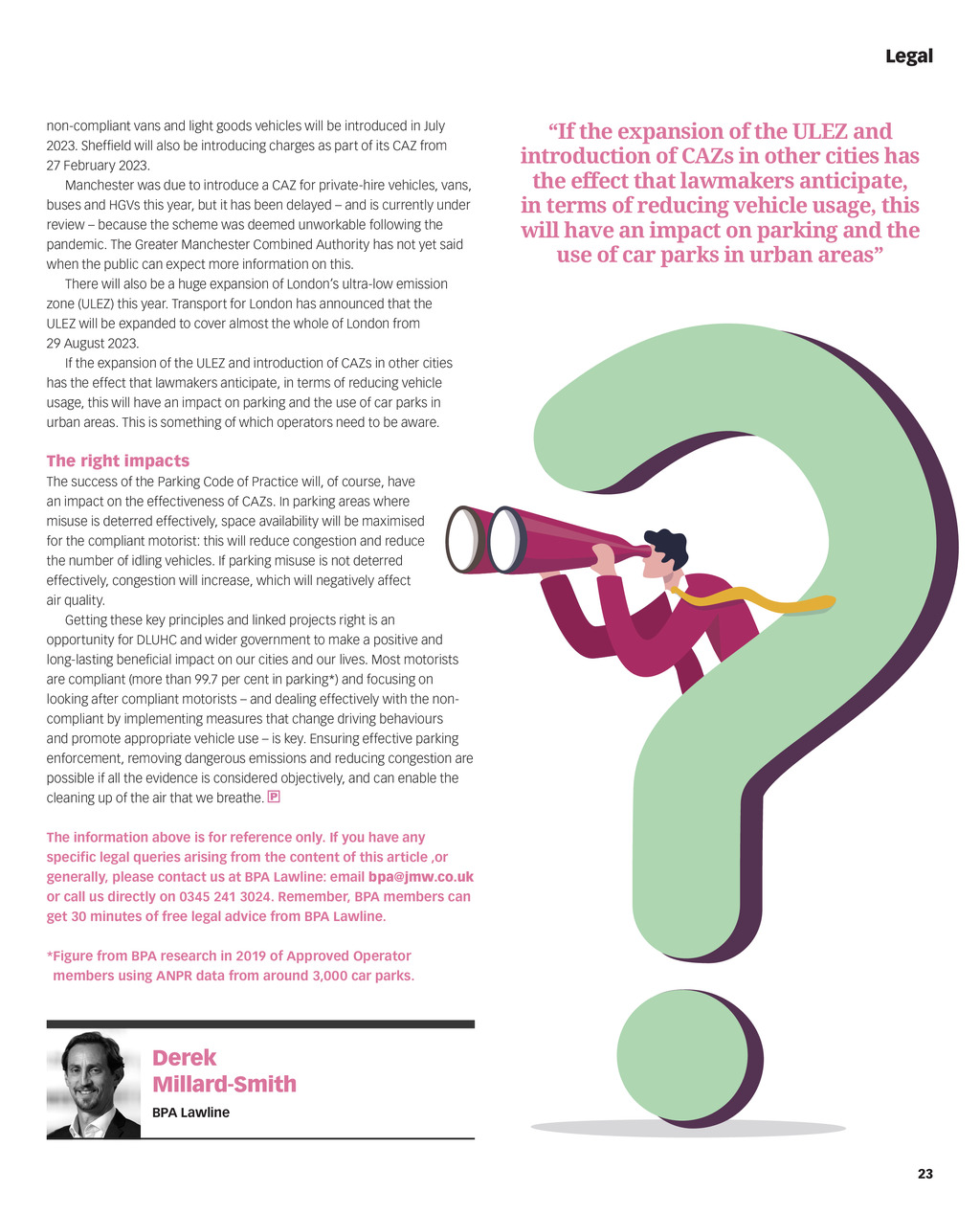


Legal Future gazing BPA Lawlines Derek Millard-Smith and Jack Daly consider the likely changes that the parking sector will face over the next 12 months e expect significant changes for the parking and wider UK motoring sector in 2023, following a busy 2022 in which we saw the building blocks for what we anticipate developing this year. In relation to the Private Parking Code of Practice, developments are expected with impact assessment and consultation processes early this year, and we will see the expansion of clean air zones (CAZs) for commercial vehicles at least across many UK cities. Last year there was the rushed introduction of the new Private Parking Code of Practice, most of the content of which was positive. The raising of standards, increased scrutiny, an improved and more transparent appeals process, and many other factors were all endorsed by the parking sector and the BPA. However, in June, the Code was withdrawn by the government for review, following a legal challenge by industry members to the proposals regarding parking charge levels and the mooted abolition of the debtrecovery fee. The challenge centred on the need for effective deterrents, to be set in line with other deterrent regimes, and for associated debt recovery and the ability to recover additional and reasonable costs, as is seen across other debt regimes. The Department for Levelling Up, Housing and Communities (DLUHC) has since been conducting its impact assessment review into private parking something that was not carried out previously. This time, engagement with the sector is promising and will, at the very least, give DLUHC access to the wealth of data that should inform appropriate review. This process is expected to conclude this year, provided fairness and appropriate process is followed. At the time of writing this article, DLUHC has said it will publish its draft impact assessment review conclusions in March, and this will be W followed by a 12-week public consultation. Once it has closed, however, the government will look to use the conclusions from this and the review to draft and publish a new Private Parking Code of Practice. Although not officially confirmed, it is expected that the government will publish the Code in September or October 2023. Pivotal role Operators within the industry have played and continue to play a crucial role in the process of the government review, providing data, testimony and evidence of why parking enforcement is needed, its beneficial effects on those locations it serves, and the need for there to be effective deterrents to prevent misuse. It is crucial that DLUHC continues to be provided with as much information as possible to inform its decision-making. After the expected publication of the new Code, it will need to be laid before Parliament for final approval before it becomes law. Once it has become law, there will be a period within which operators will be expected to make whatever changes are necessary to be compliant for example, changing things such as letters, processes and signage. The original deadline for operators to ensure compliance with the new Code was 23 December 2023. Given the timetable of the process by DLUHC, however, this would leave operators with a very short period to become compliant. While this deadline has not been officially moved by the government, it is expected to be extended to ensure reasonable time is given to comply. Meanwhile, the industry has been continuing to work towards the Conformity Assessment Body and Conformity Assessment Scheme process and associated raising of standards. Clean air zones It is crucial that DLUHC continues to be provided with as much information as possible to inform its decision-making 22 Other changes expected this year include the introduction and expansion of clean air zones (CAZs). Tyneside is the first area to introduce charges as part of its new CAZ, with charges expected to be issued from 30 January for drivers of non-compliant taxis, buses, coaches and HGVs. Charges for drivers of