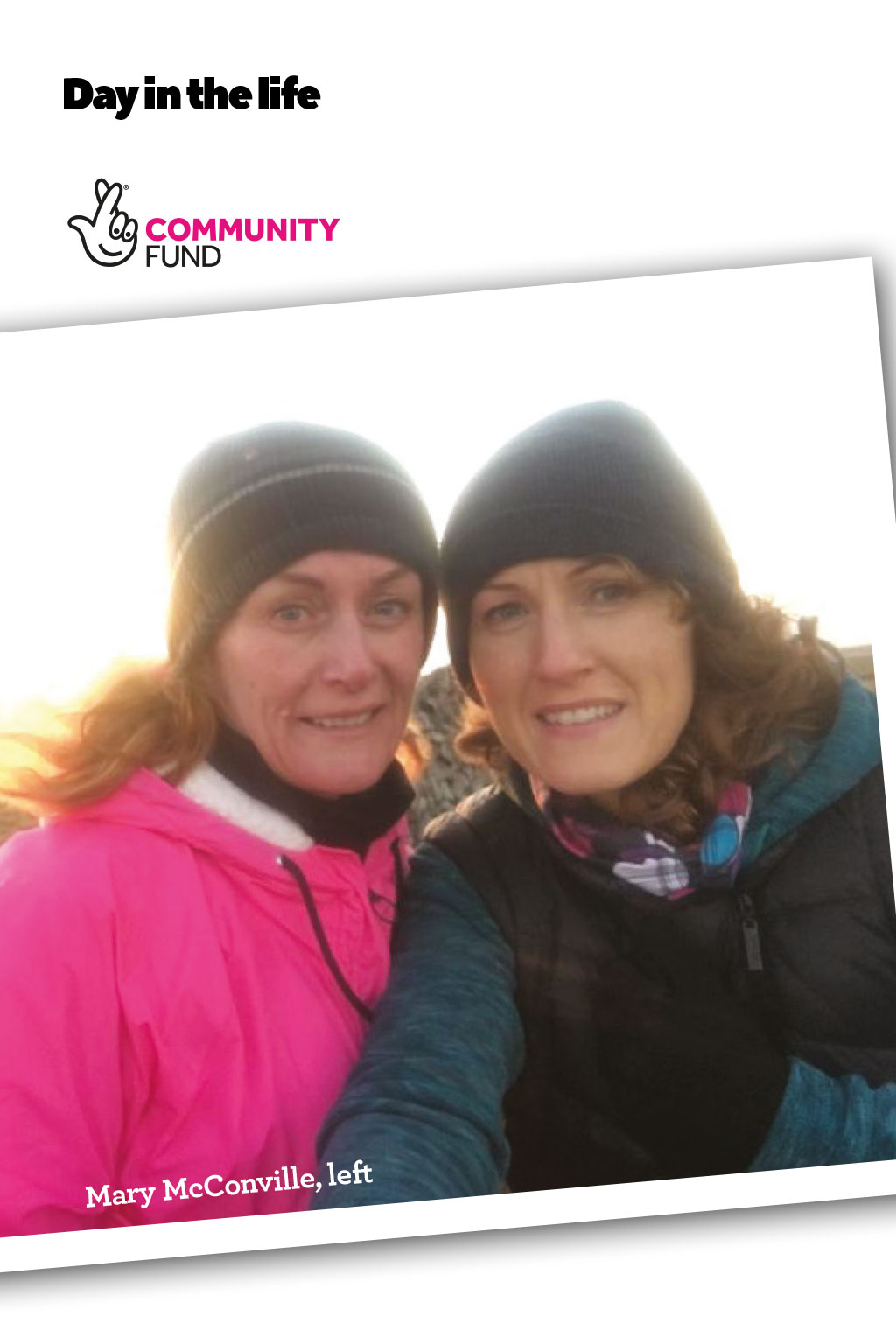
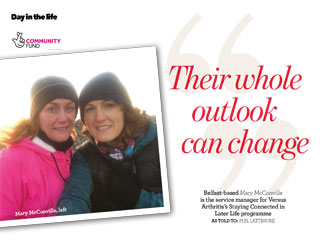
Day in the life Their whole outlook can change Belfast-based Mary McConville is the service manager for Versus Arthritiss Staying Connected in Later Life programme AS TOLD TO: PHIL LATTIMORE I began working with Arthritis Care 10 years ago, initially in a part-time role as an administrator with a project called FIT Fitness Information and Therapies to help people with arthritis. Ive had osteoarthritis for 14 years, so the job attracted me. Six years ago, the job for Staying Connected came up, and I got it. The Staying Connected project is funded by the Big Lottery. Its a mentoring and befriending service for people over 60 with arthritis, who have become isolated because of their condition. Ailish Cullen, our senior operations and development manager, thought of the idea. I then helped build the service up into what it is today. There are three strands to Staying Connected that we deliver: the one-to-one mentoring and befriending strand; carers courses (made up of a two-day stress and emotional wellbeing management course, plus self-management programmes); and work with community groups. We worked on a one-toone basis with 305 people over the five years to 2018, and more than 1,500 people in other ways. Funding for Staying Connected comes to an end in September, but were hoping well secure more. There is certainly a great need for it, as we currently have 169 people on our waiting list for the service. The one-to-one Staying Connected programme runs over eight weeks, for one hour a week, and is done at the clients home. The programme is led by volunteers and there are 14 techniques that we take them through. We do some self-management and then a bit of physical activity, such as chair-based exercise. We then do low-mood positive thinking and so on. Each programme is different because its person-centered. We listen to what people have to say, to understand why they have become less confident and more isolated, and we build on that. We develop a programme around our techniques, then we help the person build up their confidence and self-esteem. At the end of the course, we try to get them to join in some activities in their local community, so when the programme is over, the person still has a connection. I dont really have a typical day its so varied. I do all the initial introductory visits with my volunteers and the service users across the whole of Northern Ireland. We have around 30 volunteers visiting people; Im responsible for training them, and provide their support and supervision. My role also includes evaluating and reporting on the impact the service has made, plus budget management, and events and activities. I do a lot of partnership and networking to promote the service. I could be attending events, liaising with partners, running workshops, working with the volunteers or putting reports together. Its wonderful to see where a person gets to over the eight-week programme. There is such reward in helping people and seeing the difference you can make to a persons life, so that, at the end, theyre more confident, motivated and have a positive outlook on life. Their whole outlook can change. Arthritis has an impact on peoples lives. But we try to help our service users focus on the things they can still do perhaps with a few changes and help them adapt. When I was first diagnosed with arthritis, I was a runner and very active. And then I became very inactive. But with self management, and taking on board all the techniques and skills Ive learned, Ive started hill climbing again. Its really good particularly if you get up at 4.30am, start climbing and then watch the sun rise over the mountains.