
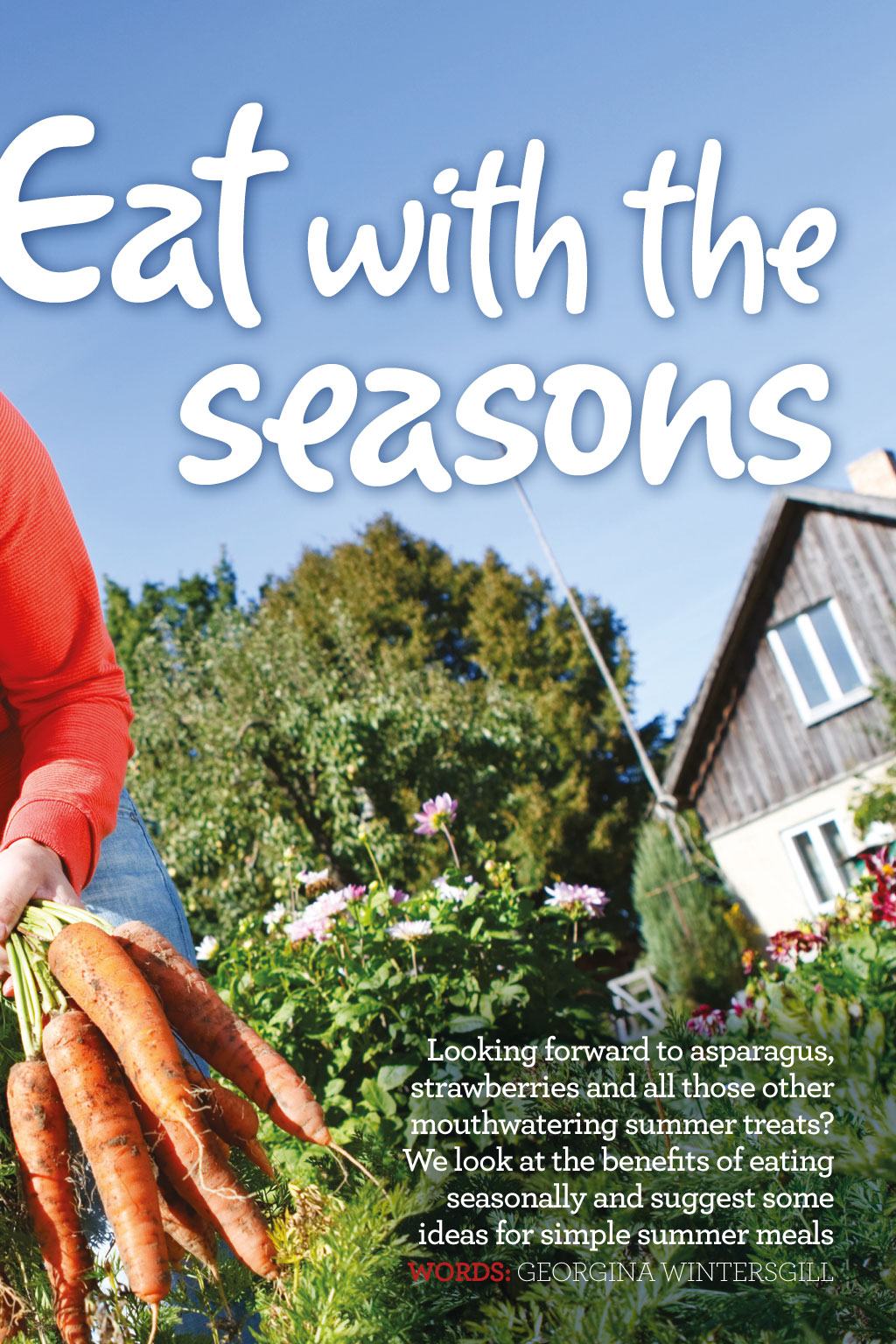
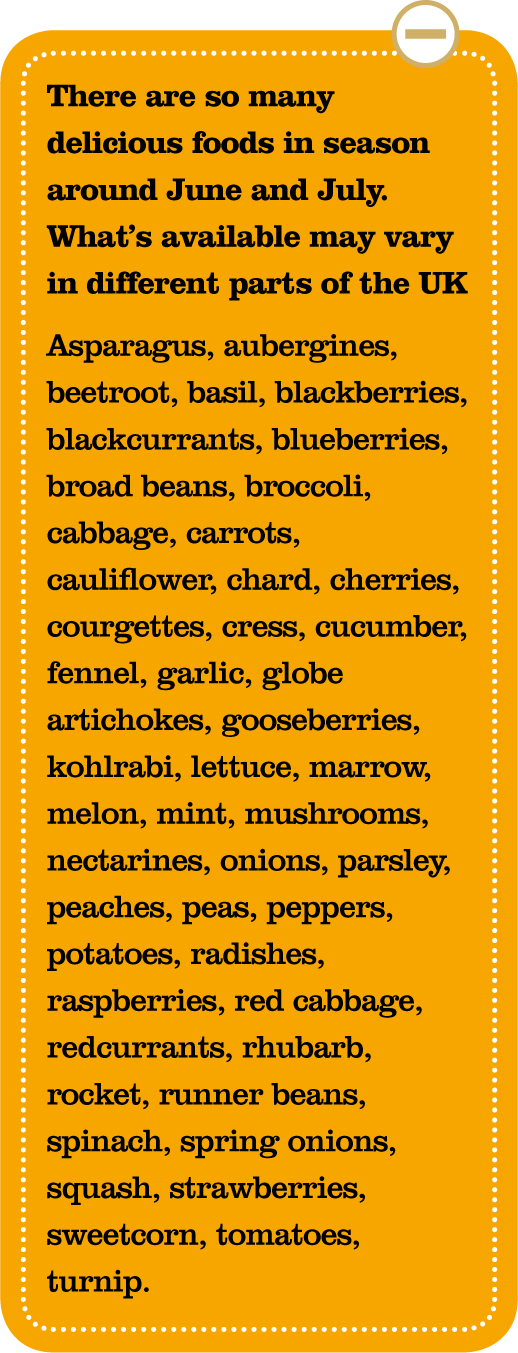

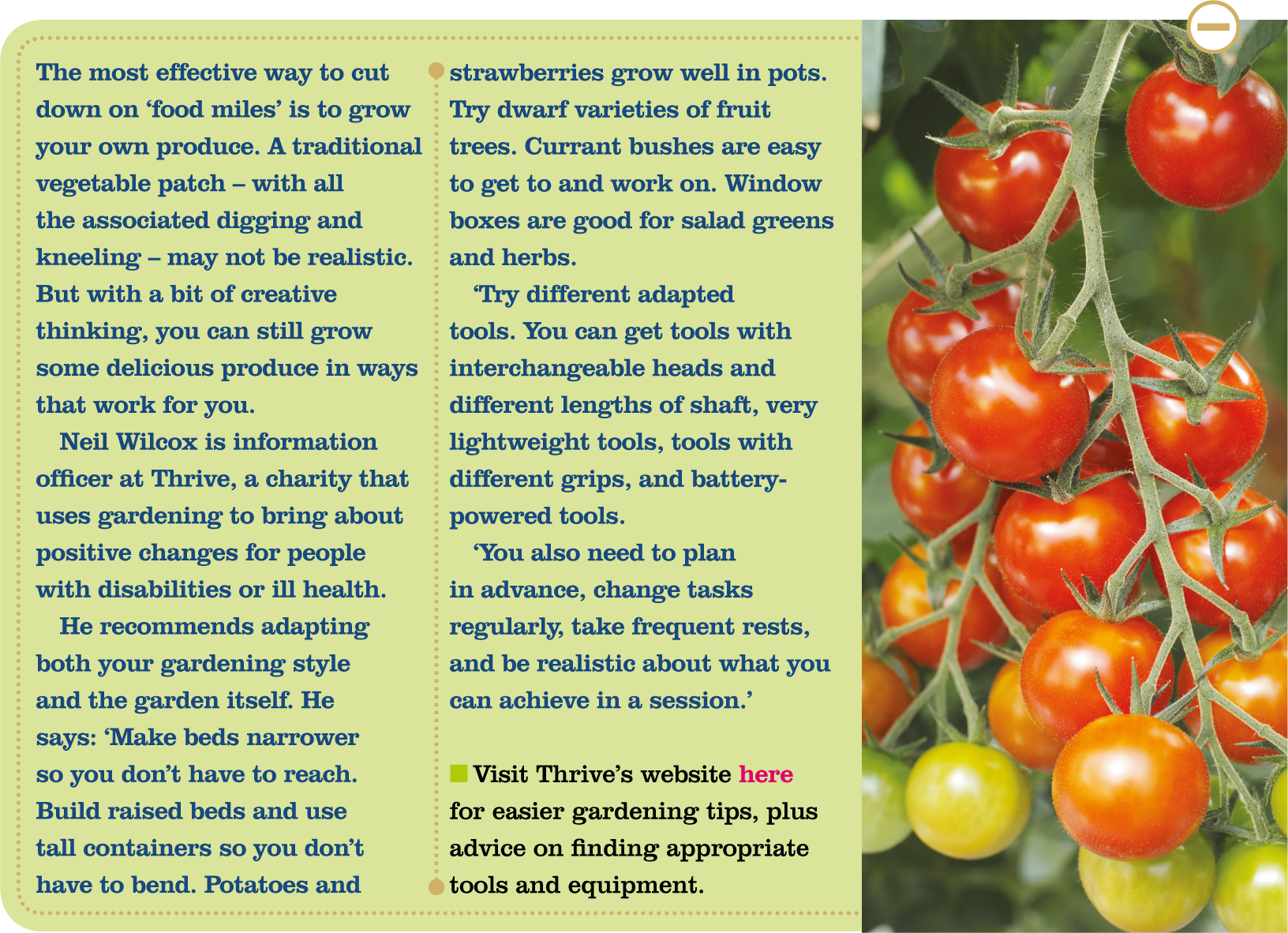


Me time Eatwiththe seasonsWhen the food you want is available in the supermarket all year round, it’s easy to forget what’s actually in season here in the UK. But eating local, seasonal produce has lots of benefits, as well as reducing the environmental impact of transporting food over long distances. Food and ingredients expert Lydia Gerratt, formerly a senior food buyer for Waitrose, explains: ‘When you buy food that’s been grown in the UK, it’s much cheaper as it has less far to travel, and harvest abundance drives down the price. It’s also much fresher, as it hasn’t been sitting in a truck from Spain for a week.’ Dr Sarah Schenker, a dietitian with the British Dietetic Association, says: ‘As soon as the food is harvested, levels of some vitamins, particularly vitamin C, start to deteriorate. The longer the food is left lying around or travelling, the lower the vitamin levels become. If you get something locally produced or harvested two days before you eat it, you’ll get the maximum benefit.’ Fruit and veg can play a key part in achieving and maintaining a healthy weight – something that, combined with regular exercise, is proven to reduce the joint pain and stiffness associated with osteoarthritis. Dr Schenker explains: ‘Fruit and veg benefit us in lots of different ways, but a key point is that they fill you up yet are often low in calories. That can help regulate your weight, which is really important for people with arthritis.’ She adds: ‘Making the effort to pick seasonal produce encourages you to do something with it. If you go to local farmers’ markets or seek out seasonal produce, you’re more likely to turn it into a smoothie, soup or salad. If you buy seasonal fruits, you may be inspired to have them for pudding rather than eating something like ice cream. ‘It’s important to have a wide variety. The more types of fruit and veg you have in your diet, the more likely it is that your body will absorb phytonutrients – substances in foods that display health benefits, for example anti-inflammatory effects.’ Eating brightly coloured fruit and veg will increase your intake of antioxidants, which may help to reduce inflammation and improve symptoms of rheumatoid arthritis. The easiest way to buy local, seasonal food is to visit a farmers’ market or sign up for an organic box from a local farm. Dr Schenker says: ‘Try a veg box if you’re happy to accept what they give you. It’s a nice surprise and encourages you to be more creative in the kitchen.’ What’s in season now? Summer yum! Grow your own Looking forward to asparagus, strawberries and all those other mouthwatering summer treats? We look at the benefits of eating seasonally and suggest some ideas for simple summer meals Words: GeorGina WintersGill What’s in season now? there are so many delicious foods in season around June and July. What’s available may vary in different parts of the UK Summer yum! Asparagus, aubergines, beetroot, basil, blackberries, blackcurrants, blueberries, broad beans, broccoli, Grow your own cabbage, carrots, cauliflower, chard, cherries, courgettes, cress, cucumber, fennel, garlic, globe artichokes, gooseberries, kohlrabi, lettuce, marrow, melon, mint, mushrooms, nectarines, onions, parsley, peaches, peas, peppers, potatoes, radishes, raspberries, red cabbage, redcurrants, rhubarb, rocket, runner beans, spinach, spring onions, squash, strawberries, sweetcorn, tomatoes, turnip. Simple, seasonal meals from food and ingredients expert Lydia Gerratt Make a fresh soup with a chicken stock base, courgettes, some garlic and parsley, and parmesan sprinkled on top. Roast some red pepper halves filled with anchovies, baby plum tomatoes, capers, garlic and olive oil. n Spaghetti is delicious with a simple fresh tomato and basil sauce. A punnet of baby plum tomatoes halved and pan fried in olive oil and garlic makes a sweet, tangy sauce in minutes. Make classic pesto using basil leaves, pine nuts, garlic, olive oil and parmesan, blitzed in a mini chopper. For recipes, click here The most effective way to cut down on ‘food miles’ is to grow your own produce. A traditional vegetable patch – with all the associated digging and kneeling – may not be realistic. But with a bit of creative thinking, you can still grow some delicious produce in ways that work for you. Neil Wilcox is information officer at Thrive, a charity that uses gardening to bring about positive changes for people with disabilities or ill health. He recommends adapting both your gardening style and the garden itself. He says: ‘Make beds narrower so you don’t have to reach. Build raised beds and use tall containers so you don’t have to bend. Potatoes and strawberries grow well in pots. Try dwarf varieties of fruit trees. Currant bushes are easy to get to and work on. Window boxes are good for salad greens and herbs. ‘Try different adapted tools. You can get tools with interchangeable heads and different lengths of shaft, very lightweight tools, tools with different grips, and battery- powered tools. ‘You also need to plan in advance, change tasks regularly, take frequent rests, and be realistic about what you can achieve in a session.’ Visit Thrive’s website here for easier gardening tips, plus advice on finding appropriate tools and equipment.