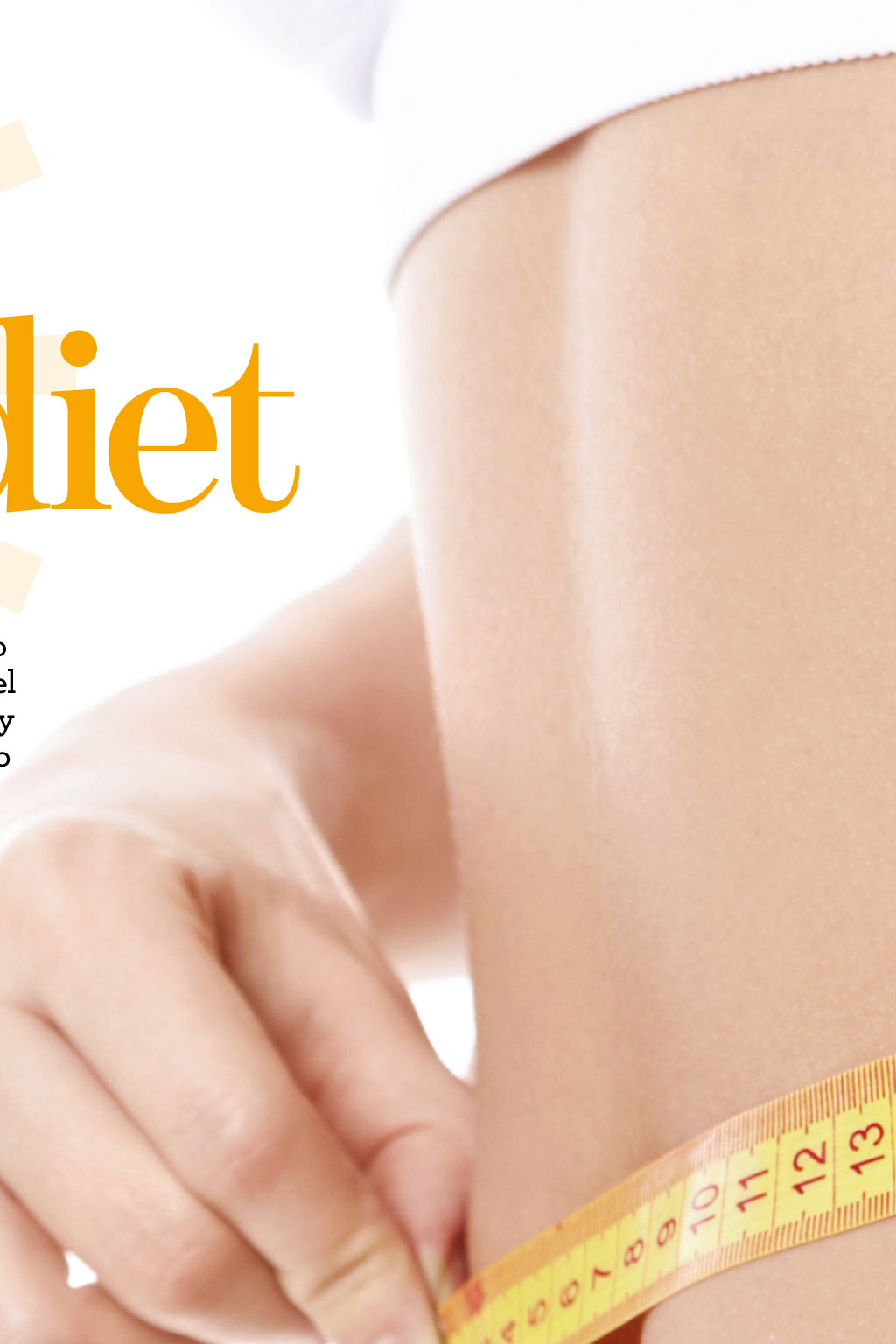

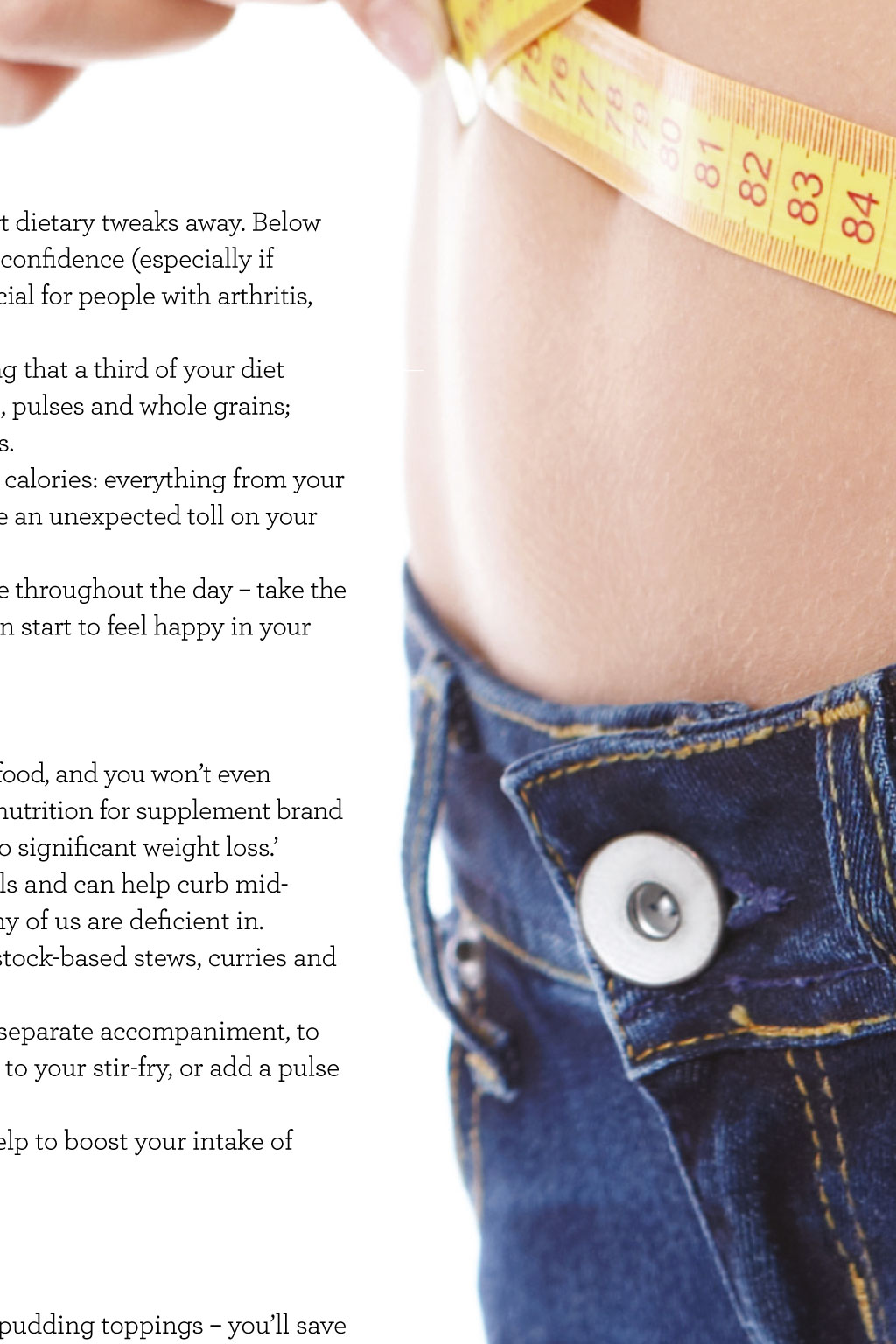
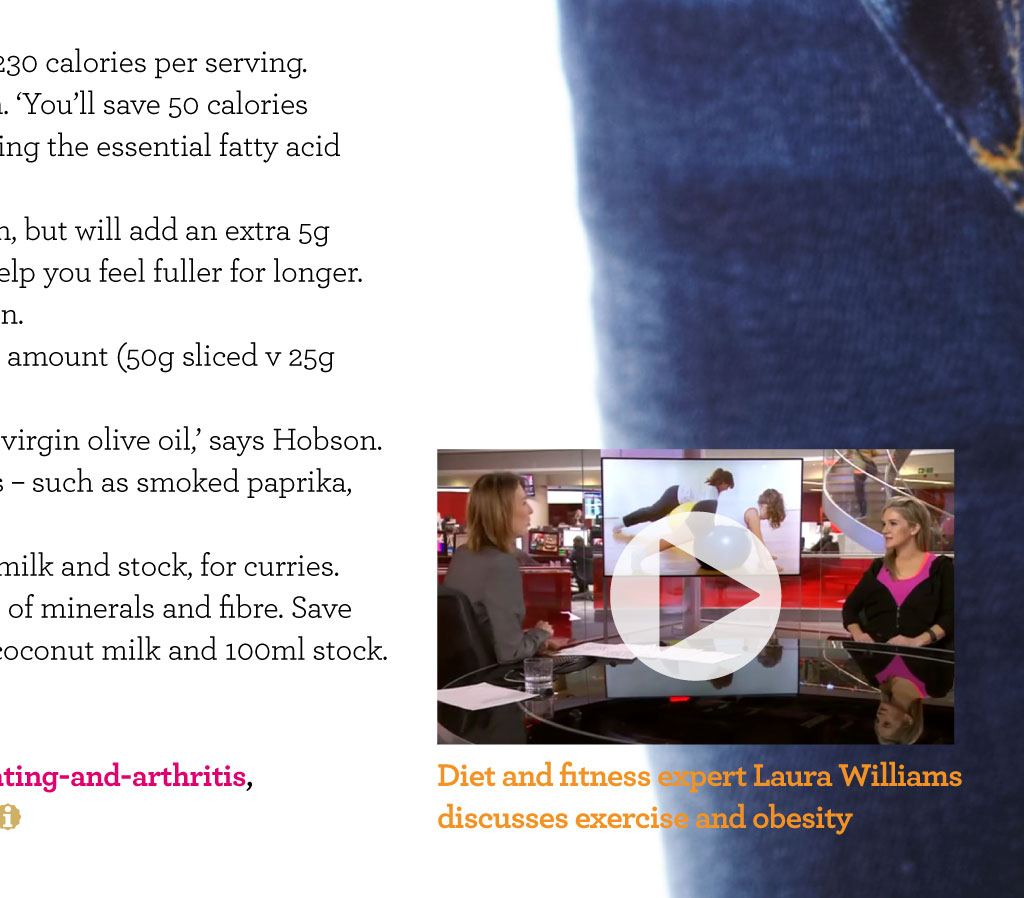
Nodiet diet The Ah, spring the season when, once again, we turn our minds to shedding those last few stubborn pounds from winter so we feel happy and comfortable in our skin come the summer. A healthy weight can also ease arthritis aches and pains. Heres how to do it without feeling food-deprived Words: Claire lavelle i f you subscribe to the thought that you can never be too rich or too thin (Wallis Simpson), you may be sceptical about the concept of a happy weight. However, fitness expert Laura Williams (laurawilliamsonline.co.uk) is convincing in her argument to the contrary. In all the years Ive been working in the fitness industry, time and time again Ive seen people reach the best weight for them what I call their happy weight and its rarely when they are at their slimmest, she says. Its the sweet spot that they find when theyre not drastically reducing calorie intake or, at the other end of the spectrum, indulging in too many oversized portions. They exercise moderately, rather than obsessively. Their clothes fit well, but they have no desire to feel any slimmer. Then they forget about their weight, and just enjoy feeling fit and healthy. Sounds good, doesnt it? Well, your own happy weight is just a few smart dietary tweaks away. Below are super-easy diet swaps that could make a lot of difference to your body confidence (especially if you start now) with very little effort and being a healthy weight is beneficial for people with arthritis, because it puts less stress on the joints. For even better results, ensure that you ring the changes by first ensuring that a third of your diet is made up of fibre-rich carbs, such as oats, potatoes (preferably with skin), pulses and whole grains; antioxidant-rich fruit and veg; and protein such as fish, lean meat and eggs. A sixth of your diet should be made up of dairy. And watch those liquid calories: everything from your daily cappuccino to that well-earned glass of Cabernet Sauvignon can take an unexpected toll on your waistline, says Williams. Remember, too, to include as much incidental exercise as is comfortable throughout the day take the stairs if you are able; walk rather than driving to the shops and youll soon start to feel happy in your own skin. the no-diet diet changes to make for life n Reduce portion sizes. Switch to using smaller plates and bowls to serve food, and you wont even notice that youre eating up to a third less, says Robert Hobson, head of nutrition for supplement brand Healthspan. Research shows opting for smaller serving plates can lead to significant weight loss. n Choose eggs for breakfast theyre more filling than grain-based cereals and can help curb midmorning snacking. Theyre also a great source of vitamin D, which many of us are deficient in. n Choose foods with a high water content, such as soup, and tomato- or stock-based stews, curries and casseroles. They help you feel fuller on fewer calories. n Combine carbohydrates with stir-fries or soup, instead of serving as a separate accompaniment, to reduce overall calories, says Hobson. Try adding brown rice or quinoa to your stir-fry, or add a pulse or grain to your soup, rather than having buttered bread. n Opt for proteins such as fish over fatty meats. Including oily fish can help to boost your intake of omega-3, which may be useful for people with rheumatoid arthritis. the no-diet diet top food swaps Cut calories without compromising on taste! n Choose half-fat crme frache or Greek yoghurt over double cream for pudding toppings youll save 330 calories per 100g serving. n Substitute courgette linguini (hello, spiraliser!) for spaghetti and save 230 calories per serving. n Swap butter for a drizzle of extra virgin rapeseed oil, suggests Hobson. Youll save 50 calories and 9g of saturated fat (based on 20g butter v 1 tbsp oil) as well as adding the essential fatty acid omega-3. n Swap white rice for quinoa or brown rice its not a calorie save, as such, but will add an extra 5g of fibre and 7g of protein, which is good for weight loss because they help you feel fuller for longer. Theres also iron and magnesium for healthy blood and muscle function. n Use grated, not sliced, cheese for sandwiches you usually use half the amount (50g sliced v 25g grated), saving 100 calories. n I like to swap heavy salad dressings for a mix of lemon juice and extra virgin olive oil, says Hobson. Try adding fresh herbs, such as coriander, chives and parsley, or spices such as smoked paprika, cumin and coriander for flavour. n Swap cream and coconut milk for yoghurt, or a mix of low-fat coconut milk and stock, for curries. You can also thicken curries with lentils and spinach for an extra boost of minerals and fibre. Save 230 calories by replacing 200ml coconut milk with 100ml reduced-fat coconut milk and 100ml stock. n Arthritis Care has updated its Healthy Eating and Arthritis booklet. For a free copy, download it from www.arthritiscare.org.uk/healthy-eating-and-arthritis, email supporter services@arthritiscare.org.uk or call 020 73806540. diet and fitness expert laura Williams discusses exercise and obesity