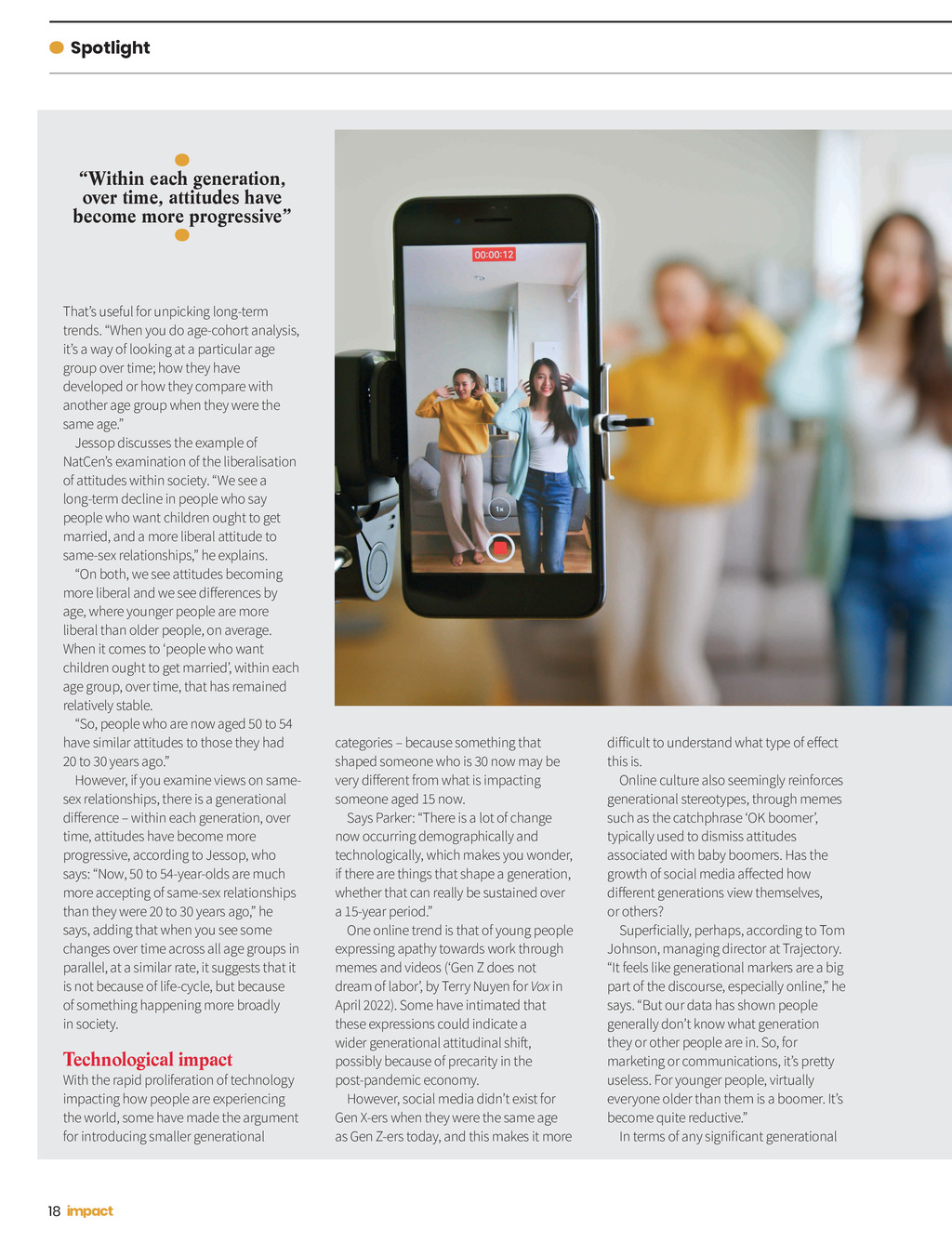


Spotlight Within each generation, over time, attitudes have become more progressive Thats useful for unpicking long-term trends. When you do age-cohort analysis, its a way of looking at a particular age group over time; how they have developed or how they compare with another age group when they were the same age. Jessop discusses the example of NatCens examination of the liberalisation of attitudes within society. We see a long-term decline in people who say people who want children ought to get married, and a more liberal attitude to same-sex relationships, he explains. On both, we see attitudes becoming more liberal and we see differences by age, where younger people are more liberal than older people, on average. When it comes to people who want children ought to get married, within each age group, over time, that has remained relatively stable. So, people who are now aged 50 to 54 have similar attitudes to those they had 20 to 30 years ago. However, if you examine views on samesex relationships, there is a generational difference within each generation, over time, attitudes have become more progressive, according to Jessop, who says: Now, 50 to 54-year-olds are much more accepting of same-sex relationships than they were 20 to 30 years ago, he says, adding that when you see some changes over time across all age groups in parallel, at a similar rate, it suggests that it is not because of life-cycle, but because of something happening more broadly in society. Technological impact With the rapid proliferation of technology impacting how people are experiencing the world, some have made the argument for introducing smaller generational categories because something that shaped someone who is 30 now may be very different from what is impacting someone aged 15 now. Says Parker: There is a lot of change now occurring demographically and technologically, which makes you wonder, if there are things that shape a generation, whether that can really be sustained over a 15-year period. One online trend is that of young people expressing apathy towards work through memes and videos (Gen Z does not dream of labor, by Terry Nuyen for Vox in April 2022). Some have intimated that these expressions could indicate a wider generational attitudinal shift, possibly because of precarity in the post-pandemic economy. However, social media didnt exist for Gen X-ers when they were the same age as Gen Z-ers today, and this makes it more difficult to understand what type of effect this is. Online culture also seemingly reinforces generational stereotypes, through memes such as the catchphrase OK boomer, typically used to dismiss attitudes associated with baby boomers. Has the growth of social media affected how different generations view themselves, or others? Superficially, perhaps, according to Tom Johnson, managing director at Trajectory. It feels like generational markers are a big part of the discourse, especially online, he says. But our data has shown people generally dont know what generation they or other people are in. So, for marketing or communications, its pretty useless. For younger people, virtually everyone older than them is a boomer. Its become quite reductive. In terms of any significant generational 18 Impact ISSUE 44 2023_pp16-19_Spot .indd 18 05/12/2023 12:05