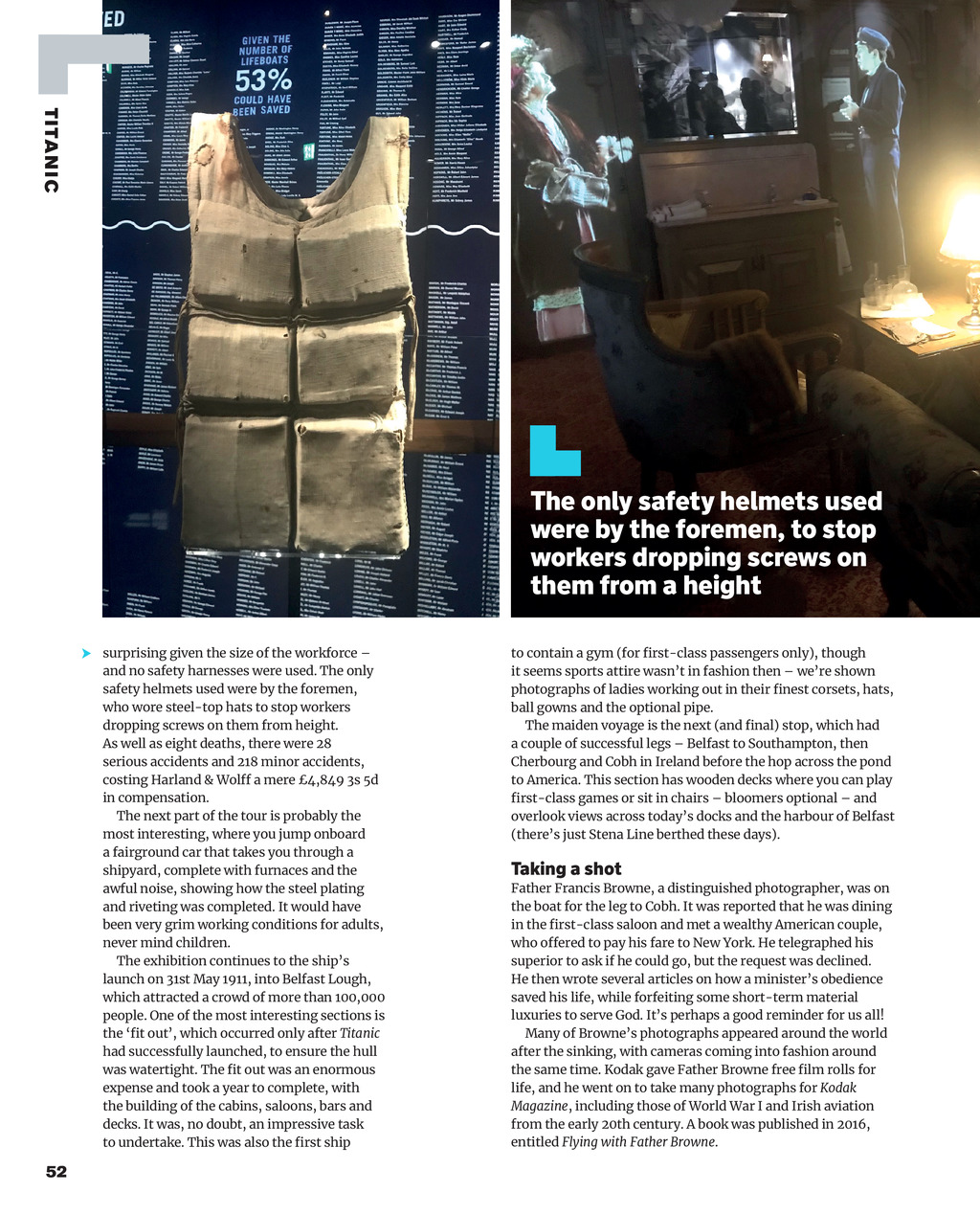


T I TA N I C The only safety helmets used were by the foremen, to stop workers dropping screws on them from a height surprising given the size of the workforce and no safety harnesses were used. The only safety helmets used were by the foremen, who wore steel-top hats to stop workers dropping screws on them from height. As well as eight deaths, there were 28 serious accidents and 218 minor accidents, costing Harland & Wolff a mere 4,849 3s 5d in compensation. The next part of the tour is probably the most interesting, where you jump onboard a fairground car that takes you through a shipyard, complete with furnaces and the awful noise, showing how the steel plating and riveting was completed. It would have been very grim working conditions for adults, never mind children. The exhibition continues to the ships launch on 31st May 1911, into Belfast Lough, which attracted a crowd of more than 100,000 people. One of the most interesting sections is the fit out, which occurred only after Titanic had successfully launched, to ensure the hull was watertight. The fit out was an enormous expense and took a year to complete, with the building of the cabins, saloons, bars and decks. It was, no doubt, an impressive task to undertake. This was also the first ship to contain a gym (for first-class passengers only), though it seems sports attire wasnt in fashion then were shown photographs of ladies working out in their finest corsets, hats, ball gowns and the optional pipe. The maiden voyage is the next (and final) stop, which had a couple of successful legs Belfast to Southampton, then Cherbourg and Cobh in Ireland before the hop across the pond to America. This section has wooden decks where you can play first-class games or sit in chairs bloomers optional and overlook views across todays docks and the harbour of Belfast (theres just Stena Line berthed these days). Taking a shot Father Francis Browne, a distinguished photographer, was on the boat for the leg to Cobh. It was reported that he was dining in the first-class saloon and met a wealthy American couple, who offered to pay his fare to New York. He telegraphed his superior to ask if he could go, but the request was declined. He then wrote several articles on how a ministers obedience saved his life, while forfeiting some short-term material luxuries to serve God. Its perhaps a good reminder for us all! Many of Brownes photographs appeared around the world after the sinking, with cameras coming into fashion around the same time. Kodak gave Father Browne free film rolls for life, and he went on to take many photographs for Kodak Magazine, including those of World War I and Irish aviation from the early 20th century. A book was published in 2016, entitled Flying with Father Browne. 52 THE LOG Spr 24 pp50-53 Titanic Museum.indd 52 16/02/2024 11:16