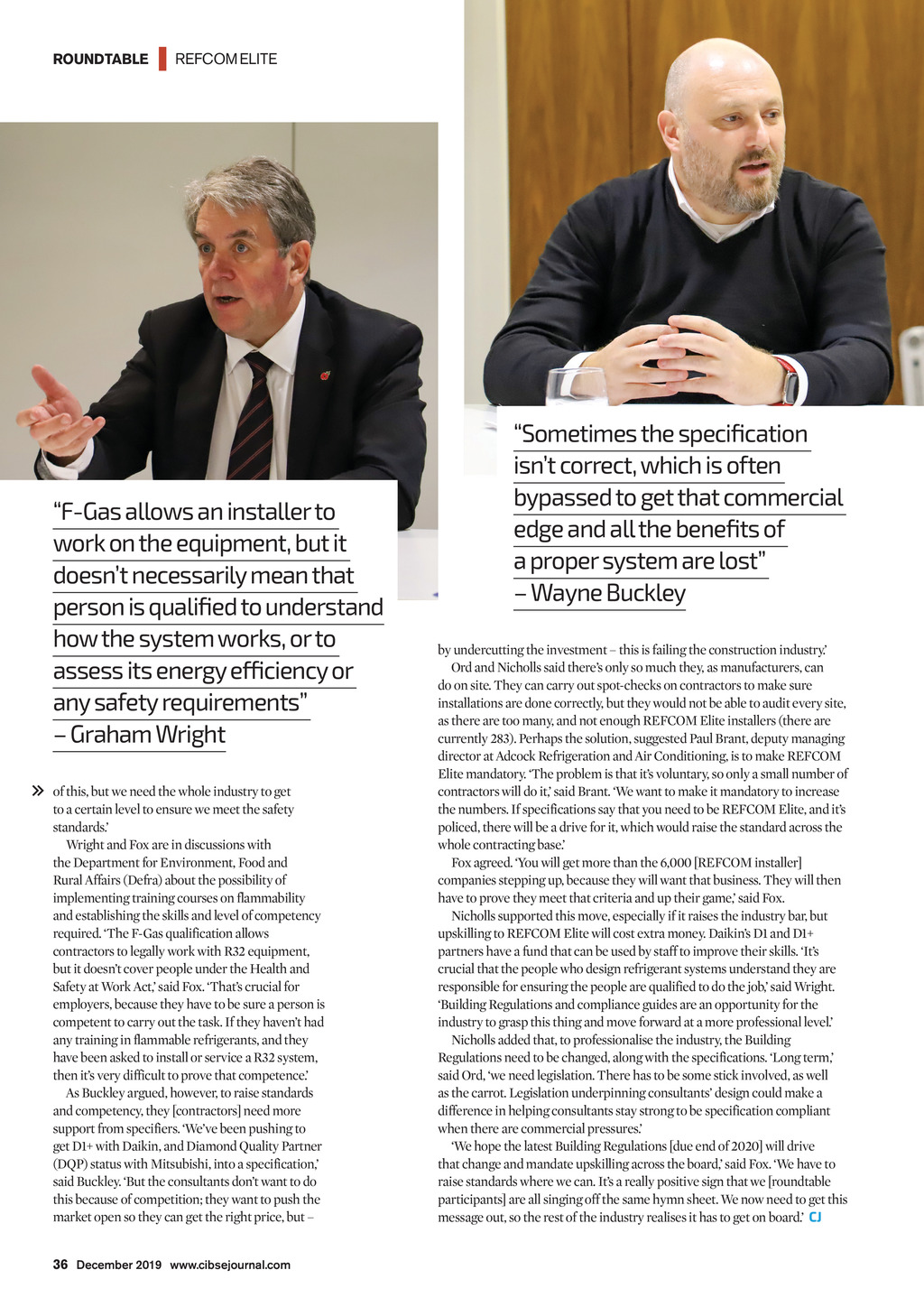


ROUNDTABLE | REFCOM ELITE F-Gas allows an installer to work on the equipment, but it doesnt necessarily mean that person is qualified to understand how the system works, or to assess its energy efficiency or any safety requirements Graham Wright of this, but we need the whole industry to get to a certain level to ensure we meet the safety standards. Wright and Fox are in discussions with the Department for Environment, Food and Rural Affairs (Defra) about the possibility of implementing training courses on flammability and establishing the skills and level of competency required. The F-Gas qualification allows contractors to legally work with R32 equipment, but it doesnt cover people under the Health and Safety at Work Act, said Fox. Thats crucial for employers, because they have to be sure a person is competent to carry out the task. If they havent had any training in flammable refrigerants, and they have been asked to install or service a R32 system, then its very difficult to prove that competence. As Buckley argued, however, to raise standards and competency, they [contractors] need more support from specifiers. Weve been pushing to get D1+ with Daikin, and Diamond Quality Partner (DQP) status with Mitsubishi, into a specification, said Buckley. But the consultants dont want to do this because of competition; they want to push the market open so they can get the right price, but Sometimes the specification isnt correct, which is often bypassed to get that commercial edge and all the benefits of a proper system are lost Wayne Buckley by undercutting the investment this is failing the construction industry. Ord and Nicholls said theres only so much they, as manufacturers, can do on site. They can carry out spot-checks on contractors to make sure installations are done correctly, but they would not be able to audit every site, as there are too many, and not enough REFCOM Elite installers (there are currently 283). Perhaps the solution, suggested Paul Brant, deputy managing director at Adcock Refrigeration and Air Conditioning, is to make REFCOM Elite mandatory. The problem is that its voluntary, so only a small number of contractors will do it, said Brant. We want to make it mandatory to increase the numbers. If specifications say that you need to be REFCOM Elite, and its policed, there will be a drive for it, which would raise the standard across the whole contracting base. Fox agreed. You will get more than the 6,000 [REFCOM installer] companies stepping up, because they will want that business. They will then have to prove they meet that criteria and up their game, said Fox. Nicholls supported this move, especially if it raises the industry bar, but upskilling to REFCOM Elite will cost extra money. Daikins D1 and D1+ partners have a fund that can be used by staff to improve their skills. Its crucial that the people who design refrigerant systems understand they are responsible for ensuring the people are qualified to do the job, said Wright. Building Regulations and compliance guides are an opportunity for the industry to grasp this thing and move forward at a more professional level. Nicholls added that, to professionalise the industry, the Building Regulations need to be changed, along with the specifications. Long term, said Ord, we need legislation. There has to be some stick involved, as well as the carrot. Legislation underpinning consultants design could make a difference in helping consultants stay strong to be specification compliant when there are commercial pressures. We hope the latest Building Regulations [due end of 2020] will drive that change and mandate upskilling across the board, said Fox. We have to raise standards where we can. Its a really positive sign that we [roundtable participants] are all singing off the same hymn sheet. We now need to get this message out, so the rest of the industry realises it has to get on board. CJ 36 December 2019 www.cibsejournal.com CIBSE Dec19 pp33-36 REFCOM Roundtable.indd 36 22/11/2019 15:24