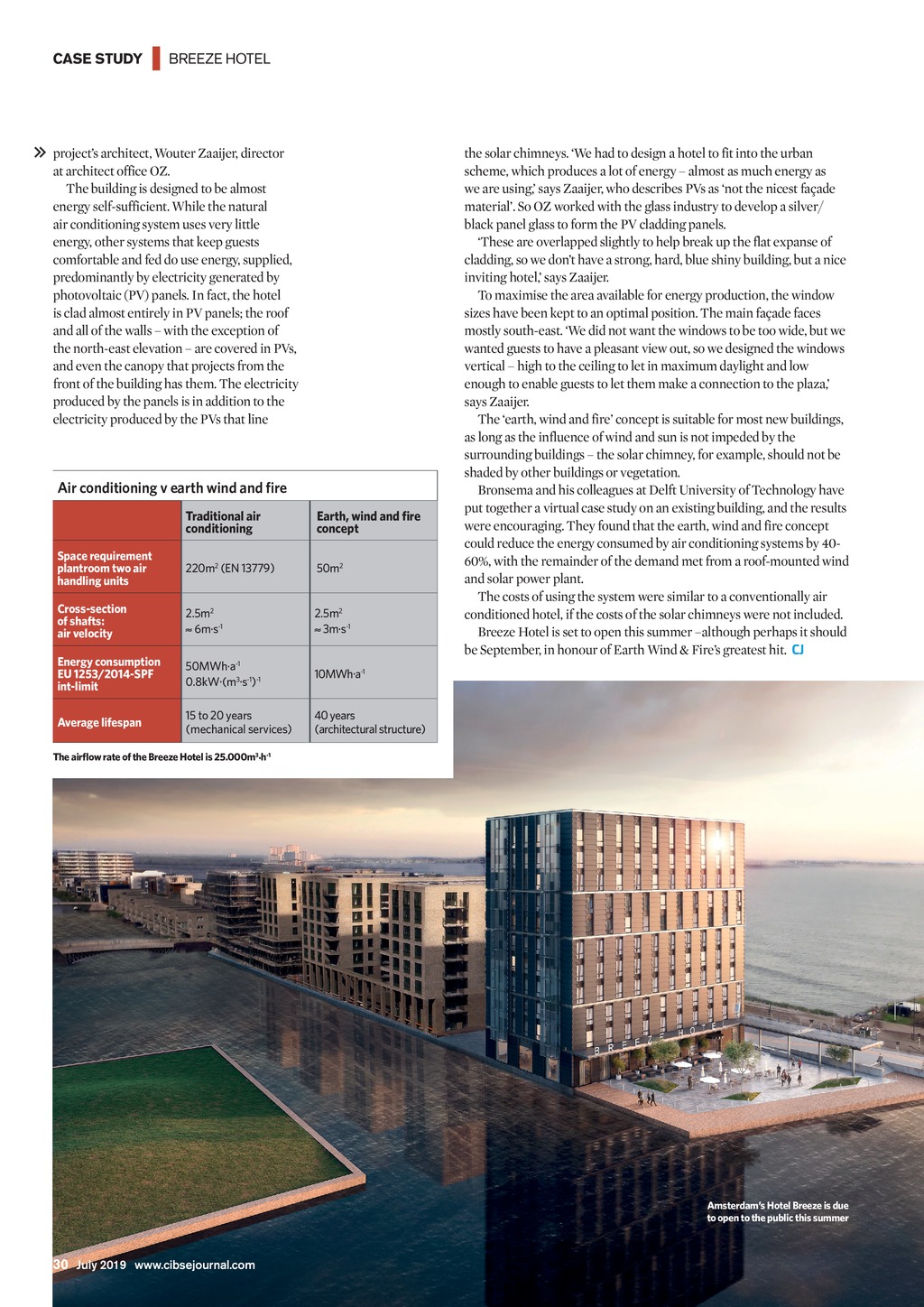


CASE STUDY | BREEZE HOTEL projects architect, Wouter Zaaijer, director at architect office OZ. The building is designed to be almost energy self-sufficient. While the natural air conditioning system uses very little energy, other systems that keep guests comfortable and fed do use energy, supplied, predominantly by electricity generated by photovoltaic (PV) panels. In fact, the hotel is clad almost entirely in PV panels; the roof and all of the walls with the exception of the north-east elevation are covered in PVs, and even the canopy that projects from the front of the building has them. The electricity produced by the panels is in addition to the electricity produced by the PVs that line Air conditioning v earth wind and fire Traditional air conditioning Earth, wind and fire concept Space requirement plantroom two air handling units 220m2 (EN 13779) 50m2 Cross-section of shafts: air velocity 2.5m2 6m.s-1 2.5m2 3m.s-1 Energy consumption EU 1253/2014-SPF int-limit 50MWh.a-1 0.8kW.(m3.s-1)-1 10MWh.a-1 Average lifespan 15 to 20 years (mechanical services) 40 years (architectural structure) the solar chimneys. We had to design a hotel to fit into the urban scheme, which produces a lot of energy almost as much energy as we are using, says Zaaijer, who describes PVs as not the nicest faade material. So OZ worked with the glass industry to develop a silver/ black panel glass to form the PV cladding panels. These are overlapped slightly to help break up the flat expanse of cladding, so we dont have a strong, hard, blue shiny building, but a nice inviting hotel, says Zaaijer. To maximise the area available for energy production, the window sizes have been kept to an optimal position. The main faade faces mostly south-east. We did not want the windows to be too wide, but we wanted guests to have a pleasant view out, so we designed the windows vertical high to the ceiling to let in maximum daylight and low enough to enable guests to let them make a connection to the plaza, says Zaaijer. The earth, wind and fire concept is suitable for most new buildings, as long as the influence of wind and sun is not impeded by the surrounding buildings the solar chimney, for example, should not be shaded by other buildings or vegetation. Bronsema and his colleagues at Delft University of Technology have put together a virtual case study on an existing building, and the results were encouraging. They found that the earth, wind and fire concept could reduce the energy consumed by air conditioning systems by 4060%, with the remainder of the demand met from a roof-mounted wind and solar power plant. The costs of using the system were similar to a conventionally air conditioned hotel, if the costs of the solar chimneys were not included. Breeze Hotel is set to open this summer although perhaps it should be September, in honour of Earth Wind & Fires greatest hit. CJ The airflow rate of the Breeze Hotel is 25.000m3.h-1 Amsterdams Hotel Breeze is due to open to the public this summer 30 July 2019 www.cibsejournal.com CIBSE July19 pp26-28, 30 BreezeHotel.indd 30 21/06/2019 14:46