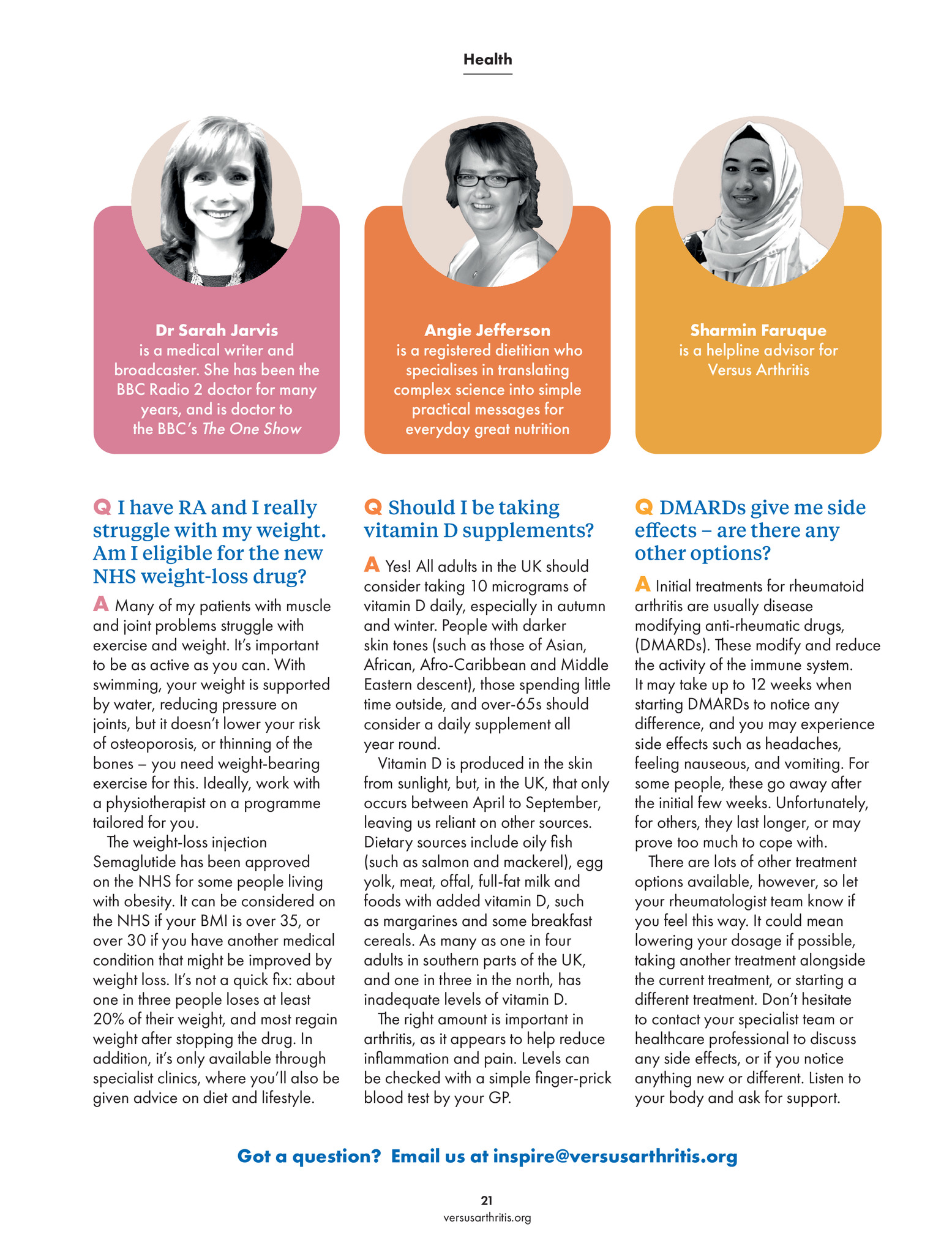

Health Dr Sarah Jarvis is a medical writer and broadcaster. She has been the BBC Radio 2 doctor for many years, and is doctor to the BBCs The One Show Q I have RA and I really struggle with my weight. Am I eligible for the new NHS weight-loss drug? A Many of my patients with muscle and joint problems struggle with exercise and weight. Its important to be as active as you can. With swimming, your weight is supported by water, reducing pressure on joints, but it doesnt lower your risk of osteoporosis, or thinning of the bones you need weight-bearing exercise for this. Ideally, work with a physiotherapist on a programme tailored for you. The weight-loss injection Semaglutide has been approved on the NHS for some people living with obesity. It can be considered on the NHS if your BMI is over 35, or over 30 if you have another medical condition that might be improved by weight loss. Its not a quick fix: about one in three people loses at least 20% of their weight, and most regain weight after stopping the drug. In addition, its only available through specialist clinics, where youll also be given advice on diet and lifestyle. Angie Jefferson is a registered dietitian who specialises in translating complex science into simple practical messages for everyday great nutrition Q Should I be taking vitamin D supplements? A Yes! All adults in the UK should consider taking 10 micrograms of vitamin D daily, especially in autumn and winter. People with darker skin tones (such as those of Asian, African, Afro-Caribbean and Middle Eastern descent), those spending little time outside, and over-65s should consider a daily supplement all year round. Vitamin D is produced in the skin from sunlight, but, in the UK, that only occurs between April to September, leaving us reliant on other sources. Dietary sources include oily fish (such as salmon and mackerel), egg yolk, meat, offal, full-fat milk and foods with added vitamin D, such as margarines and some breakfast cereals. As many as one in four adults in southern parts of the UK, and one in three in the north, has inadequate levels of vitamin D. The right amount is important in arthritis, as it appears to help reduce inflammation and pain. Levels can be checked with a simple finger-prick blood test by your GP. Sharmin Faruque is a helpline advisor for Versus Arthritis Q DMARDs give me side effects are there any other options? A Initial treatments for rheumatoid arthritis are usually disease modifying anti-rheumatic drugs, (DMARDs). These modify and reduce the activity of the immune system. It may take up to 12 weeks when starting DMARDs to notice any difference, and you may experience side effects such as headaches, feeling nauseous, and vomiting. For some people, these go away after the initial few weeks. Unfortunately, for others, they last longer, or may prove too much to cope with. There are lots of other treatment options available, however, so let your rheumatologist team know if you feel this way. It could mean lowering your dosage if possible, taking another treatment alongside the current treatment, or starting a different treatment. Dont hesitate to contact your specialist team or healthcare professional to discuss any side effects, or if you notice anything new or different. Listen to your body and ask for support. Got a question? Email us at inspire@versusarthritis.org 21 versusarthritis.org PP20-21_Inspire_Summer 2023_Ask the experts.indd 21 17/05/2023 16:00