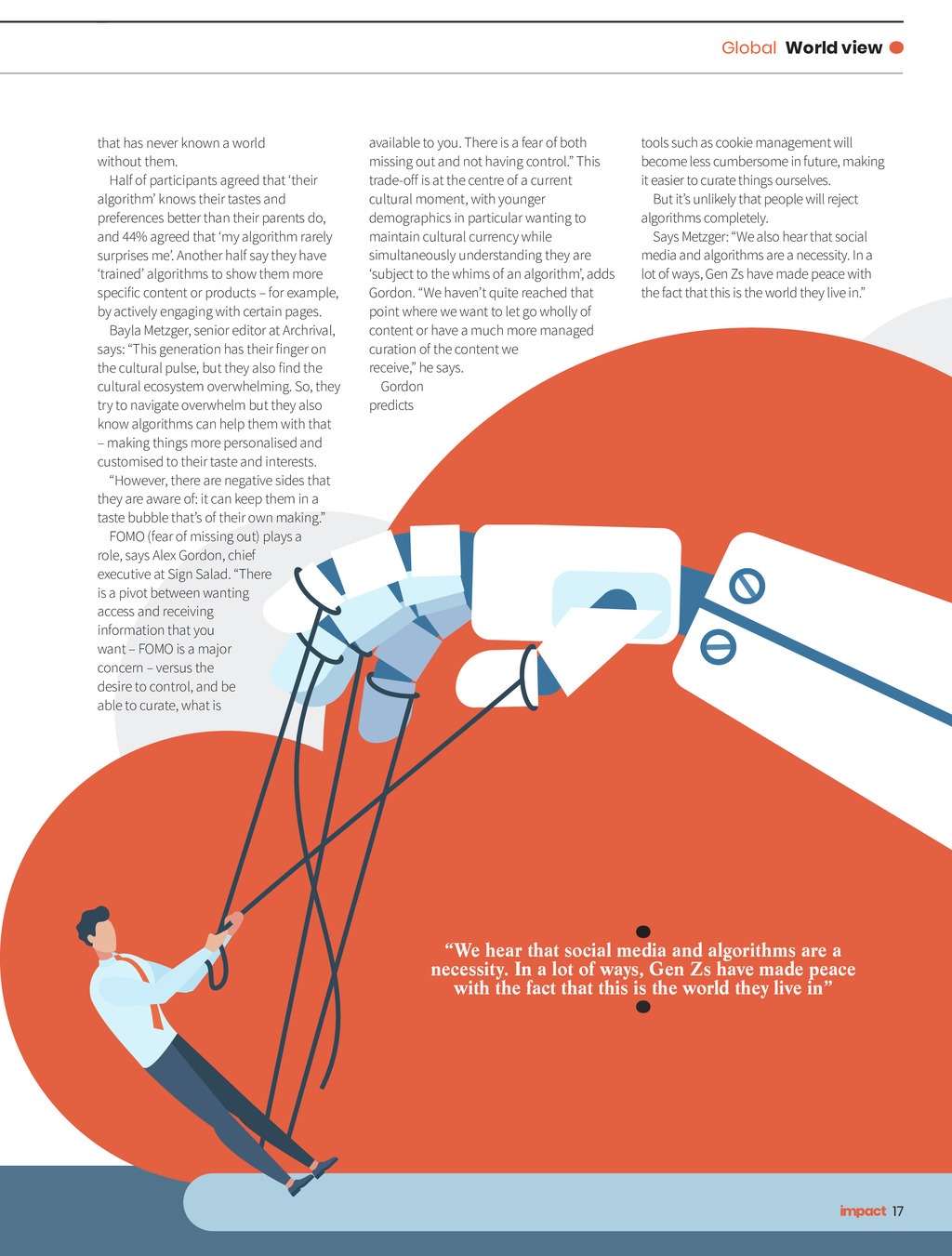

World view Global Who pulls the strings? Algorithms have a huge influence on what we see online, getting personal in their recommendations and seemingly knowing us inside out. Now, some people are consciously adapting their behaviour to regain control. By Katie McQuater Earlier this year, a BBC journalist wrote a report about how Netflix and Spotify seemed to know she was bisexual before she herself did, when she reflected on the suggested recommendations she had received. It exemplified how algorithms have become an intrinsic, increasingly personal part of contemporary online life, reading signals such as search history to serve us content, recommendations and advertising. While they have a clear commercial imperative, algorithmic recommendations have democratised popular culture to an extent. Whereas 30 years ago, magazine reviews or the Official Charts (see p18) might Alternative inspirations Self-publishing platform Substack hit more than two million paid subscribers in 2023. It connects writers directly with readers and eschews algorithms and advertising. Archrival qual found young people reporting that they were not going to Spotify to discover new music instead visiting New Yorks public parks to look for buskers. Another study by the company found that 53% of young people claim they prefer to discover new products in store, not through social media. The Luddite Club is a group of teenagers that meets regularly in New York, putting away smartphones and promoting a lifestyle free of social media (the New York Times, December 2022). have been the only ways to discover new music, Spotify today offers a plethora of playlists tailored to individual tastes. On the other hand, algorithms can also be a blunt tool, grouping people by obvious demographics and reinforcing stereotypes leaving us feeling annoyed at being targeted with unsolicited weight-loss content in January, for example. With increased awareness of algorithms in our lives, there is a shift towards reassessing the role they play and in some cases, people are changing how they interact with platforms, to change the dynamic. For example, reports of dating app users hacking the settings highlight a desire to reclaim agency over the types of potential love interests being suggested. The whole idea of a dating app is that you have more choice and control over who you meet, and the algorithm has taken that control away, says Katrina Russell, associate director at semiotics agency Sign Salad. Other examples include adjusting Instagrams settings to change what advertisements appear, or actively liking certain content to see more of it. Russell thinks there is a wider trend for hacking algorithms, but says its not about people turning away from them but working out ways in which they can have more choice. Finding a creative way to gain more control is an appealing concept. Given the prominence of a lot of big players in tech, people are looking to find their own power and control, adds Russell. The take-up of algorithm-free social platforms such as micro-blogging site Mastodon and RTRO (which pitches itself as non-toxic social media), hint at this desire for control as well as a rejection of big techs hold over what some see as the public square. The original forms of social media tried to create a more horizontal space, says Russell, but that has now changed. That feeling of even-handed representation has, for many people, been distorted by algorithms. Its not so much that the problem is the algorithm itself, but rather the specific algorithm that is being used by each platform. Russell adds: The ultimate idea of the algorithm is to keep a seamless flow of cultural content and to reflect people, rather than make people feel that they can see the demographic bucket that they have been put into which, for a lot of people, is not appealing. The impact of algorithms extends far beyond recommending products, and switching off isnt easy in modern life. Some young people have reported using TikTok, for example, to effectively self-diagnose health conditions after being served with highly individualised content. With social media apps having such immersive layouts, it can be hard to separate your own motivations and preferences from what you are seeing. Russell says: There is a real challenge around being able to ignore, or to not identify, with whats being said to you its literally called a feed. Cultural currency While evidence is scant on this emerging topic, studies of how young people engage with algorithms offer an insight. For the most recent edition of its Almanac publication, which came out earlier in 2023, US youth culture agency Archrival fielded research looking into algorithms, with a focus on Generation Z a group of people 16 Impact ISSUE 43 2023_pp16-17 WV Global.indd 16 18/09/2023 11:56