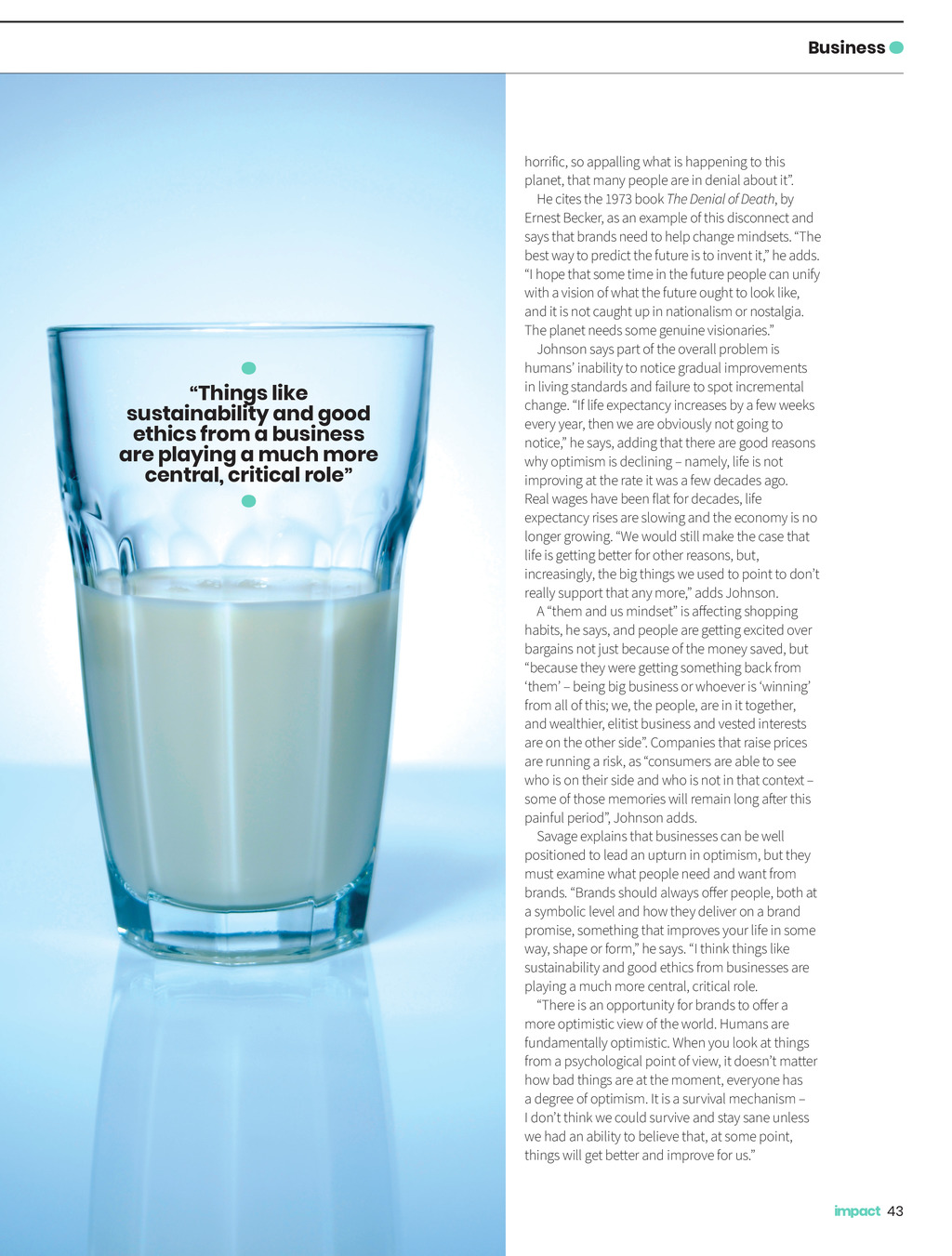
Business A glass half empty? Optimism is a valuable tool for most businesses, but if the feel-good factor declines, what is the financial impact of that for brands? Liam Kay finds out I t is a hard time to be an optimist. We are emerging from a worldwide pandemic; facing a cost-of-living crisis driven by spiralling fuel and energy prices and higher inflation rates; the effects of human activity on the environment are increasingly becoming obvious; and war has broken out in Ukraine, leading to a knock-on effect on food and supply chains. The future is not looking so rosy. With a few notable exceptions, businesses generally trade on optimism and goodwill in their advertising, products and brand image, whether that be a new car, house, investment tools, or simply food and drink. But is the current political and economic climate affecting that formula and is the loss of optimism part of a longer-term trend, or an unsustainable blip? Much of the current loss of optimism is reflected in consumer confidence figures. GfKs Consumer Confidence Index fell to its lowest levels since its records began, in 1974, in its May edition, reaching a score of -40, one point lower than the 2008 financial crisis. Joe Staton, client strategy director at GfK, says the cost-of-living crisis is the leading cause of economic pessimism. My glass feels rather half empty at the moment, looking at the numbers, he says. I cannot find any strong tailwinds that will boost consumer confidence. The headwinds are phenomenal. Consumers are similar to markets they trade on confidence and surety. Market research firm Trajectory has been running an optimism index since 2018 and has also noticed a recent collapse. The April 2022 index said 39% of us felt life had got worse during the past 50 years and would continue to decline over the next 20, compared with 37% who said the opposite. The cost-of-living crisis is a big factor in the fall in optimism, but other factors are at play. Trust in politicians is having an impact on optimism in a way it doesnt normally, explains Tom Johnson, managing director at Trajectory, as is nostalgia for an idealised past and levels of personal autonomy. Johnson adds that financial pressures, social fragmentation and declining trust in leaders are combining to create a different consumer and citizen mindset. Darren Savage, chief strategy officer at Tribal, says some evidence points to the younger generations being more optimistic as they have grown up in a much more connected and participatory culture, and they feel that, through such participation and connections, they can effect change. Trajectorys optimism index also supports the idea that younger generations are more likely to be optimistic about the future than their parents. It found that the Silent Generation, millennials and Generation Z were the least nostalgic, whereas the Baby Boomers and Generation X were most likely to feel things were getting worse. The environment is one of the big elephants in the room when we discuss humanitys innate optimism, or perceived lack of it. With the climate crisis likely to accelerate in the decades ahead, Savage thinks there is a disconnect it is so It is so horrific, so appalling what is happening to this planet, that many people are in denial about it 42 Impact ISSUE 38 2022_pp42-43_Business.indd 42 22/06/2022 16:04