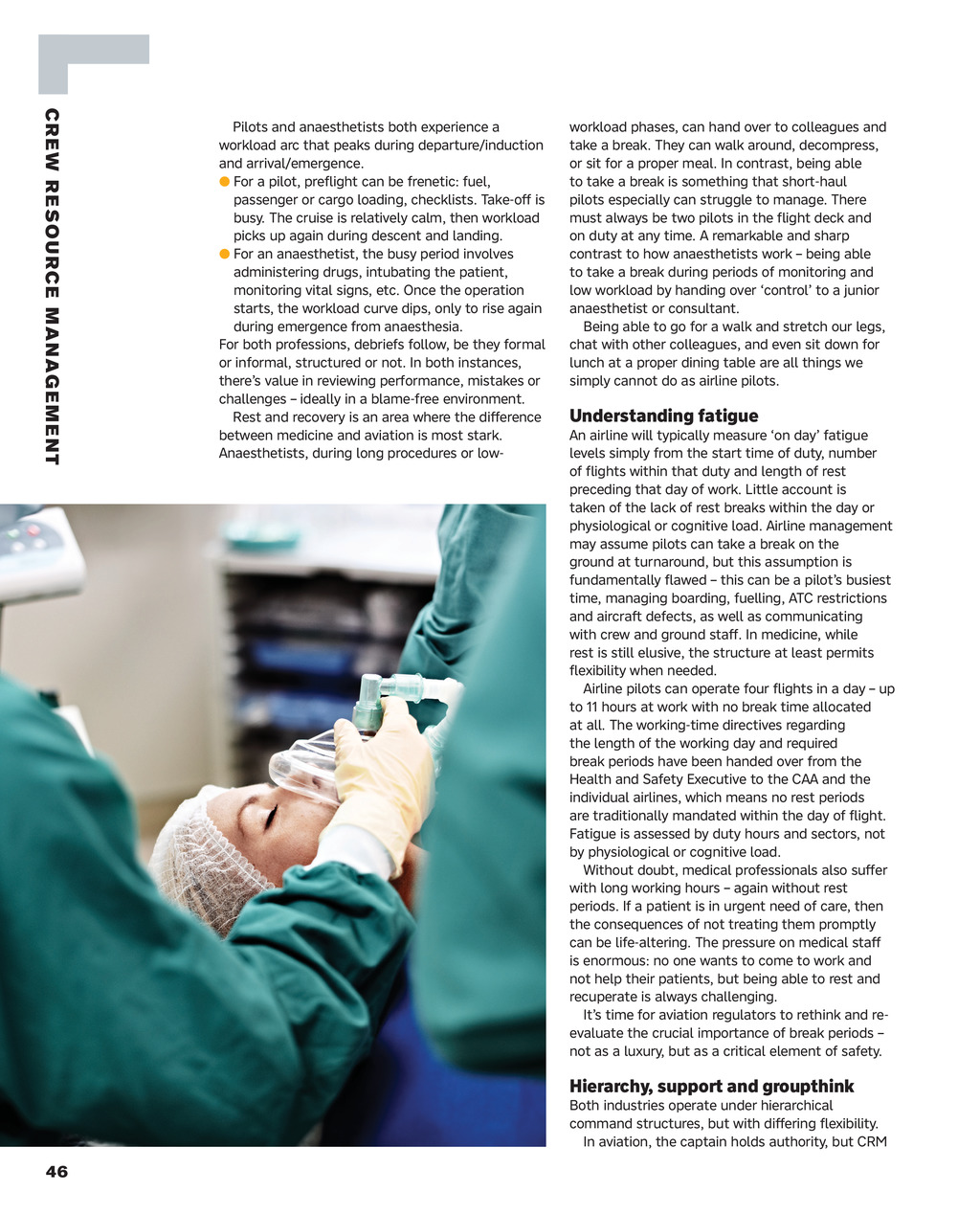
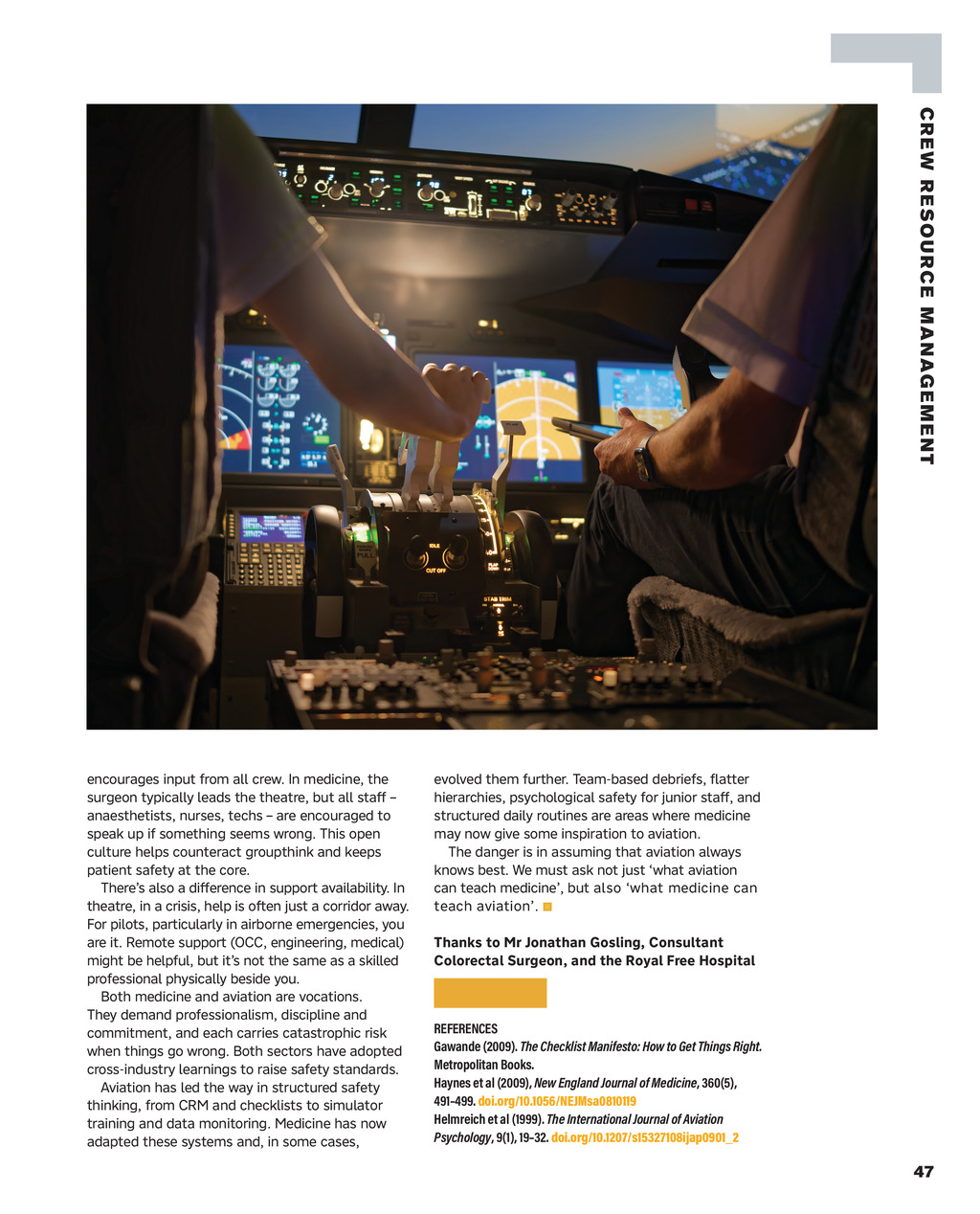

C R E W R E SO U R C E M A N AG E M E N T Pilots and anaesthetists both experience a workload arc that peaks during departure/induction and arrival/emergence. For a pilot, preflight can be frenetic: fuel, passenger or cargo loading, checklists. Take-off is busy. The cruise is relatively calm, then workload picks up again during descent and landing. For an anaesthetist, the busy period involves administering drugs, intubating the patient, monitoring vital signs, etc. Once the operation starts, the workload curve dips, only to rise again during emergence from anaesthesia. For both professions, debriefs follow, be they formal or informal, structured or not. In both instances, theres value in reviewing performance, mistakes or challenges ideally in a blame-free environment. Rest and recovery is an area where the difference between medicine and aviation is most stark. Anaesthetists, during long procedures or low- workload phases, can hand over to colleagues and take a break. They can walk around, decompress, or sit for a proper meal. In contrast, being able to take a break is something that short-haul pilots especially can struggle to manage. There must always be two pilots in the flight deck and on duty at any time. A remarkable and sharp contrast to how anaesthetists work being able to take a break during periods of monitoring and low workload by handing over control to a junior anaesthetist or consultant. Being able to go for a walk and stretch our legs, chat with other colleagues, and even sit down for lunch at a proper dining table are all things we simply cannot do as airline pilots. Understanding fatigue An airline will typically measure on day fatigue levels simply from the start time of duty, number of flights within that duty and length of rest preceding that day of work. Little account is taken of the lack of rest breaks within the day or physiological or cognitive load. Airline management may assume pilots can take a break on the ground at turnaround, but this assumption is fundamentally flawed this can be a pilots busiest time, managing boarding, fuelling, ATC restrictions and aircraft defects, as well as communicating with crew and ground staff. In medicine, while rest is still elusive, the structure at least permits flexibility when needed. Airline pilots can operate four flights in a day up to 11 hours at work with no break time allocated at all. The working-time directives regarding the length of the working day and required break periods have been handed over from the Health and Safety Executive to the CAA and the individual airlines, which means no rest periods are traditionally mandated within the day of flight. Fatigue is assessed by duty hours and sectors, not by physiological or cognitive load. Without doubt, medical professionals also suffer with long working hours again without rest periods. If a patient is in urgent need of care, then the consequences of not treating them promptly can be life-altering. The pressure on medical staff is enormous: no one wants to come to work and not help their patients, but being able to rest and recuperate is always challenging. Its time for aviation regulators to rethink and reevaluate the crucial importance of break periods not as a luxury, but as a critical element of safety. Hierarchy, support and groupthink Both industries operate under hierarchical command structures, but with differing flexibility. In aviation, the captain holds authority, but CRM 46 THE LOG Summer 25 pp44-47 CRM.indd 46 09/07/2025 15:48