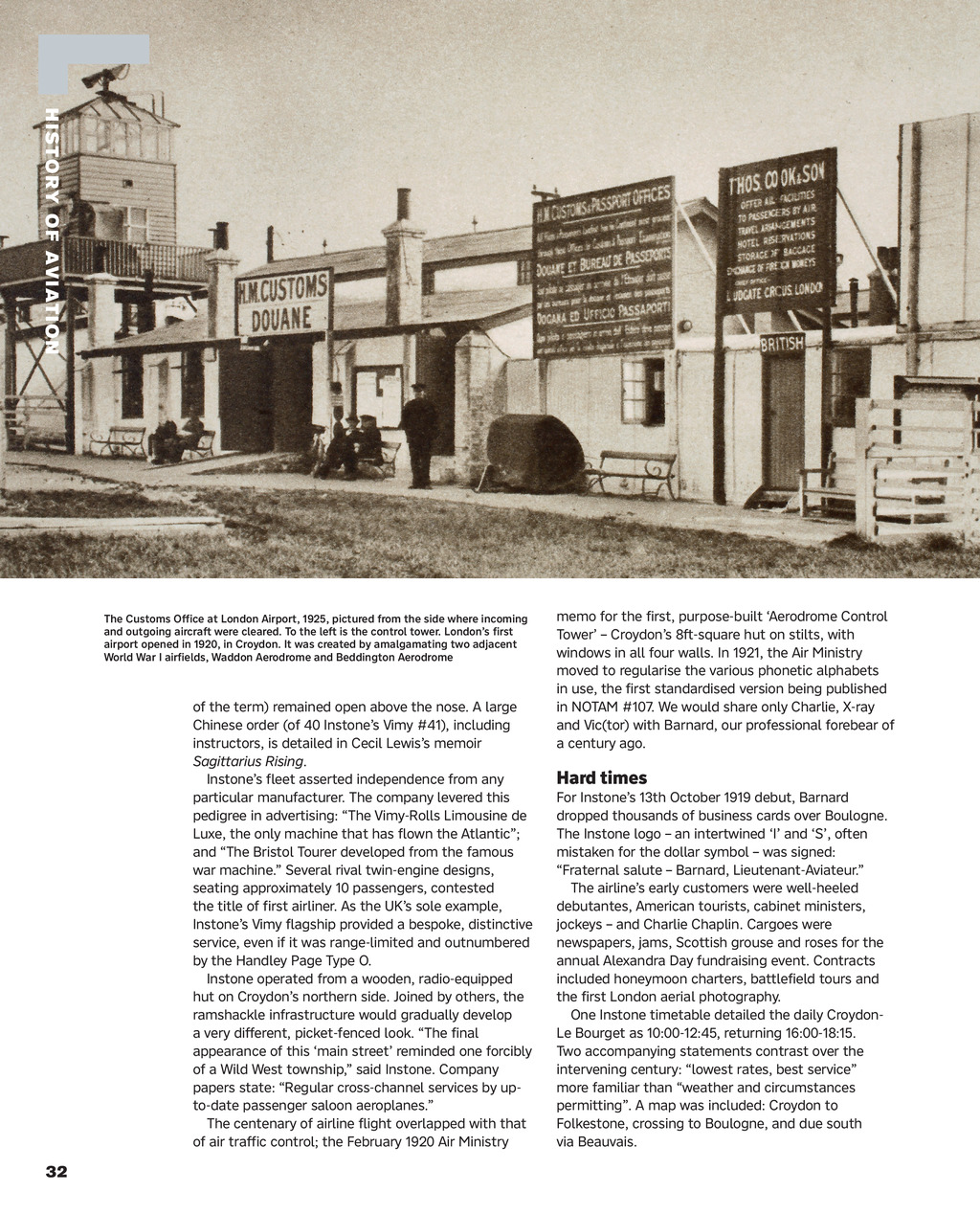
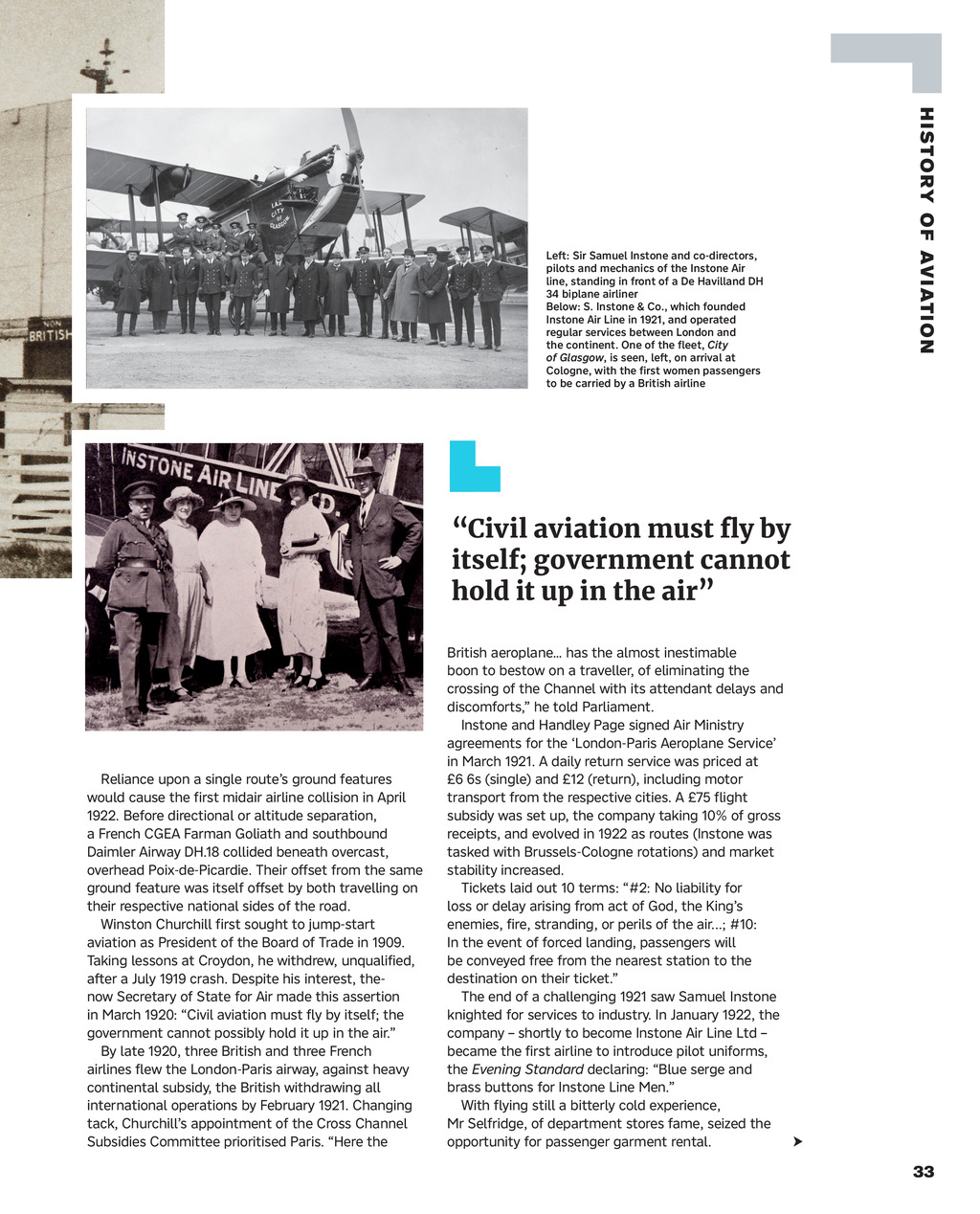
H I S T O RY O F AV I AT I O N The Customs Office at London Airport, 1925, pictured from the side where incoming and outgoing aircraft were cleared. To the left is the control tower. Londons first airport opened in 1920, in Croydon. It was created by amalgamating two adjacent World War I airfields, Waddon Aerodrome and Beddington Aerodrome of the term) remained open above the nose. A large Chinese order (of 40 Instones Vimy #41), including instructors, is detailed in Cecil Lewiss memoir Sagittarius Rising. Instones fleet asserted independence from any particular manufacturer. The company levered this pedigree in advertising: The Vimy-Rolls Limousine de Luxe, the only machine that has flown the Atlantic; and The Bristol Tourer developed from the famous war machine. Several rival twin-engine designs, seating approximately 10 passengers, contested the title of first airliner. As the UKs sole example, Instones Vimy flagship provided a bespoke, distinctive service, even if it was range-limited and outnumbered by the Handley Page Type O. Instone operated from a wooden, radio-equipped hut on Croydons northern side. Joined by others, the ramshackle infrastructure would gradually develop a very different, picket-fenced look. The final appearance of this main street reminded one forcibly of a Wild West township, said Instone. Company papers state: Regular cross-channel services by upto-date passenger saloon aeroplanes. The centenary of airline flight overlapped with that of air traffic control; the February 1920 Air Ministry memo for the first, purpose-built Aerodrome Control Tower Croydons 8ft-square hut on stilts, with windows in all four walls. In 1921, the Air Ministry moved to regularise the various phonetic alphabets in use, the first standardised version being published in NOTAM #107. We would share only Charlie, X-ray and Vic(tor) with Barnard, our professional forebear of a century ago. Hard times For Instones 13th October 1919 debut, Barnard dropped thousands of business cards over Boulogne. The Instone logo an intertwined I and S, often mistaken for the dollar symbol was signed: Fraternal salute Barnard, Lieutenant-Aviateur. The airlines early customers were well-heeled debutantes, American tourists, cabinet ministers, jockeys and Charlie Chaplin. Cargoes were newspapers, jams, Scottish grouse and roses for the annual Alexandra Day fundraising event. Contracts included honeymoon charters, battlefield tours and the first London aerial photography. One Instone timetable detailed the daily CroydonLe Bourget as 10:00-12:45, returning 16:00-18:15. Two accompanying statements contrast over the intervening century: lowest rates, best service more familiar than weather and circumstances permitting. A map was included: Croydon to Folkestone, crossing to Boulogne, and due south via Beauvais. 32 THE LOG Summer 25 pp30-35 History of Commercial Aviation.indd 32 09/07/2025 16:33