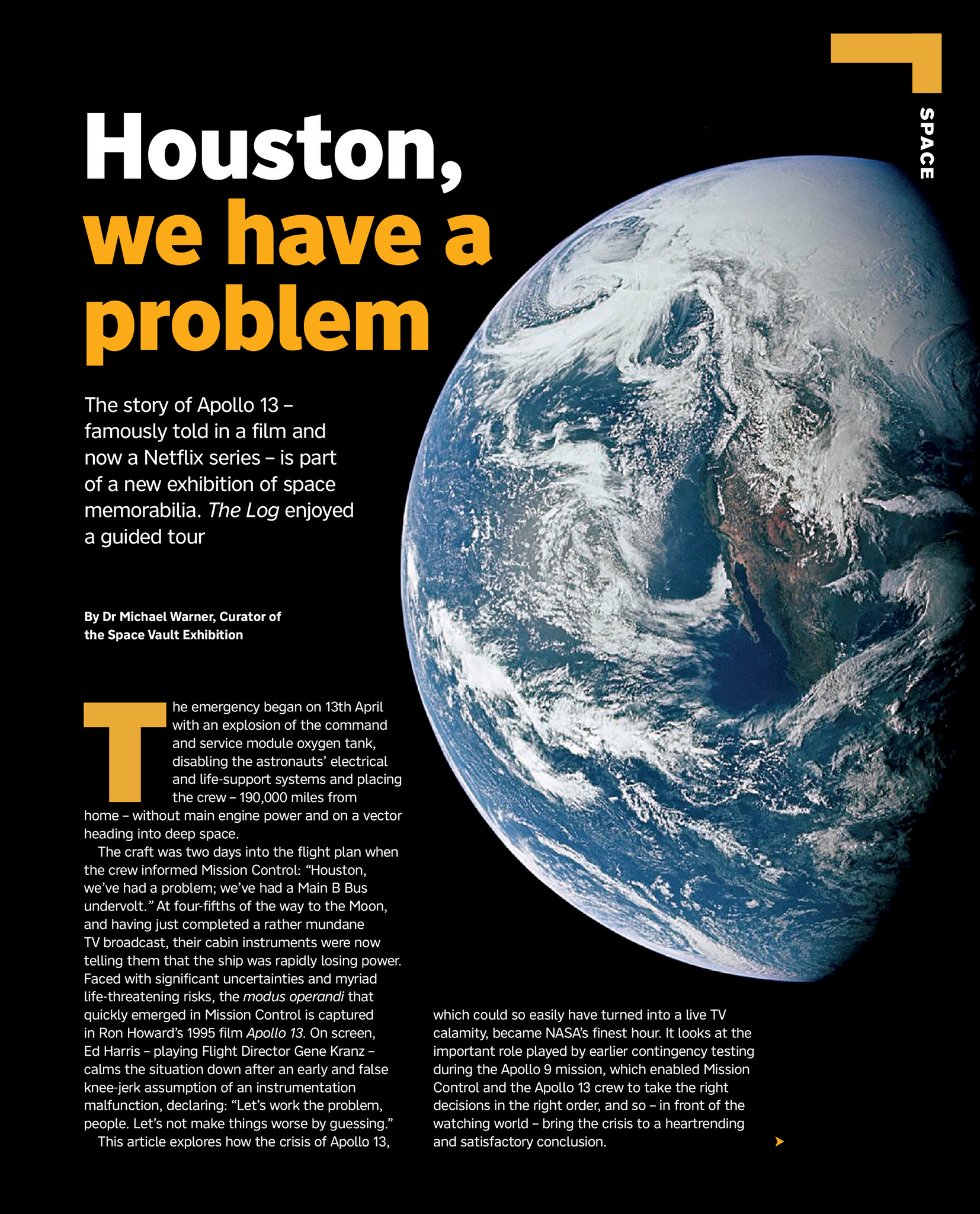

S PAC E n Houston, we have a problem The story of Apollo 13 famously told in a film and now a Netflix series is part of a new exhibition of space memorabilia. The Log enjoyed a guided tour By Dr Michael Warner, Curator of the Space Vault Exhibition T he emergency began on 13th April with an explosion of the command and service module oxygen tank, disabling the astronauts electrical and life-support systems and placing the crew 190,000 miles from home without main engine power and on a vector heading into deep space. The craft was two days into the flight plan when the crew informed Mission Control: Houston, weve had a problem; weve had a Main B Bus undervolt. At four-fifths of the way to the Moon, and having just completed a rather mundane TV broadcast, their cabin instruments were now telling them that the ship was rapidly losing power. Faced with significant uncertainties and myriad life-threatening risks, the modus operandi that quickly emerged in Mission Control is captured in Ron Howards 1995 film Apollo 13. On screen, Ed Harris playing Flight Director Gene Kranz calms the situation down after an early and false knee-jerk assumption of an instrumentation malfunction, declaring: Lets work the problem, people. Lets not make things worse by guessing. This article explores how the crisis of Apollo 13, which could so easily have turned into a live TV calamity, became NASAs finest hour. It looks at the important role played by earlier contingency testing during the Apollo 9 mission, which enabled Mission Control and the Apollo 13 crew to take the right decisions in the right order, and so in front of the watching world bring the crisis to a heartrending and satisfactory conclusion. 31 THE LOG Spring 25 pp31-35 Apollo 13 V2.indd 31 17/03/2025 14:20