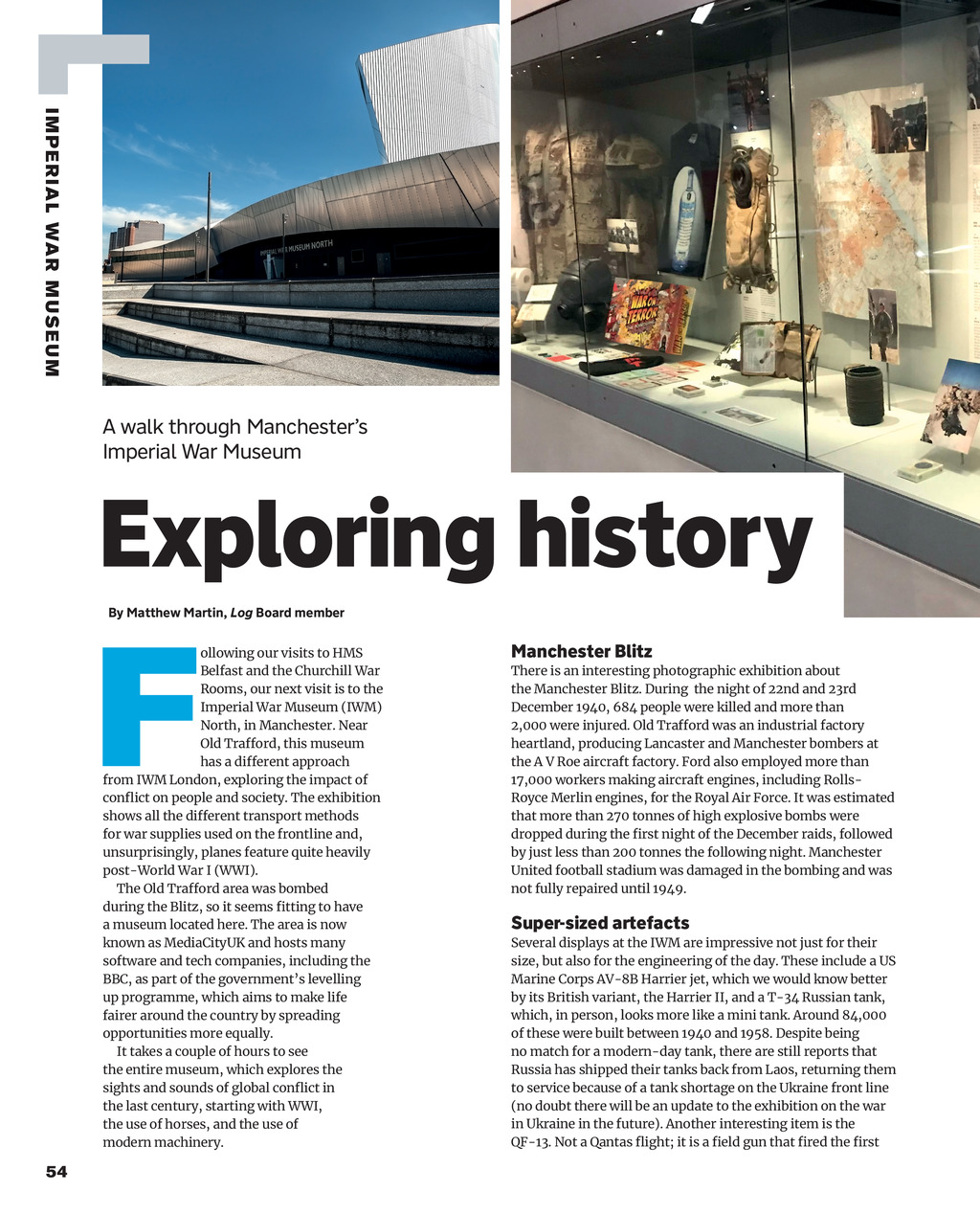
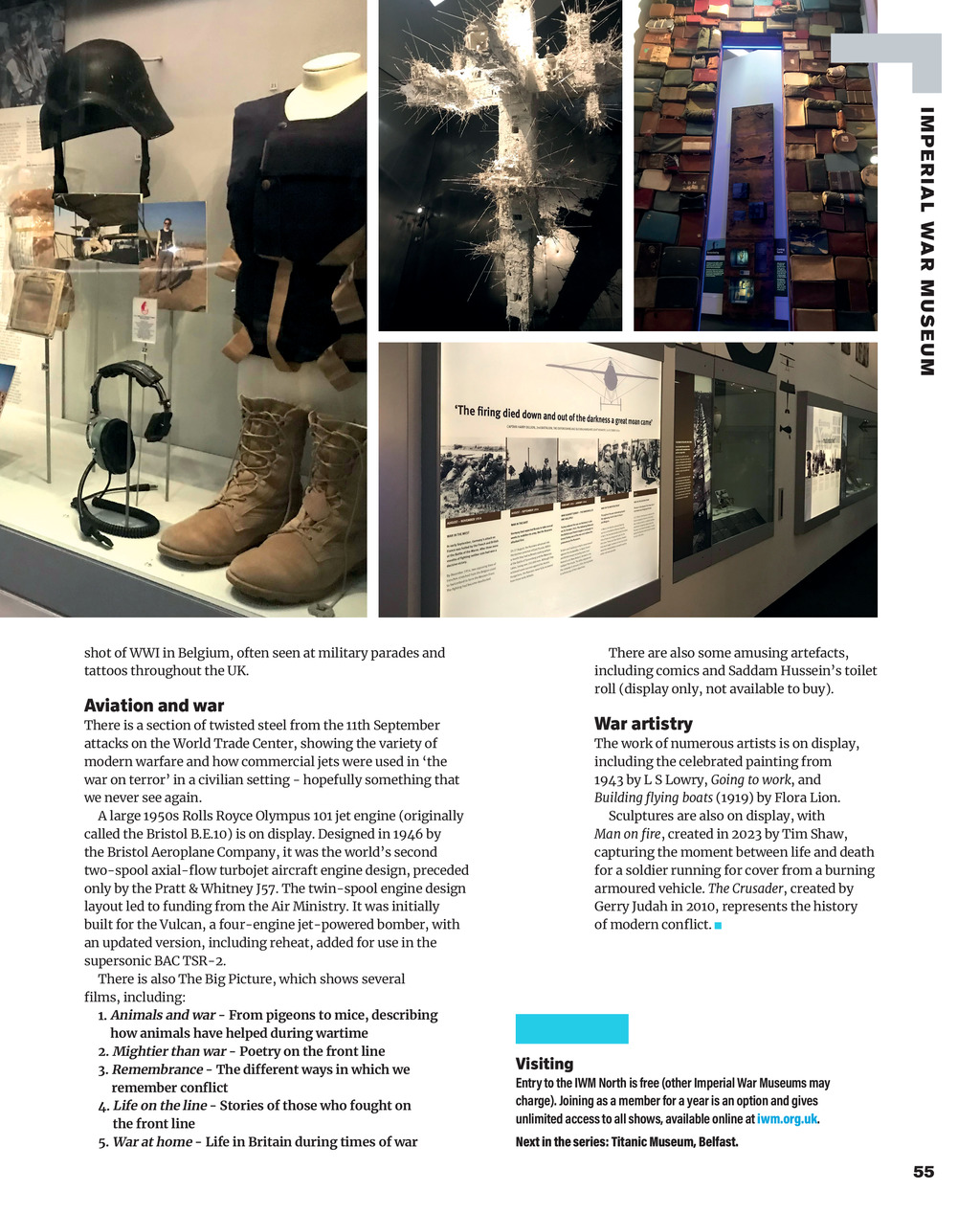

I M P E R I A L WA R M US E U M A walk through Manchesters Imperial War Museum Exploring history By Matthew Martin, Log Board member F ollowing our visits to HMS Belfast and the Churchill War Rooms, our next visit is to the Imperial War Museum (IWM) North, in Manchester. Near Old Trafford, this museum has a different approach from IWM London, exploring the impact of conflict on people and society. The exhibition shows all the different transport methods for war supplies used on the frontline and, unsurprisingly, planes feature quite heavily post-World War I (WWI). The Old Trafford area was bombed during the Blitz, so it seems fitting to have a museum located here. The area is now known as MediaCityUK and hosts many software and tech companies, including the BBC, as part of the governments levelling up programme, which aims to make life fairer around the country by spreading opportunities more equally. It takes a couple of hours to see the entire museum, which explores the sights and sounds of global conflict in the last century, starting with WWI, the use of horses, and the use of modern machinery. Manchester Blitz There is an interesting photographic exhibition about the Manchester Blitz. During the night of 22nd and 23rd December 1940, 684 people were killed and more than 2,000 were injured. Old Trafford was an industrial factory heartland, producing Lancaster and Manchester bombers at the A V Roe aircraft factory. Ford also employed more than 17,000 workers making aircraft engines, including RollsRoyce Merlin engines, for the Royal Air Force. It was estimated that more than 270 tonnes of high explosive bombs were dropped during the first night of the December raids, followed by just less than 200 tonnes the following night. Manchester United football stadium was damaged in the bombing and was not fully repaired until 1949. Super-sized artefacts Several displays at the IWM are impressive not just for their size, but also for the engineering of the day. These include a US Marine Corps AV-8B Harrier jet, which we would know better by its British variant, the Harrier II, and a T-34 Russian tank, which, in person, looks more like a mini tank. Around 84,000 of these were built between 1940 and 1958. Despite being no match for a modern-day tank, there are still reports that Russia has shipped their tanks back from Laos, returning them to service because of a tank shortage on the Ukraine front line (no doubt there will be an update to the exhibition on the war in Ukraine in the future). Another interesting item is the QF-13. Not a Qantas flight; it is a field gun that fired the first 54 THE LOG Win 24 pp54-55 Imperial War Museum Manchester.indd 54 01/12/2023 14:58