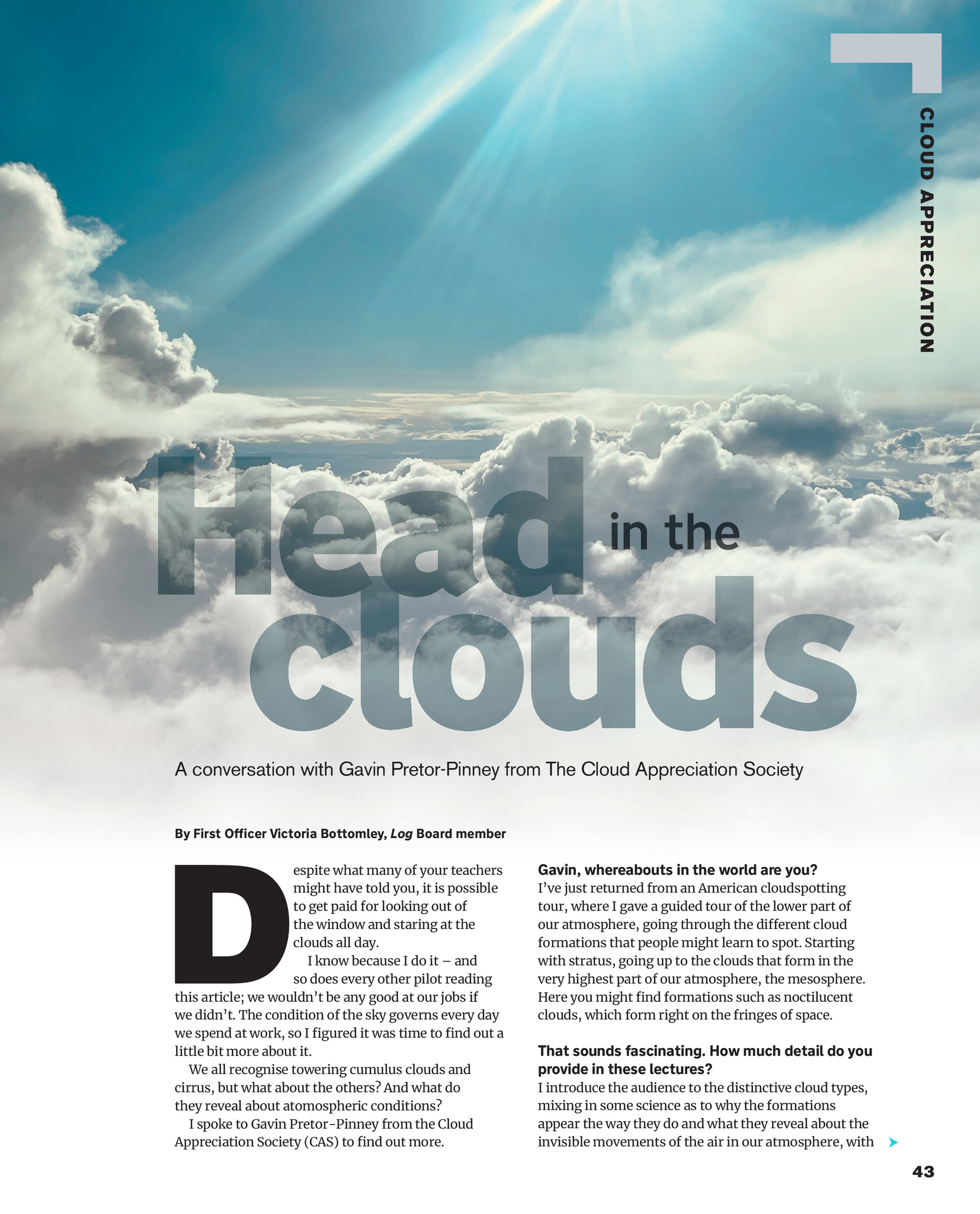

C L O U D A P P R E C I AT I O N Head in the clouds A conversation with Gavin Pretor-Pinney from The Cloud Appreciation Society By First Officer Victoria Bottomley, Log Board member D espite what many of your teachers might have told you, it is possible to get paid for looking out of the window and staring at the clouds all day. I know because I do it and so does every other pilot reading this article; we wouldnt be any good at our jobs if we didnt. The condition of the sky governs every day we spend at work, so I figured it was time to find out a little bit more about it. We all recognise towering cumulus clouds and cirrus, but what about the others? And what do they reveal about atomospheric conditions? I spoke to Gavin Pretor-Pinney from the Cloud Appreciation Society (CAS) to find out more. Gavin, whereabouts in the world are you? Ive just returned from an American cloudspotting tour, where I gave a guided tour of the lower part of our atmosphere, going through the different cloud formations that people might learn to spot. Starting with stratus, going up to the clouds that form in the very highest part of our atmosphere, the mesosphere. Here you might find formations such as noctilucent clouds, which form right on the fringes of space. That sounds fascinating. How much detail do you provide in these lectures? I introduce the audience to the distinctive cloud types, mixing in some science as to why the formations appear the way they do and what they reveal about the invisible movements of the air in our atmosphere, with 43 THE LOG Win 24 pp43-46 Clouds.indd 43 01/12/2023 14:56