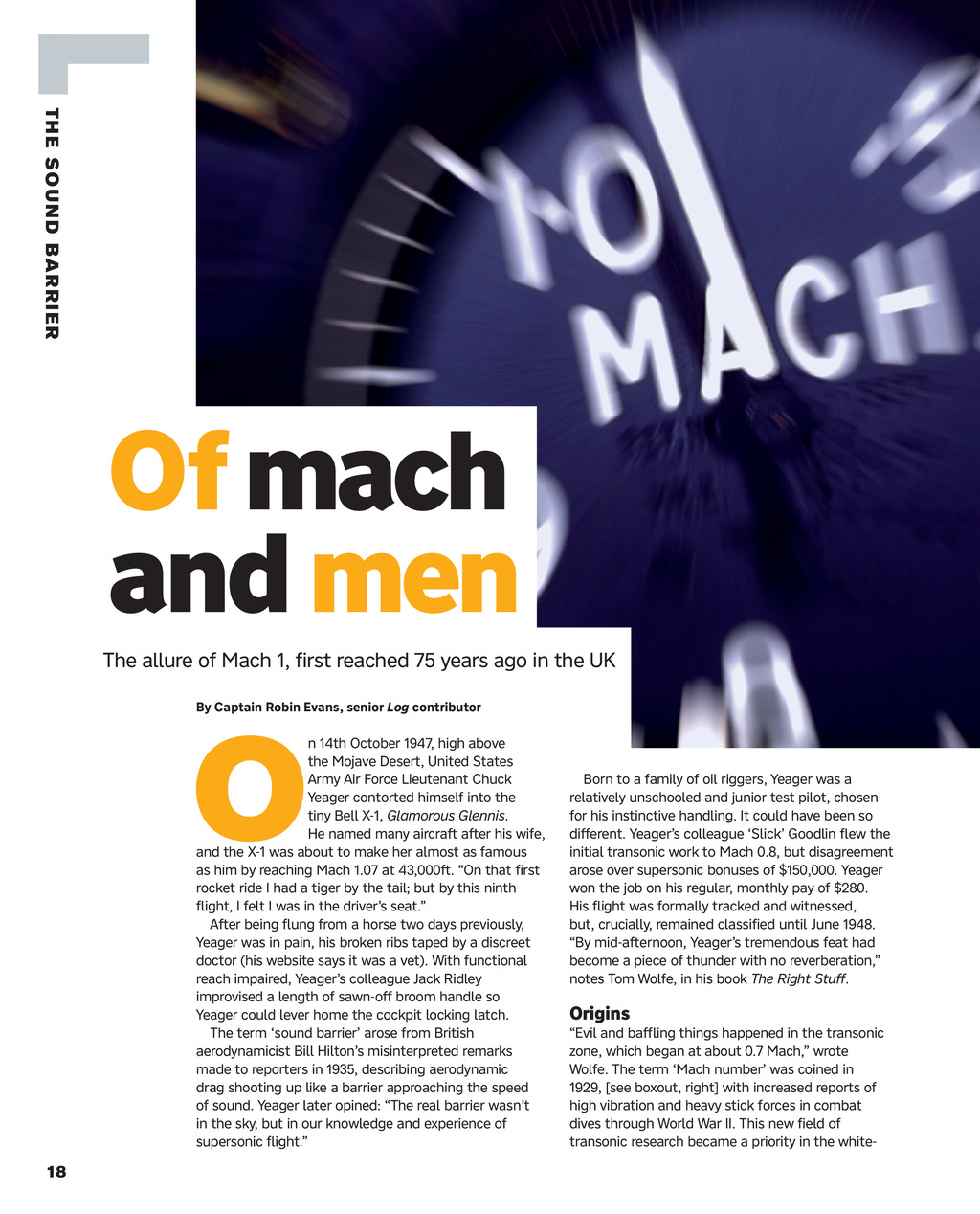
T H E SO U N D BA R R I E R Of mach and men The allure of Mach 1, first reached 75 years ago in the UK By Captain Robin Evans, senior Log contributor O n 14th October 1947, high above the Mojave Desert, United States Army Air Force Lieutenant Chuck Yeager contorted himself into the tiny Bell X-1, Glamorous Glennis. He named many aircraft after his wife, and the X-1 was about to make her almost as famous as him by reaching Mach 1.07 at 43,000ft. On that first rocket ride I had a tiger by the tail; but by this ninth flight, I felt I was in the drivers seat. After being flung from a horse two days previously, Yeager was in pain, his broken ribs taped by a discreet doctor (his website says it was a vet). With functional reach impaired, Yeagers colleague Jack Ridley improvised a length of sawn-off broom handle so Yeager could lever home the cockpit locking latch. The term sound barrier arose from British aerodynamicist Bill Hiltons misinterpreted remarks made to reporters in 1935, describing aerodynamic drag shooting up like a barrier approaching the speed of sound. Yeager later opined: The real barrier wasnt in the sky, but in our knowledge and experience of supersonic flight. Born to a family of oil riggers, Yeager was a relatively unschooled and junior test pilot, chosen for his instinctive handling. It could have been so different. Yeagers colleague Slick Goodlin flew the initial transonic work to Mach 0.8, but disagreement arose over supersonic bonuses of $150,000. Yeager won the job on his regular, monthly pay of $280. His flight was formally tracked and witnessed, but, crucially, remained classified until June 1948. By mid-afternoon, Yeagers tremendous feat had become a piece of thunder with no reverberation, notes Tom Wolfe, in his book The Right Stuff. Origins Evil and baffling things happened in the transonic zone, which began at about 0.7 Mach, wrote Wolfe. The term Mach number was coined in 1929, [see boxout, right] with increased reports of high vibration and heavy stick forces in combat dives through World War II. This new field of transonic research became a priority in the white- 18 THE LOG Win 24 pp18-21 Sound barrier.indd 18 01/12/2023 15:37