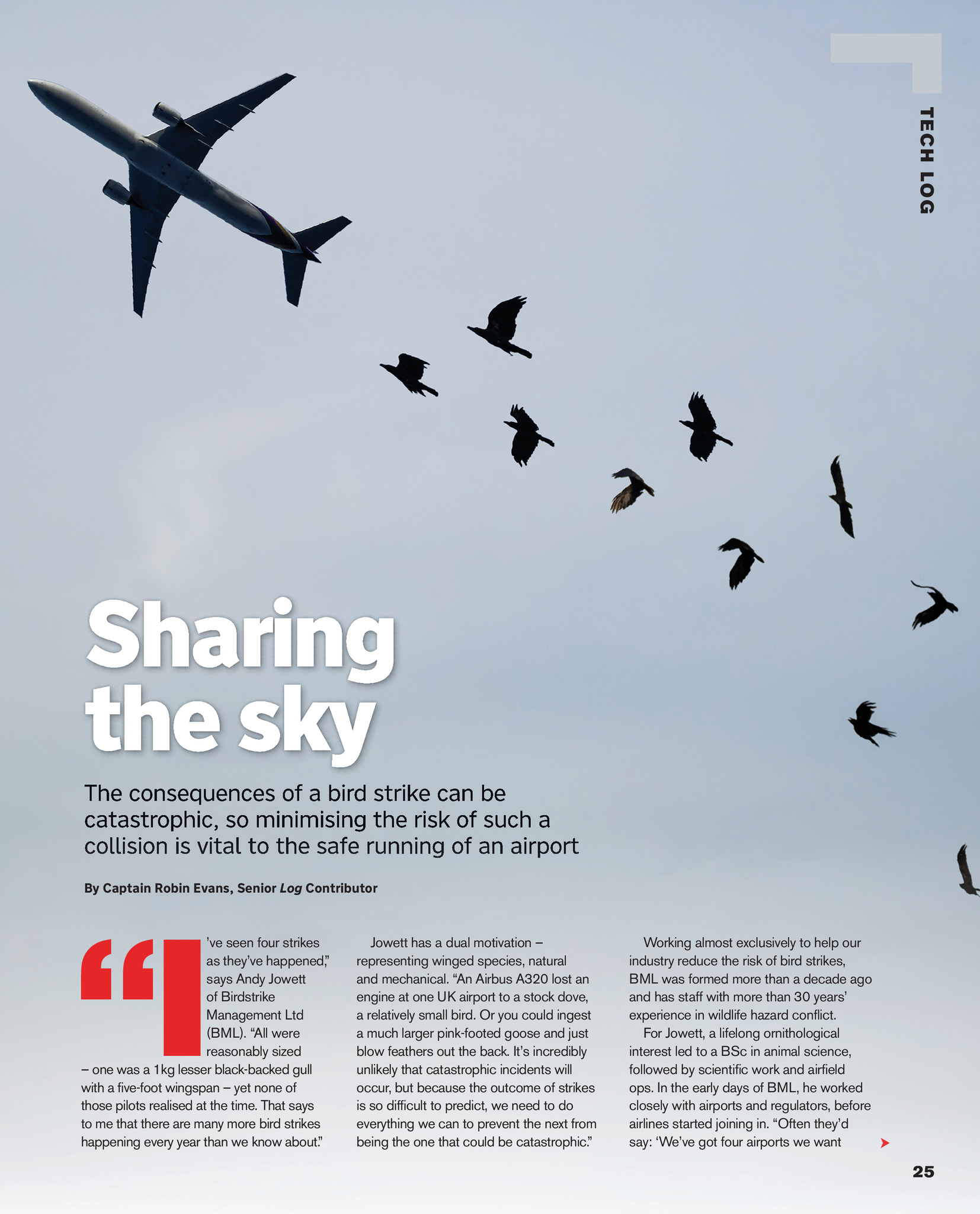
TECH LOG Sharing the sky The consequences of a bird strike can be catastrophic, so minimising the risk of such a collision is vital to the safe running of an airport By Captain Robin Evans, Senior Log Contributor I ve seen four strikes as theyve happened, says Andy Jowett of Birdstrike Management Ltd (BML). All were reasonably sized one was a 1kg lesser black-backed gull with a five-foot wingspan yet none of those pilots realised at the time. That says to me that there are many more bird strikes happening every year than we know about. Jowett has a dual motivation representing winged species, natural and mechanical. An Airbus A320 lost an engine at one UK airport to a stock dove, a relatively small bird. Or you could ingest a much larger pink-footed goose and just blow feathers out the back. Its incredibly unlikely that catastrophic incidents will occur, but because the outcome of strikes is so difficult to predict, we need to do everything we can to prevent the next from being the one that could be catastrophic. Working almost exclusively to help our industry reduce the risk of bird strikes, BML was formed more than a decade ago and has staff with more than 30 years experience in wildlife hazard conflict. For Jowett, a lifelong ornithological interest led to a BSc in animal science, followed by scientific work and airfield ops. In the early days of BML, he worked closely with airports and regulators, before airlines started joining in. Often theyd say: Weve got four airports we want 25 THE LOG Autumn 24 pp25-29 Birdstrikes.indd 25 13/11/2024 14:22