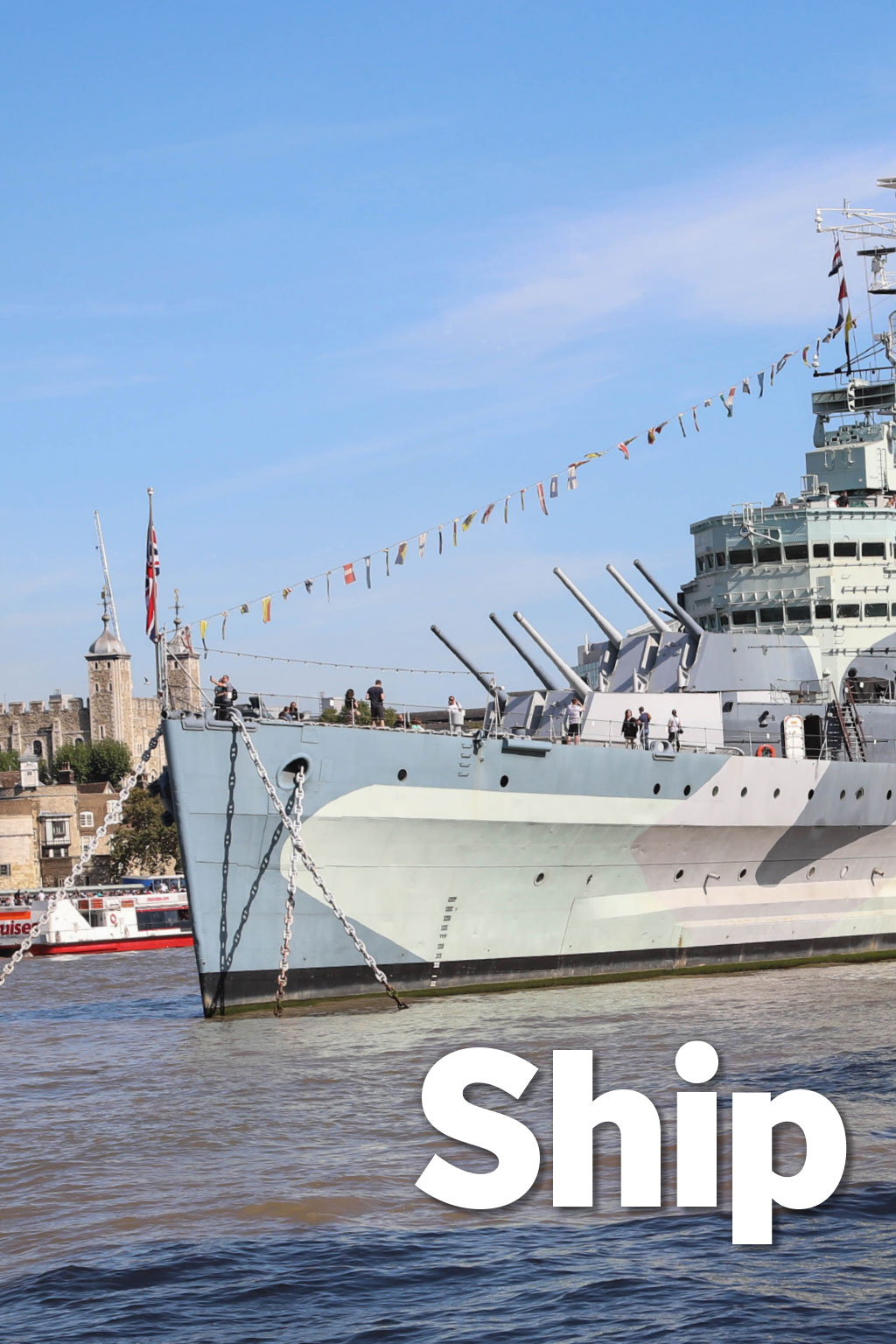
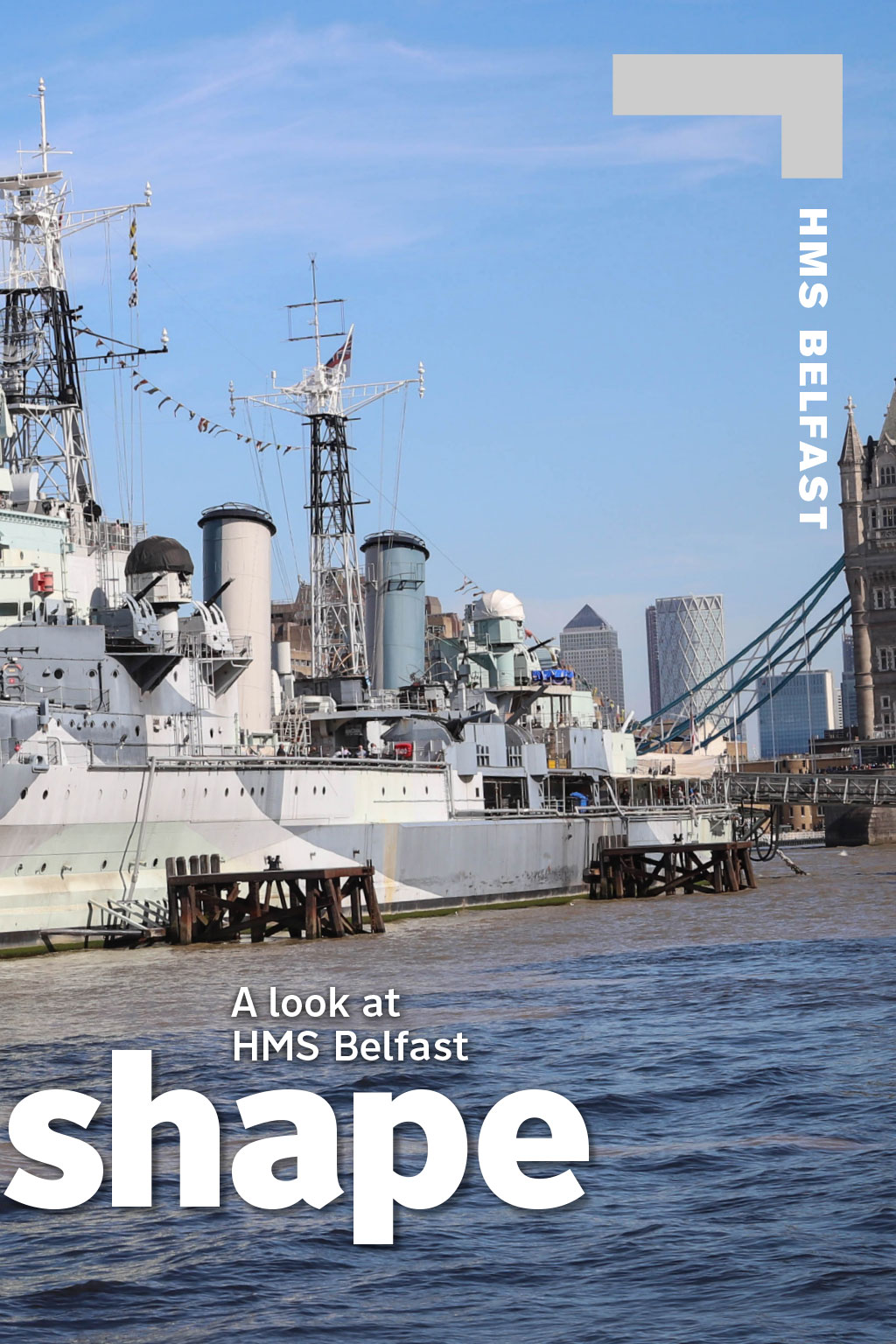
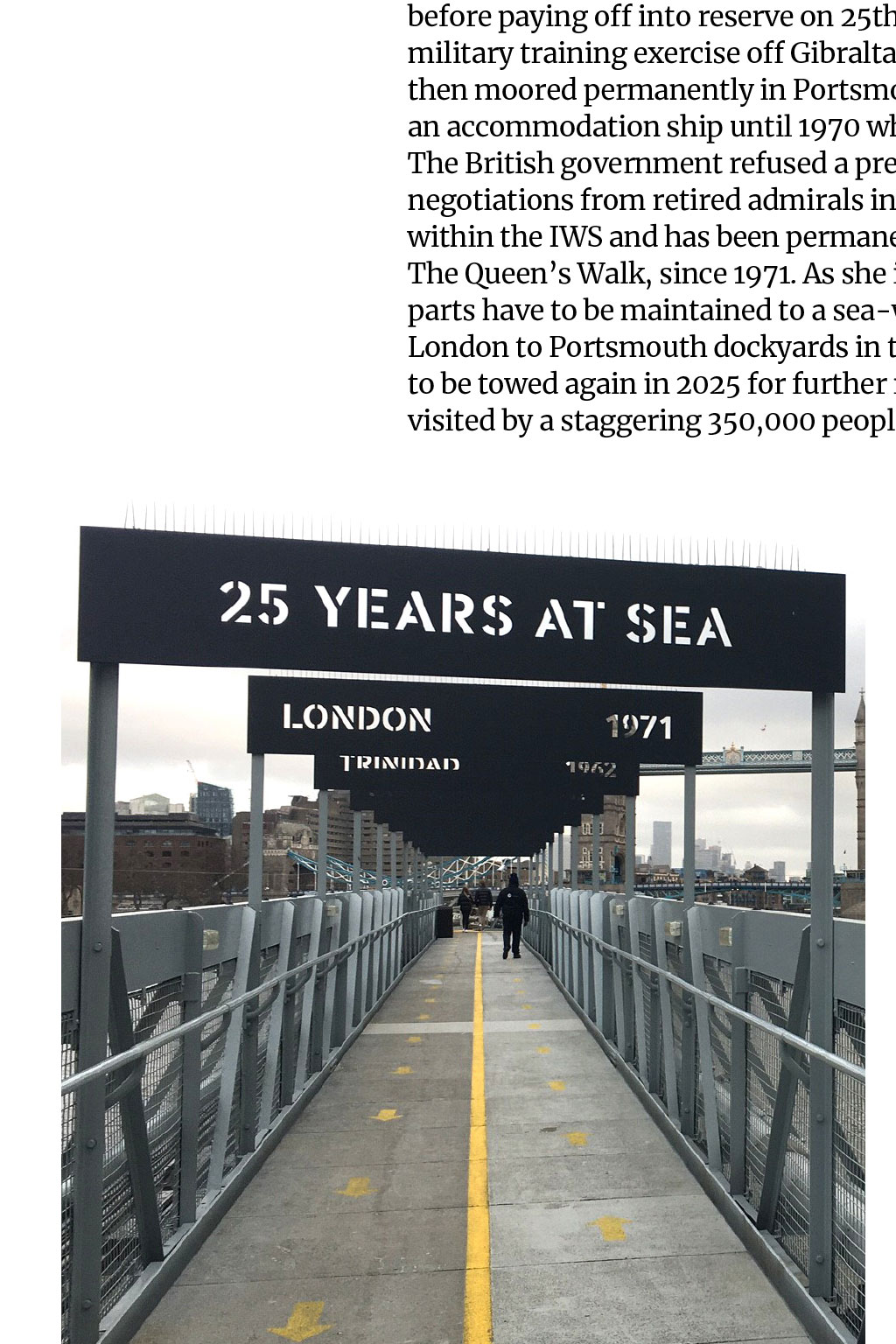
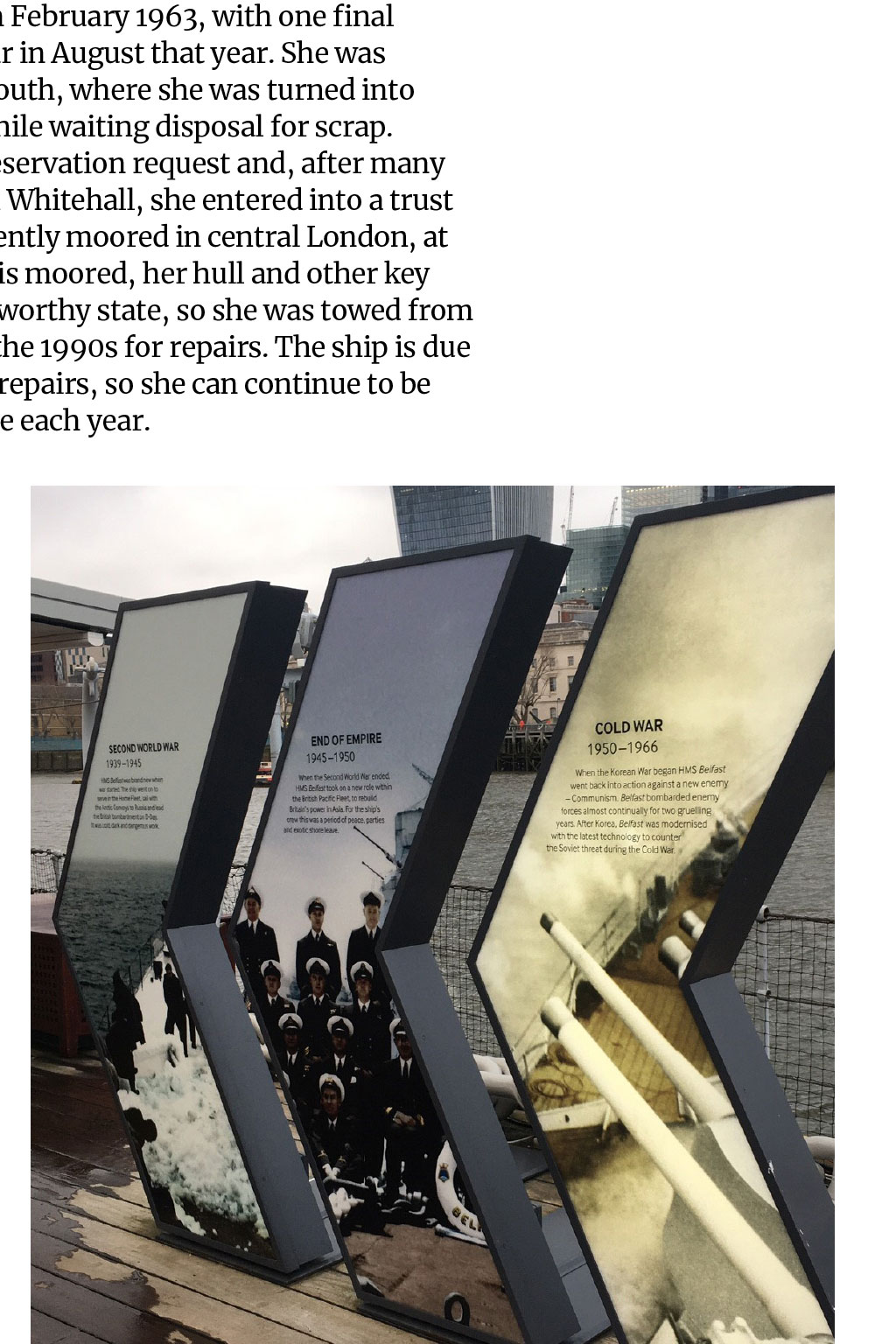
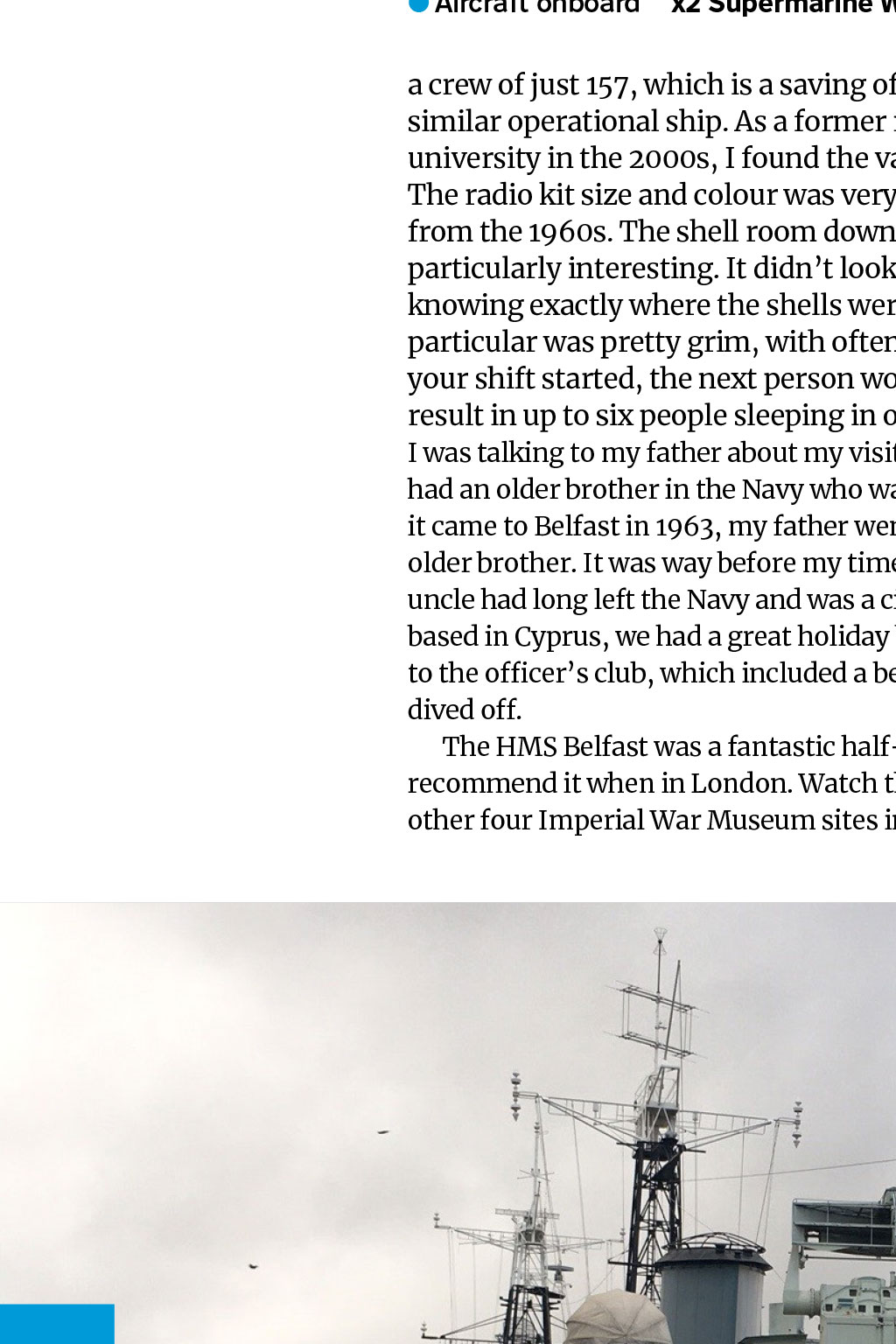
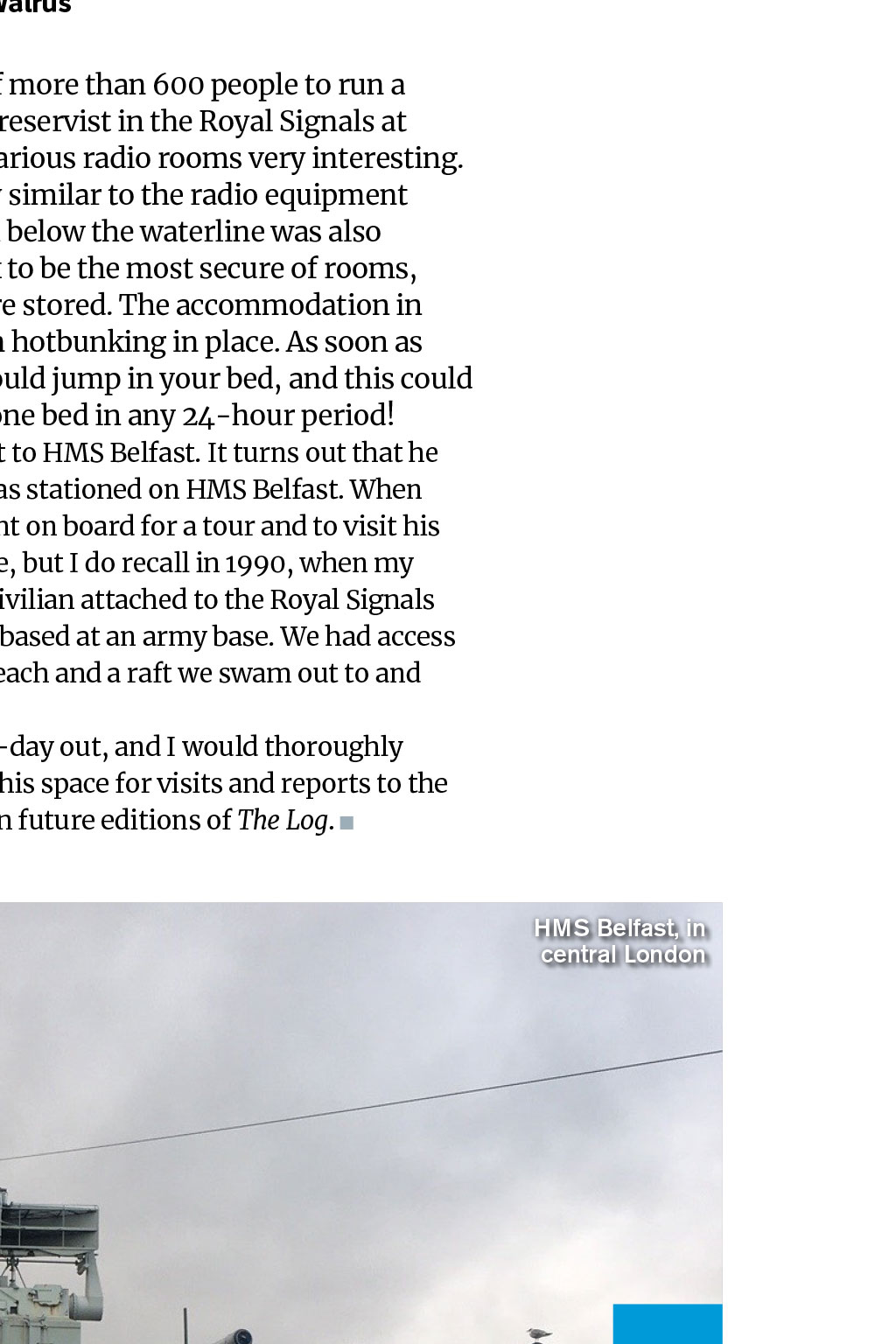
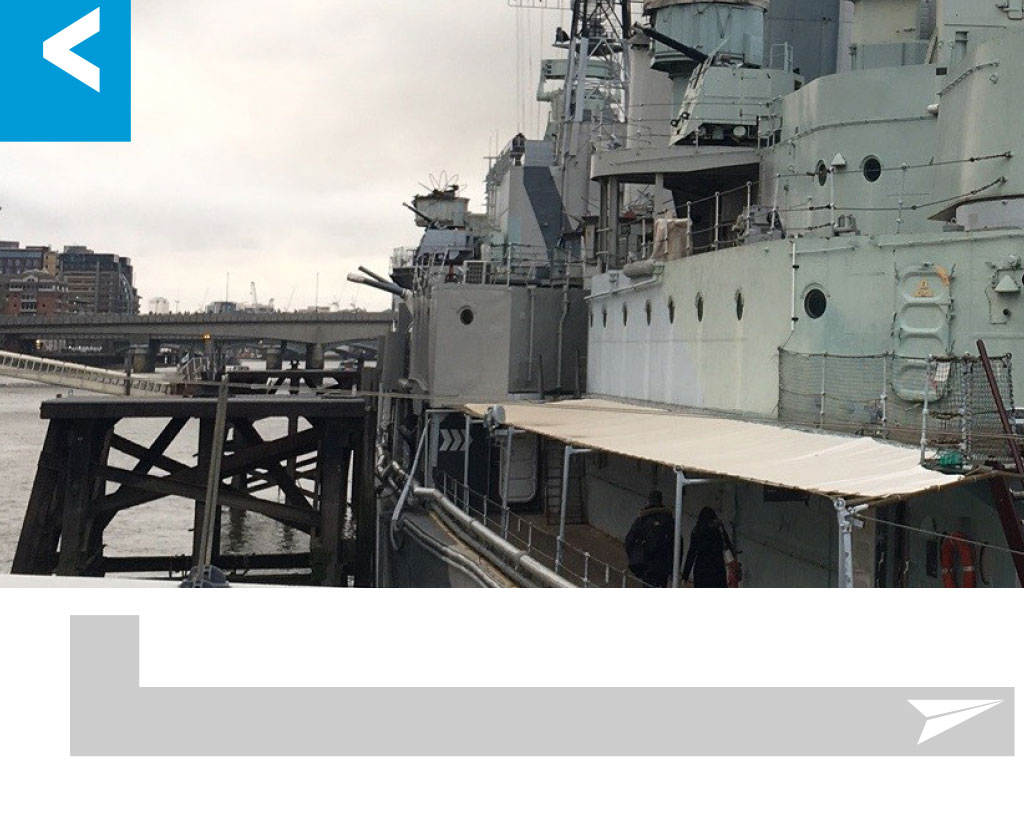
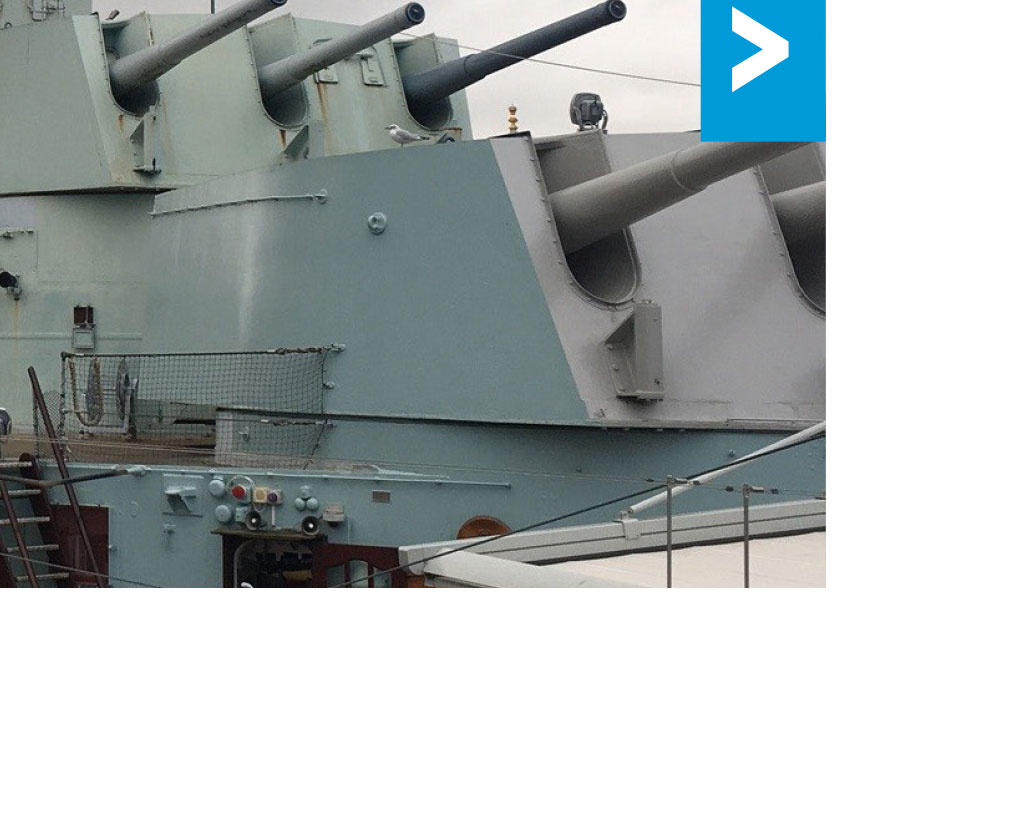
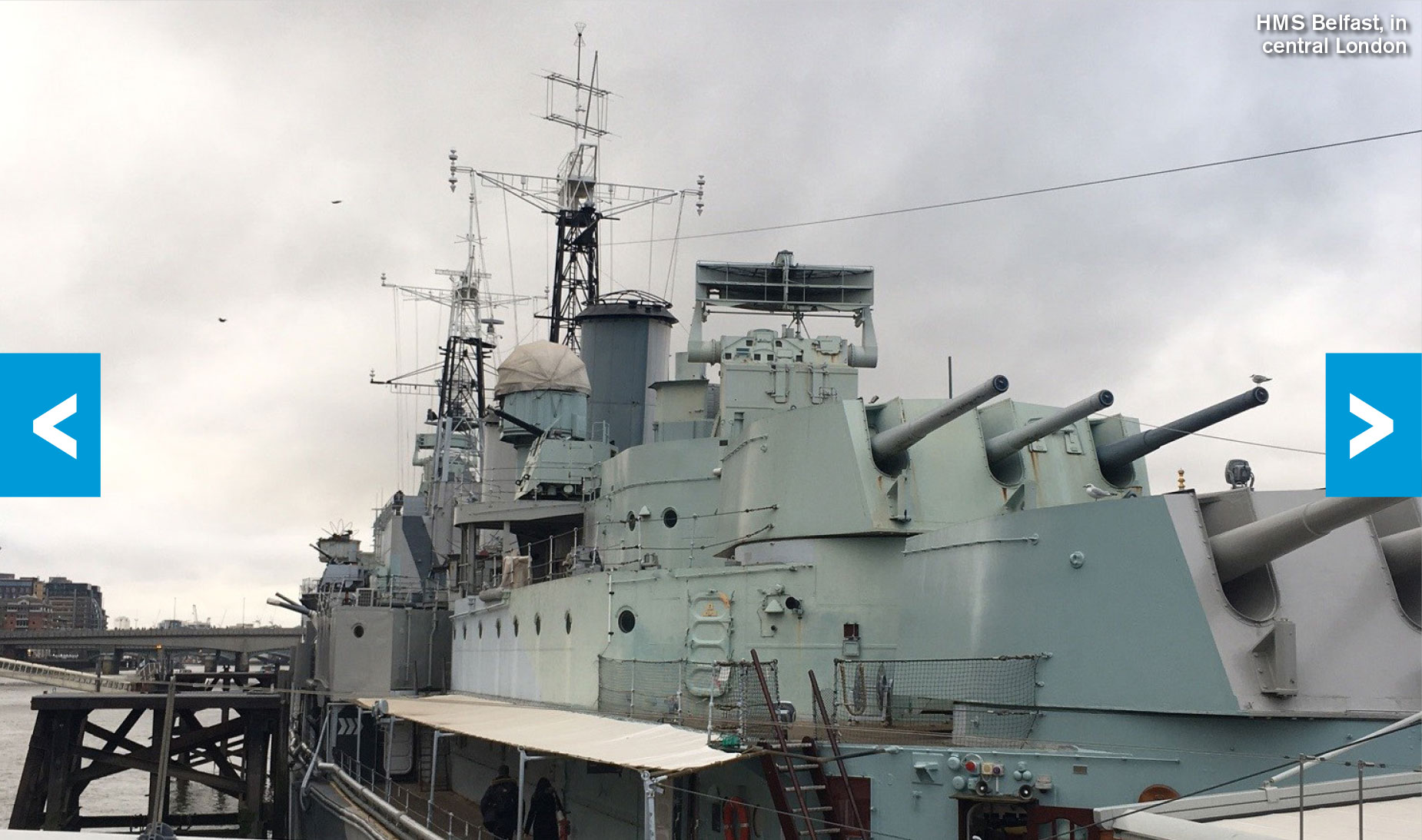


HMS BELFAST Ship shape By First Officer Matthew Martin, Log Board member Founded in 1917, the original Imperial War Museum was created to record the civil and military effort of the UK and its Empire during World War I. This has since expanded to include all conflicts in which British or Commonwealth forces have been involved since 1914. There are currently five museums in the collection, spread across the country: IWM London, IWM Duxford, Churchill War Rooms, IWM North and HMS Belfast. History HMS Belfast is a Town Class light cruiser that began construction in 1936 in, of course, Belfast. She was built relatively quickly by the famous Harland and Wolff shipbuilders (think the yellow and red cranes). She was launched on St Patricks Day in 1938 by the wife of Neville Chamberlain. After sea trials, she was commissioned in a timely manner in August 1939. Straightaway, the ship saw active service as part of the British naval blockade against Germany. However, her first period of service was to be short-lived as, in November 1939, she struck a German mine and spent the next couple of years undergoing repairs before returning to action three years later with an upgrade in guns and armoured steel. Seeing out the rest of World War II with several successful operations, including the landings in Normandy (D-Day), she was then deployed to the other side of the world to join the British Pacific fleet. It was in 1950-52 that she saw most of her combat operations, in the Korean War, many times more than in World War II. Post-World War II In the early 1960s, plans were drawn up for the conversion of HMS Belfast to a hybrid helicopter cruiser for amphibious operations, but this was rejected because it would take too long and not be cost-effective. In 1962, she made a final visit to Belfast from 23rd-29th November, before paying off into reserve on 25th February 1963, with one final military training exercise off Gibraltar in August that year. She was then moored permanently in Portsmouth, where she was turned into an accommodation ship until 1970 while waiting disposal for scrap. The British government refused a preservation request and, after many negotiations from retired admirals in Whitehall, she entered into a trust within the IWS and has been permanently moored in central London, at The Queens Walk, since 1971. As she is moored, her hull and other key parts have to be maintained to a sea-worthy state, so she was towed from London to Portsmouth dockyards in the 1990s for repairs. The ship is due to be towed again in 2025 for further repairs, so she can continue to be visited by a staggering 350,000 people each year. The engine room felt more like Willy Wonkas chocolate factory, with the number of dials, buttons, and levers around Onboard A visit to the ship is fascinating, with most areas open for viewing. It is also available for hire for private parties and meeting events. The number of decks and rooms is staggering, with three decks below the waterline, which were the engine rooms, and you can see what a dangerous working environment it was down there. Imagine being out in the middle of sea during a war at full speed. The risk of having the engine room doors closed if there is damage from a Uboat doesnt bear thinking about. The engine room felt more like Willy Wonkas chocolate factory, with the number of dials, buttons and levers around. I am sure the type rating for these engines was no walk in the park! When compared to an airliner, the weight of the ship and the amount of fuel needed to power it and get it moving was impressive. What with the heavy machinery in the kitchen even the floor, tiled with 0.5cm-thick tiles it seems weight was no issue during construction. I would doubt they would be so extravagant today, with weight tolerances and efficiency levels demanded. The new HMS Belfast, due to be delivered in the next few years, has HMS Belfast technical stats Weight Length Crew Propulsion Speed Aircraft onboard 11,500 tonnes 187 metres 761 60,000 KW x4 Parsons single reduction geared steam turbines 32 knots x2 Supermarine Walrus a crew of just 157, which is a saving of more than 600 people to run a similar operational ship. As a former reservist in the Royal Signals at university in the 2000s, I found the various radio rooms very interesting. The radio kit size and colour was very similar to the radio equipment from the 1960s. The shell room down below the waterline was also particularly interesting. It didnt look to be the most secure of rooms, knowing exactly where the shells were stored. The accommodation in particular was pretty grim, with often hotbunking in place. As soon as your shift started, the next person would jump in your bed, and this could result in up to six people sleeping in one bed in any 24-hour period! I was talking to my father about my visit to HMS Belfast. It turns out that he had an older brother in the Navy who was stationed on HMS Belfast. When it came to Belfast in 1963, my father went on board for a tour and to visit his older brother. It was way before my time, but I do recall in 1990, when my uncle had long left the Navy and was a civilian attached to the Royal Signals based in Cyprus, we had a great holiday based at an army base. We had access to the officers club, which included a beach and a raft we swam out to and dived off. The HMS Belfast was a fantastic half-day out, and I would thoroughly recommend it when in London. Watch this space for visits and reports to the other four Imperial War Museum sites in future editions of The Log. HMS Belfast, in central London A peek inside the captains cabin Dental facilities were provided on board Cables weave their way along the engine room Down in the dark depths of the engine room All mod cons in the ships kitchen HMS Belfasts switch-filled radio room A store of shells A fully-equipped workshop