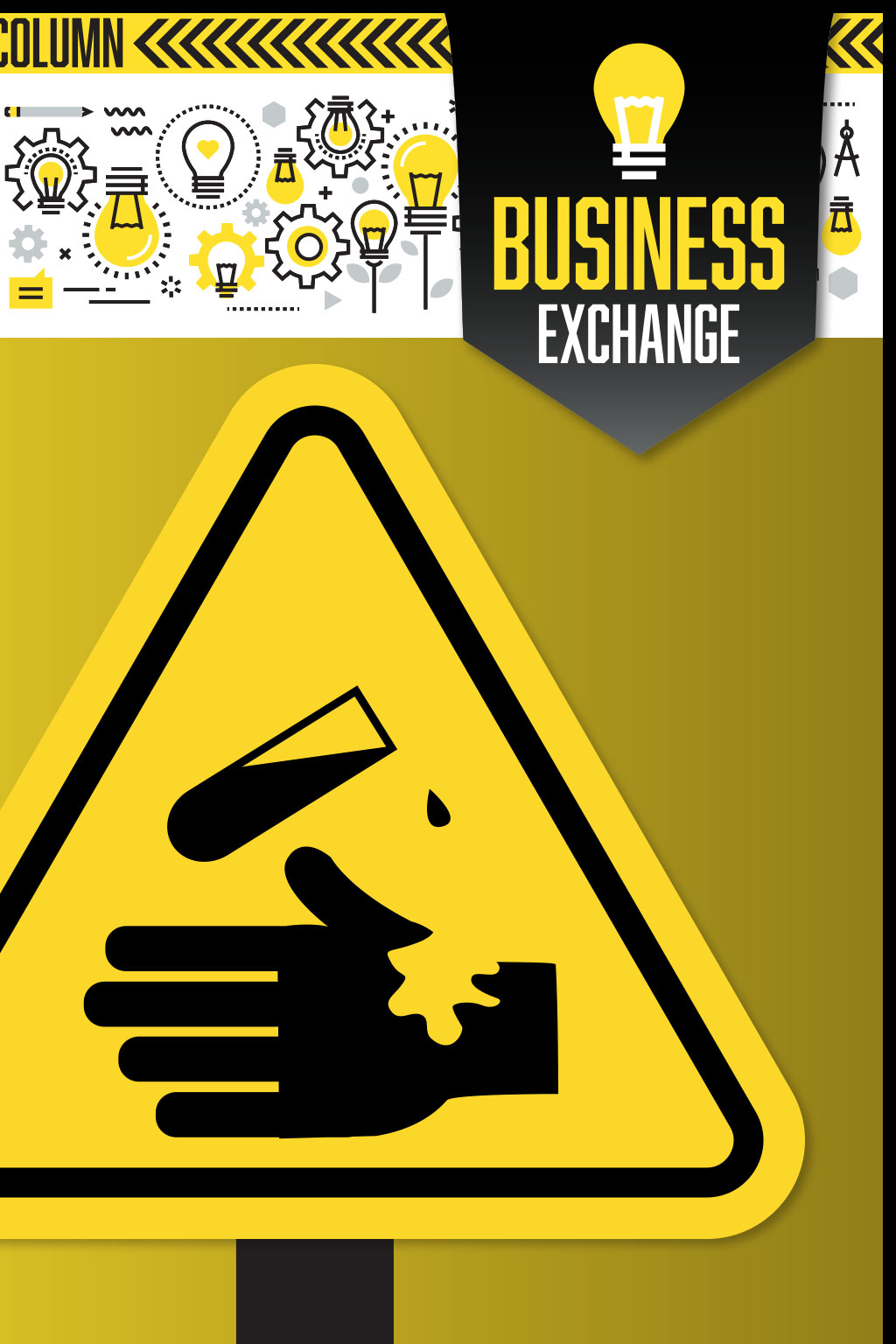



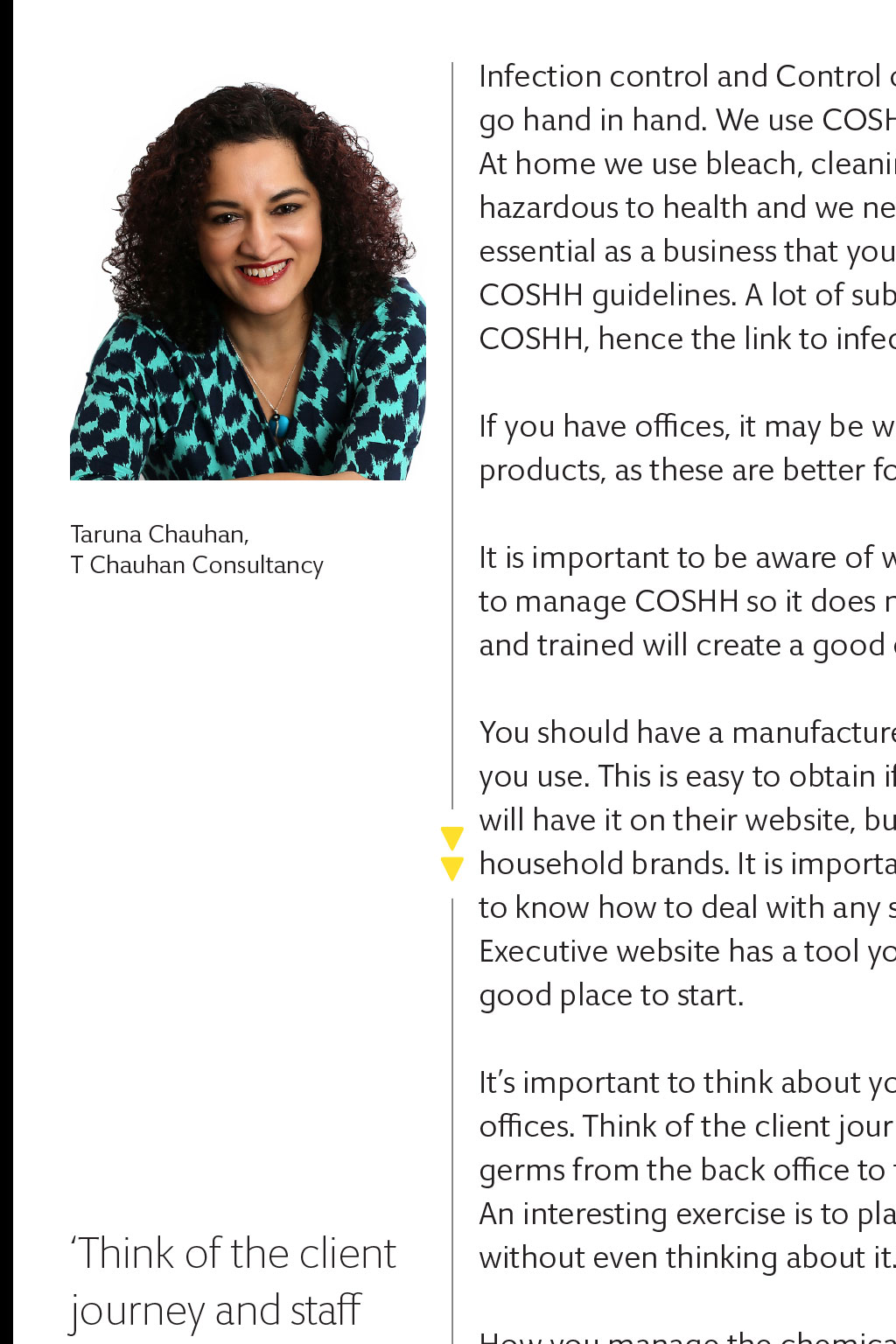



Our first contribution for our new feature where we turn the spotlight on YOU is from Taruna Chauhan, from T Chauhan Consultancy, who takes a look at infection control and Control of Substances Hazardous to Health (COSHH) Infection control and Control of Substances Hazardous to Health (COSHH) go hand in hand. We use COSHH in our daily lives, we just dont call it that. At home we use bleach, cleaning fluids, washing-up liquids these are all hazardous to health and we need to be mindful of how we use them. It is essential as a business that you follow, and show that you are following, COSHH guidelines. A lot of substances used for cleaning will come under COSHH, hence the link to infection control. If you have offices, it may be worth looking at eco options for COSHH products, as these are better for the environment and for you. Taruna Chauhan, T Chauhan Consultancy It is important to be aware of what makes a good cleaning regime and how to manage COSHH so it does not become a burden. Having staff on board and trained will create a good environment with a reduced risk of infection. You should have a manufacturers data sheet for any cleaning products that you use. This is easy to obtain if you buy from a commercial supplier, as they will have it on their website, but you can still find a data sheet if you are using household brands. It is important to have this information because you need to know how to deal with any spillages or accidents. The Health and Safety Executive website has a tool you can use to find this information and is a good place to start. Think of the client journey and staff journey, as people can transmit germs from the back office to the front desk and any areas they walk around Its important to think about your premises, from the front door to the back offices. Think of the client journey and staff journey, as people can transmit germs from the back office to the front desk and any areas they walk around. An interesting exercise is to place Post-it notes on each surface you touch without even thinking about it. How you manage the chemicals used in your workplace is important, but so too is your cleaning regime. The NHS has a colour-coded system for cleaning that helps to reduce the risk of infection. Red: bathrooms, washroom, showers, toilets, basins and bathroom floors. Blue: general areas, departments, offices and basins in public areas. Green: cafeteria, kitchen areas, general food areas. Cost-effective colour-coded kits are available through commercial cleaning sites and will help your business to reduce any risk of cross-contamination. By using a colour-coded system for cloths and equipment such as mops and buckets your cleaning staff will be aware of what to use in which areas. This can help reduce infection risks and, therefore, illness. If you use a commercial cleaner, check whether they are part of the British Institute of Cleaning Science or if they are members of the British Cleaners Association, because these have standards that have to be met and you will know that COSHH is being managed. Credit: Taruna Chauhan, T Chauhan Consultancy Image: iStock.com / Oleksandr Slobodianiuk DISLAIMER: The opinions, advice, and viewpoints expressed in this article are exclusively those of the contributing author and do not reflect the official stance of CEnTSA. Any products, services, or external links mentioned are for informational purposes only and are not endorsed by CEnTSA. This article is not intended to provide legal or regulatory advice. Readers are encouraged to confirm the information contained herein with other sources to ensure there are no errors or omissions in the content of this article. Anonymous Hotline For further information, please contact your local Trading Standards Service For up-to-date news stories and information, follow us on 0300 303 2636 Is your sector being undermined by unscrupulous traders operating outside the law? Report them via Trading Standards Anonymous Hotline or online and help level the playing field for honest businesses.