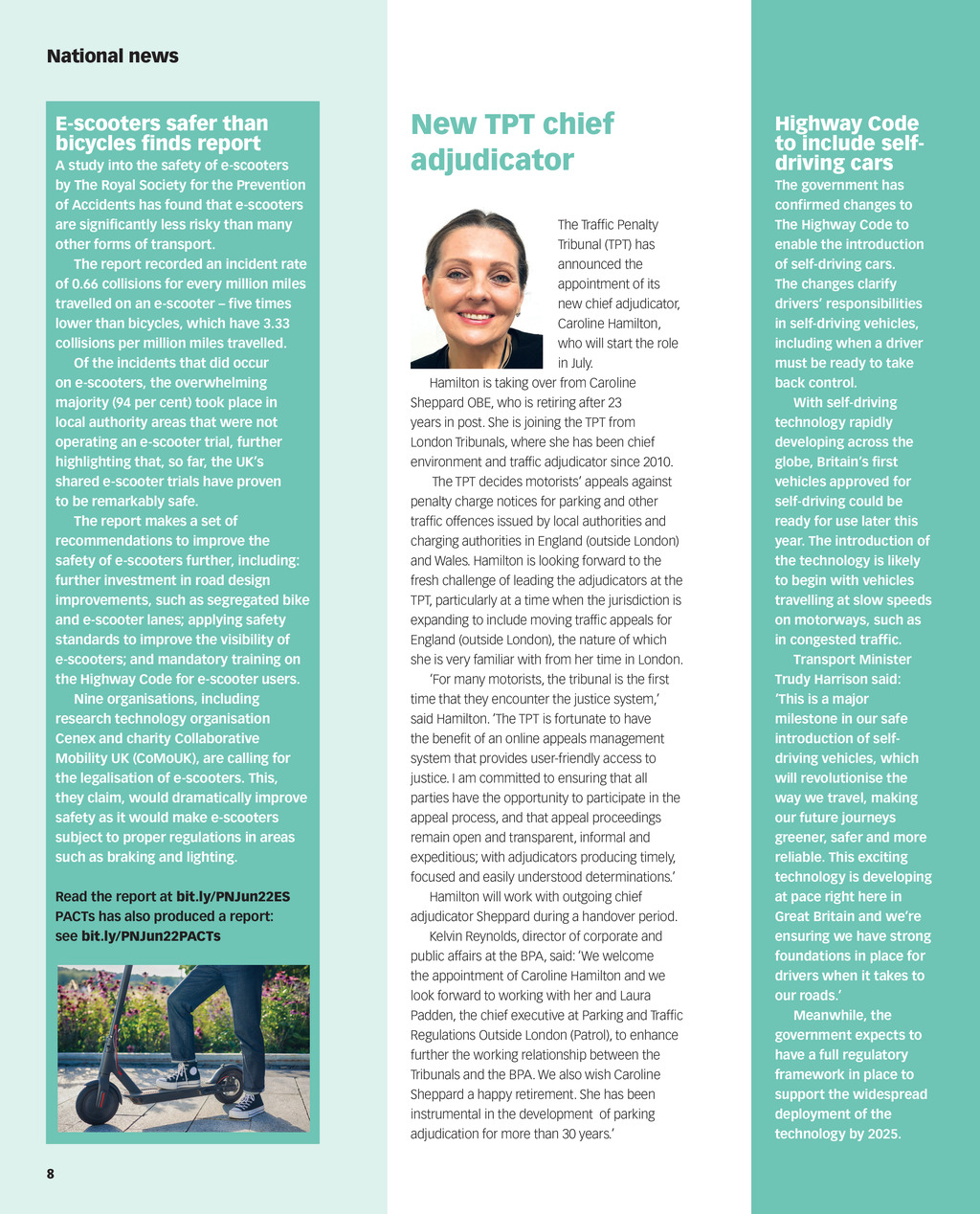

National news E-scooters safer than bicycles finds report A study into the safety of e-scooters by The Royal Society for the Prevention of Accidents has found that e-scooters are significantly less risky than many other forms of transport. The report recorded an incident rate of 0.66 collisions for every million miles travelled on an e-scooter five times lower than bicycles, which have 3.33 collisions per million miles travelled. Of the incidents that did occur on e-scooters, the overwhelming majority (94 per cent) took place in local authority areas that were not operating an e-scooter trial, further highlighting that, so far, the UKs shared e-scooter trials have proven to be remarkably safe. The report makes a set of recommendations to improve the safety of e-scooters further, including: further investment in road design improvements, such as segregated bike and e-scooter lanes; applying safety standards to improve the visibility of e-scooters; and mandatory training on the Highway Code for e-scooter users. Nine organisations, including research technology organisation Cenex and charity Collaborative Mobility UK (CoMoUK), are calling for the legalisation of e-scooters. This, they claim, would dramatically improve safety as it would make e-scooters subject to proper regulations in areas such as braking and lighting. Read the report at bit.ly/PNJun22ES PACTs has also produced a report: see bit.ly/PNJun22PACTs New TPT chief adjudicator The Traffic Penalty Tribunal (TPT) has announced the appointment of its new chief adjudicator, Caroline Hamilton, who will start the role in July. Hamilton is taking over from Caroline Sheppard OBE, who is retiring after 23 years in post. She is joining the TPT from London Tribunals, where she has been chief environment and traffic adjudicator since 2010. The TPT decides motorists appeals against penalty charge notices for parking and other traffic offences issued by local authorities and charging authorities in England (outside London) and Wales. Hamilton is looking forward to the fresh challenge of leading the adjudicators at the TPT, particularly at a time when the jurisdiction is expanding to include moving traffic appeals for England (outside London), the nature of which she is very familiar with from her time in London. For many motorists, the tribunal is the first time that they encounter the justice system, said Hamilton. The TPT is fortunate to have the benefit of an online appeals management system that provides user-friendly access to justice. I am committed to ensuring that all parties have the opportunity to participate in the appeal process, and that appeal proceedings remain open and transparent, informal and expeditious; with adjudicators producing timely, focused and easily understood determinations. Hamilton will work with outgoing chief adjudicator Sheppard during a handover period. Kelvin Reynolds, director of corporate and public affairs at the BPA, said: We welcome the appointment of Caroline Hamilton and we look forward to working with her and Laura Padden, the chief executive at Parking and Traffic Regulations Outside London (Patrol), to enhance further the working relationship between the Tribunals and the BPA. We also wish Caroline Sheppard a happy retirement. She has been instrumental in the development of parking adjudication for more than 30 years. Highway Code to include selfdriving cars The government has confirmed changes to The Highway Code to enable the introduction of self-driving cars. The changes clarify drivers responsibilities in self-driving vehicles, including when a driver must be ready to take back control. With self-driving technology rapidly developing across the globe, Britains first vehicles approved for self-driving could be ready for use later this year. The introduction of the technology is likely to begin with vehicles travelling at slow speeds on motorways, such as in congested traffic. Transport Minister Trudy Harrison said: This is a major milestone in our safe introduction of selfdriving vehicles, which will revolutionise the way we travel, making our future journeys greener, safer and more reliable. This exciting technology is developing at pace right here in Great Britain and were ensuring we have strong foundations in place for drivers when it takes to our roads. Meanwhile, the government expects to have a full regulatory framework in place to support the widespread deployment of the technology by 2025. 8 PN June 2022 pp08-09 National News.indd 8 24/05/2022 16:10