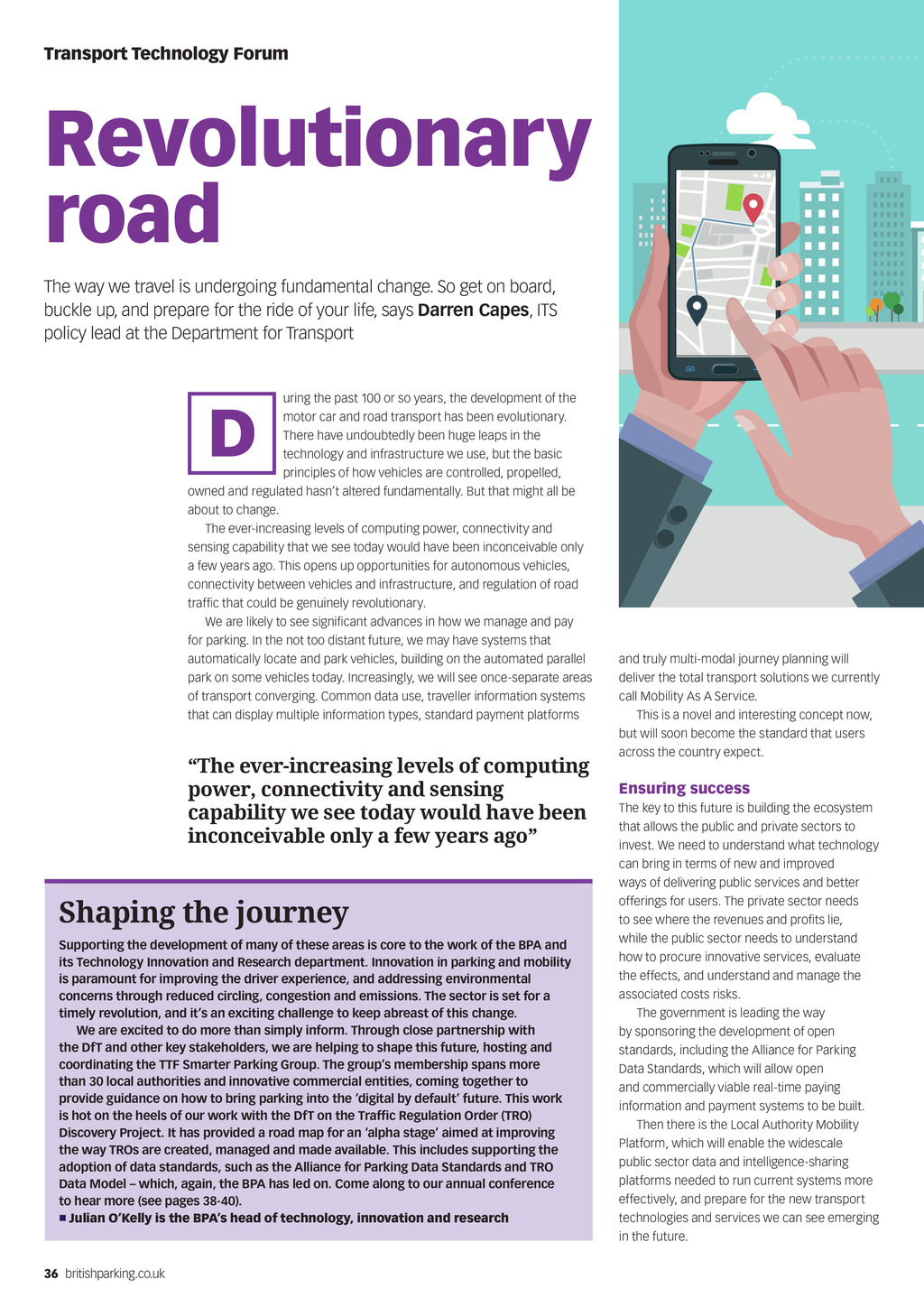
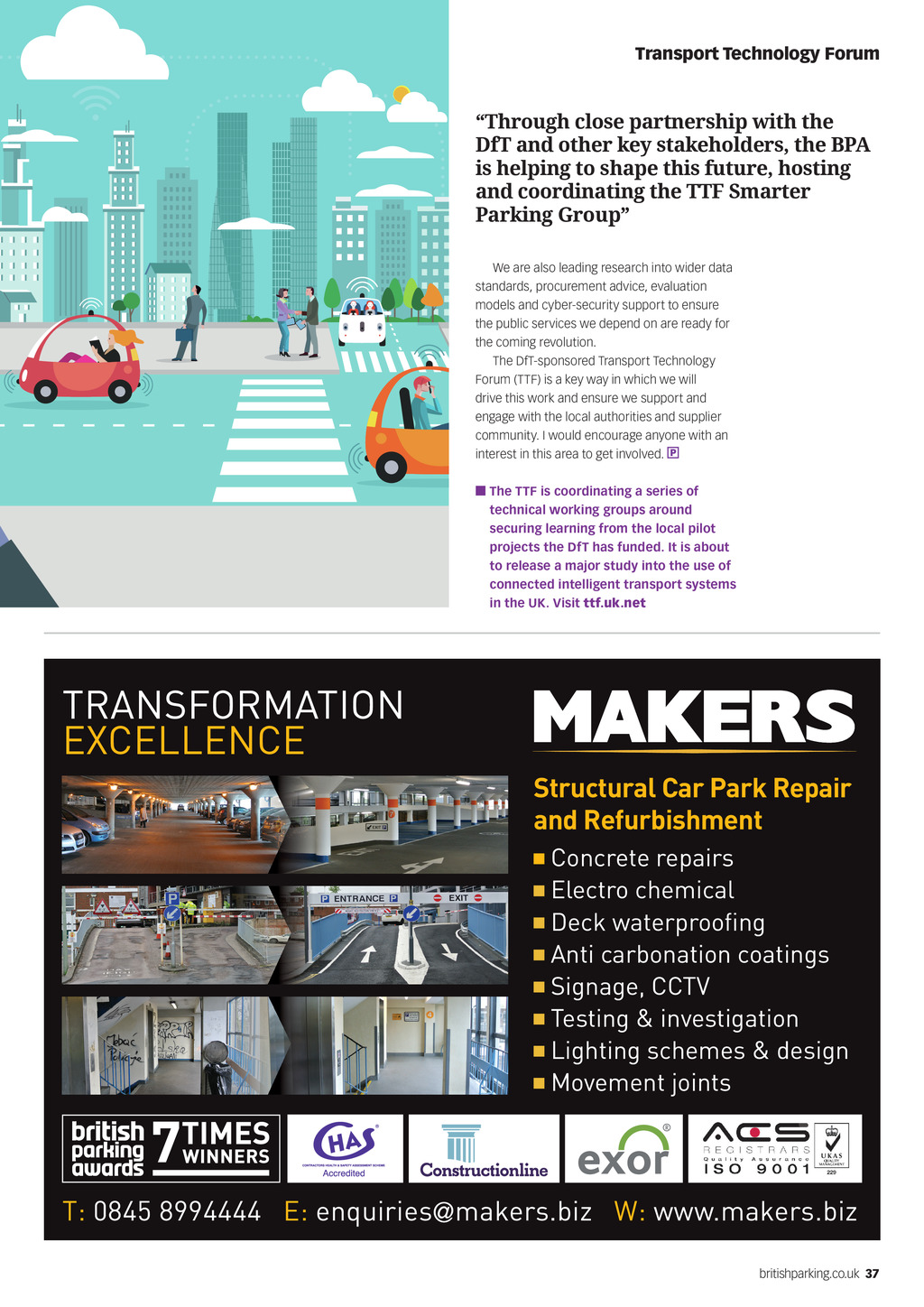

Transport Technology Forum Revolutionary road The way we travel is undergoing fundamental change. So get on board, buckle up, and prepare for the ride of your life, says Darren Capes, ITS policy lead at the Department for Transport uring the past 100 or so years, the development of the motor car and road transport has been evolutionary. There have undoubtedly been huge leaps in the technology and infrastructure we use, but the basic principles of how vehicles are controlled, propelled, owned and regulated hasnt altered fundamentally. But that might all be about to change. The ever-increasing levels of computing power, connectivity and sensing capability that we see today would have been inconceivable only a few years ago. This opens up opportunities for autonomous vehicles, connectivity between vehicles and infrastructure, and regulation of road traffic that could be genuinely revolutionary. We are likely to see significant advances in how we manage and pay for parking. In the not too distant future, we may have systems that automatically locate and park vehicles, building on the automated parallel park on some vehicles today. Increasingly, we will see once-separate areas of transport converging. Common data use, traveller information systems that can display multiple information types, standard payment platforms D The ever-increasing levels of computing power, connectivity and sensing capability we see today would have been inconceivable only a few years ago Shaping the journey Supporting the development of many of these areas is core to the work of the BPA and its Technology Innovation and Research department. Innovation in parking and mobility is paramount for improving the driver experience, and addressing environmental concerns through reduced circling, congestion and emissions. The sector is set for a timely revolution, and its an exciting challenge to keep abreast of this change. We are excited to do more than simply inform. Through close partnership with the DfT and other key stakeholders, we are helping to shape this future, hosting and coordinating the TTF Smarter Parking Group. The groups membership spans more than 30 local authorities and innovative commercial entities, coming together to provide guidance on how to bring parking into the digital by default future. This work is hot on the heels of our work with the DfT on the Traffic Regulation Order (TRO) Discovery Project. It has provided a road map for an alpha stage aimed at improving the way TROs are created, managed and made available. This includes supporting the adoption of data standards, such as the Alliance for Parking Data Standards and TRO Data Model which, again, the BPA has led on. Come along to our annual conference to hear more (see pages 38-40). Julian OKelly is the BPAs head of technology, innovation and research and truly multi-modal journey planning will deliver the total transport solutions we currently call Mobility As A Service. This is a novel and interesting concept now, but will soon become the standard that users across the country expect. Ensuring success The key to this future is building the ecosystem that allows the public and private sectors to invest. We need to understand what technology can bring in terms of new and improved ways of delivering public services and better offerings for users. The private sector needs to see where the revenues and profits lie, while the public sector needs to understand how to procure innovative services, evaluate the effects, and understand and manage the associated costs risks. The government is leading the way by sponsoring the development of open standards, including the Alliance for Parking Data Standards, which will allow open and commercially viable real-time paying information and payment systems to be built. Then there is the Local Authority Mobility Platform, which will enable the widescale public sector data and intelligence-sharing platforms needed to run current systems more effectively, and prepare for the new transport technologies and services we can see emerging in the future. 36 britishparking.co.uk PN Oct19 pp36-37 DFT Feature.indd 36 23/09/2019 14:02