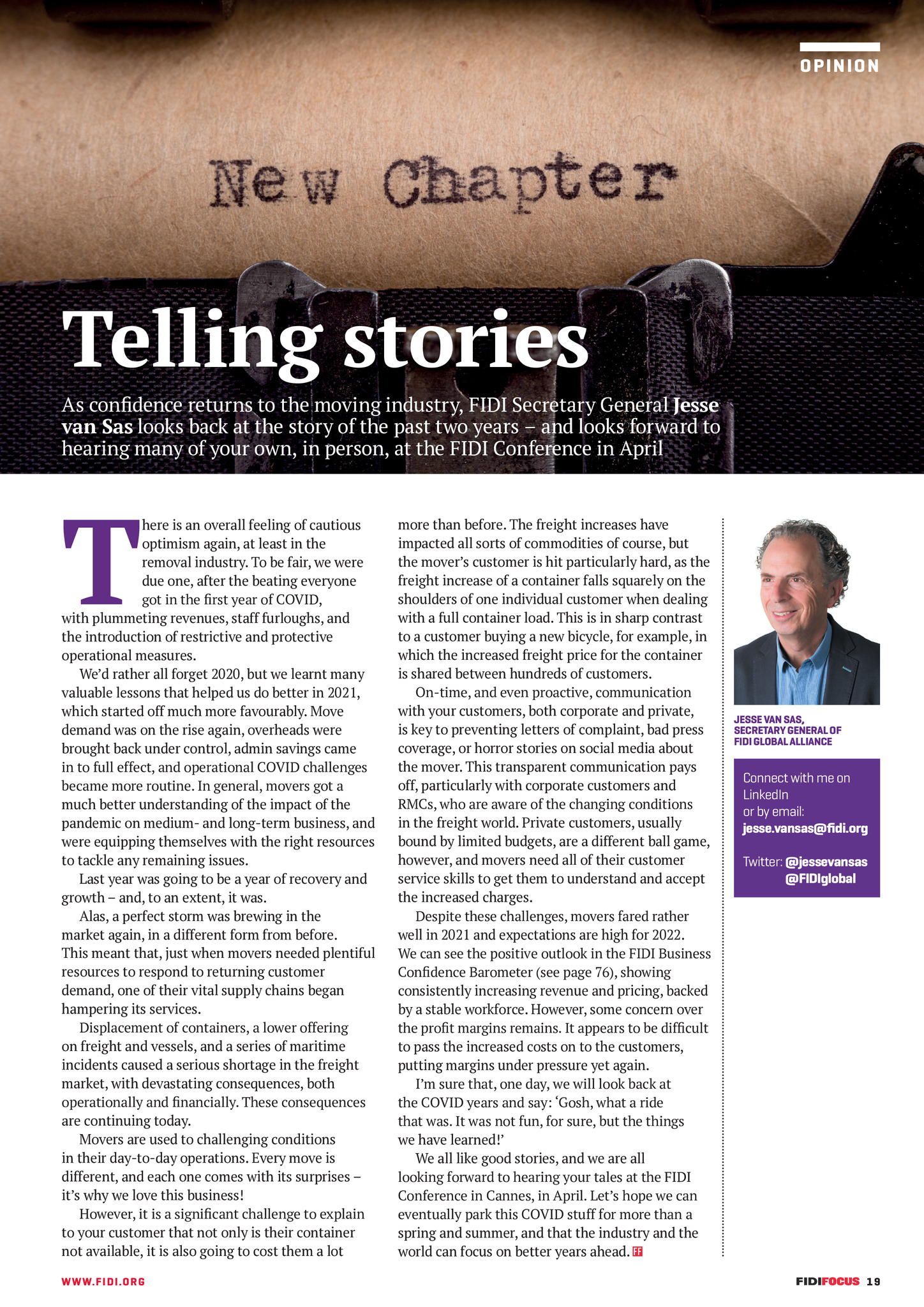
O PI N I O N Telling stories As condence returns to the moving industry, FIDI Secretary General Jesse van Sas looks back at the story of the past two years and looks forward to hearing many of your own, in person, at the FIDI Conference in April T here is an overall feeling of cautious optimism again, at least in the removal industry. To be fair, we were due one, after the beating everyone got in the rst year of COVID, with plummeting revenues, staff furloughs, and the introduction of restrictive and protective operational measures. Wed rather all forget 2020, but we learnt many valuable lessons that helped us do better in 2021, which started off much more favourably. Move demand was on the rise again, overheads were brought back under control, admin savings came in to full effect, and operational COVID challenges became more routine. In general, movers got a much better understanding of the impact of the pandemic on medium- and long-term business, and were equipping themselves with the right resources to tackle any remaining issues. Last year was going to be a year of recovery and growth and, to an extent, it was. Alas, a perfect storm was brewing in the market again, in a different form from before. This meant that, just when movers needed plentiful resources to respond to returning customer demand, one of their vital supply chains began hampering its services. Displacement of containers, a lower offering on freight and vessels, and a series of maritime incidents caused a serious shortage in the freight market, with devastating consequences, both operationally and nancially. These consequences are continuing today. Movers are used to challenging conditions in their day-to-day operations. Every move is different, and each one comes with its surprises its why we love this business! However, it is a signicant challenge to explain to your customer that not only is their container not available, it is also going to cost them a lot W W W. F ID I. O R G FF305 Mar_May 22 pp19 Jesse Opinion.indd 19 more than before. The freight increases have impacted all sorts of commodities of course, but the movers customer is hit particularly hard, as the freight increase of a container falls squarely on the shoulders of one individual customer when dealing with a full container load. This is in sharp contrast to a customer buying a new bicycle, for example, in which the increased freight price for the container is shared between hundreds of customers. On-time, and even proactive, communication with your customers, both corporate and private, is key to preventing letters of complaint, bad press coverage, or horror stories on social media about the mover. This transparent communication pays off, particularly with corporate customers and RMCs, who are aware of the changing conditions in the freight world. Private customers, usually bound by limited budgets, are a different ball game, however, and movers need all of their customer service skills to get them to understand and accept the increased charges. Despite these challenges, movers fared rather well in 2021 and expectations are high for 2022. We can see the positive outlook in the FIDI Business Condence Barometer (see page 76), showing consistently increasing revenue and pricing, backed by a stable workforce. However, some concern over the prot margins remains. It appears to be difcult to pass the increased costs on to the customers, putting margins under pressure yet again. Im sure that, one day, we will look back at the COVID years and say: Gosh, what a ride that was. It was not fun, for sure, but the things we have learned! We all like good stories, and we are all looking forward to hearing your tales at the FIDI Conference in Cannes, in April. Lets hope we can eventually park this COVID stuff for more than a spring and summer, and that the industry and the world can focus on better years ahead. JESSE VAN SAS, SECRETARY GENERAL OF FIDI GLOBAL ALLIANCE Connect with me on LinkedIn or by email: jesse.vansas@fidi.org Twitter: @jessevansas @FIDIglobal 19 08/03/2022 07:59