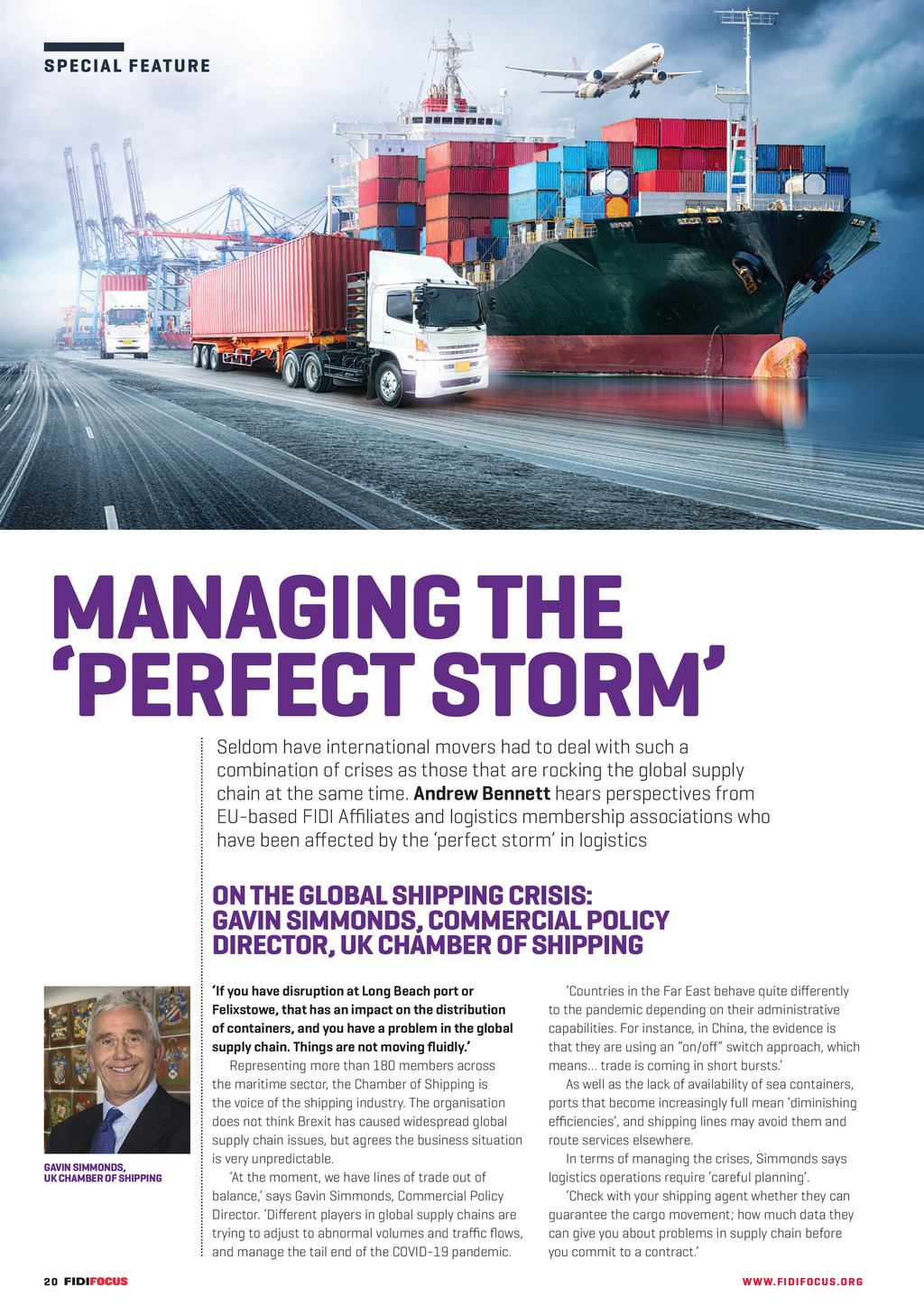
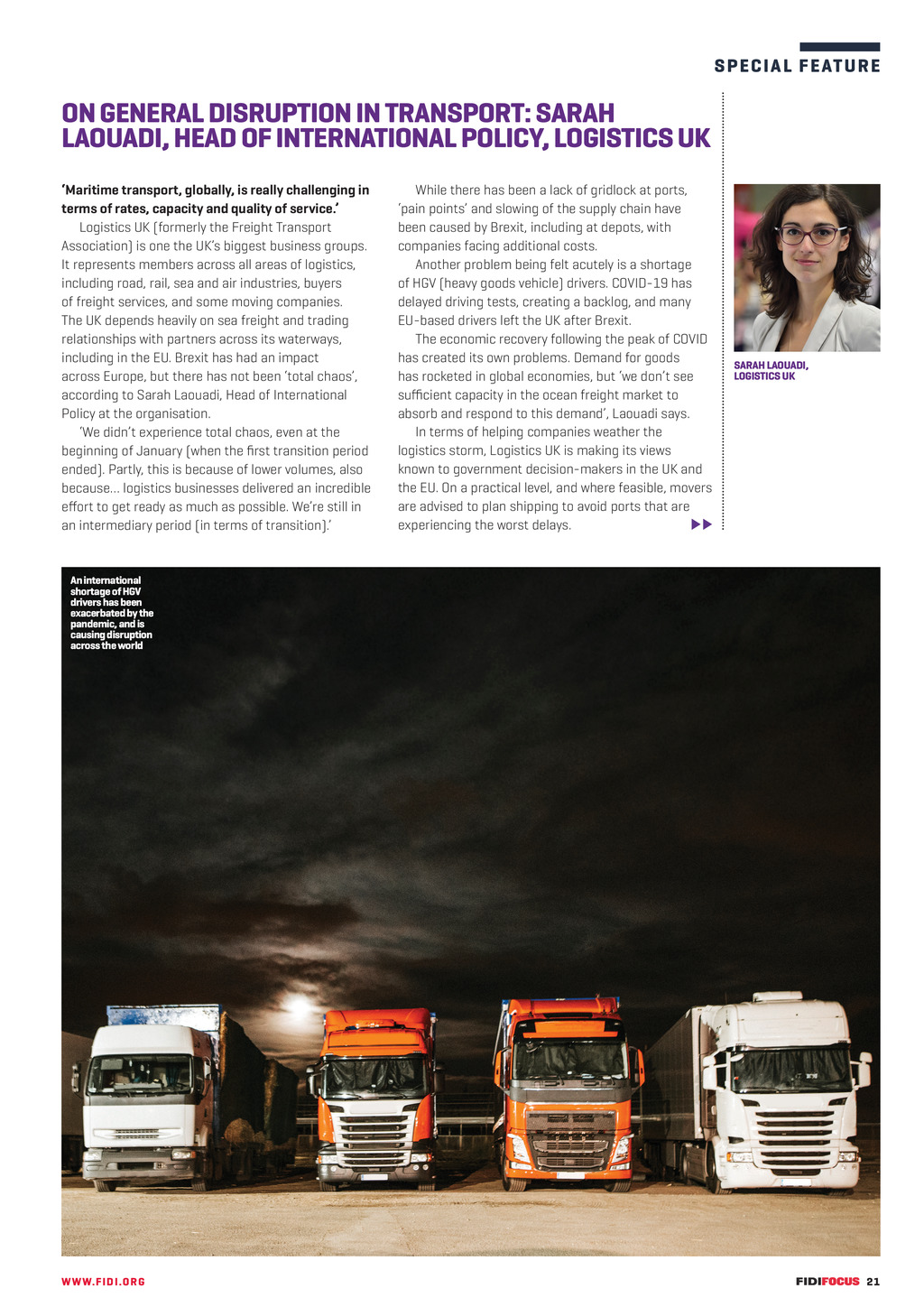

S P E C I A L FE ATUR E MANAGING THE PERFECT STORM Seldom have international movers had to deal with such a combination of crises as those that are rocking the global supply chain at the same time. Andrew Bennett hears perspectives from EU-based FIDI Affiliates and logistics membership associations who have been affected by the perfect storm in logistics ON THE GLOBAL SHIPPING CRISIS: GAVIN SIMMONDS, COMMERCIAL POLICY DIRECTOR, UK CHAMBER OF SHIPPING GAVIN SIMMONDS, UK CHAMBER OF SHIPPING If you have disruption at Long Beach port or Felixstowe, that has an impact on the distribution of containers, and you have a problem in the global supply chain. Things are not moving fluidly. Representing more than 180 members across the maritime sector, the Chamber of Shipping is the voice of the shipping industry. The organisation does not think Brexit has caused widespread global supply chain issues, but agrees the business situation is very unpredictable. At the moment, we have lines of trade out of balance, says Gavin Simmonds, Commercial Policy Director. Different players in global supply chains are trying to adjust to abnormal volumes and traffic flows, and manage the tail end of the COVID-19 pandemic. 20 FF304 Dec_Jan 22 pp20-25 Special feature_logistics.indd 20 Countries in the Far East behave quite differently to the pandemic depending on their administrative capabilities. For instance, in China, the evidence is that they are using an on/off switch approach, which means trade is coming in short bursts. As well as the lack of availability of sea containers, ports that become increasingly full mean diminishing efficiencies, and shipping lines may avoid them and route services elsewhere. In terms of managing the crises, Simmonds says logistics operations require careful planning. Check with your shipping agent whether they can guarantee the cargo movement; how much data they can give you about problems in supply chain before you commit to a contract. WW W. F I D I FOC U S . OR G 07/12/2021 16:03