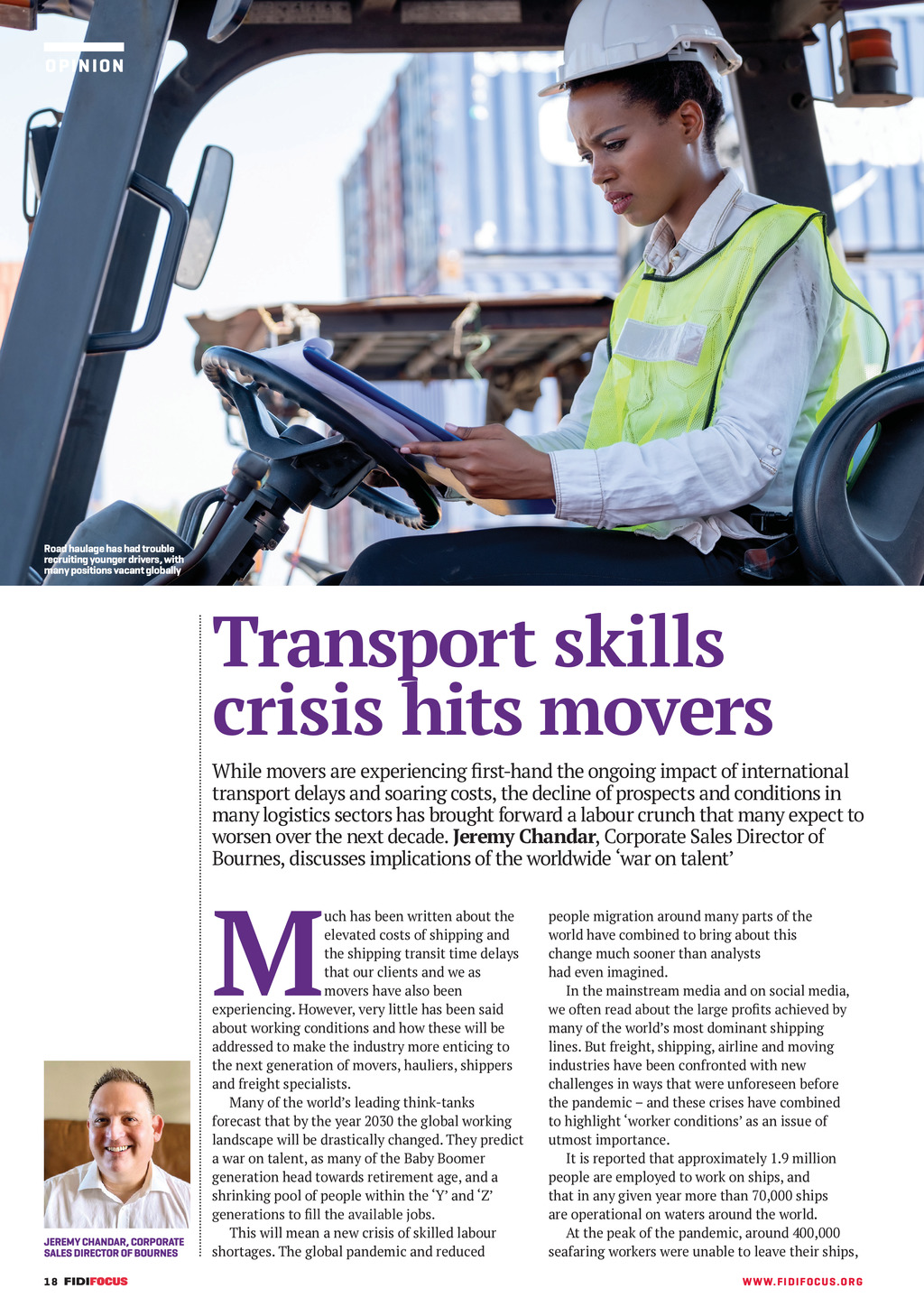
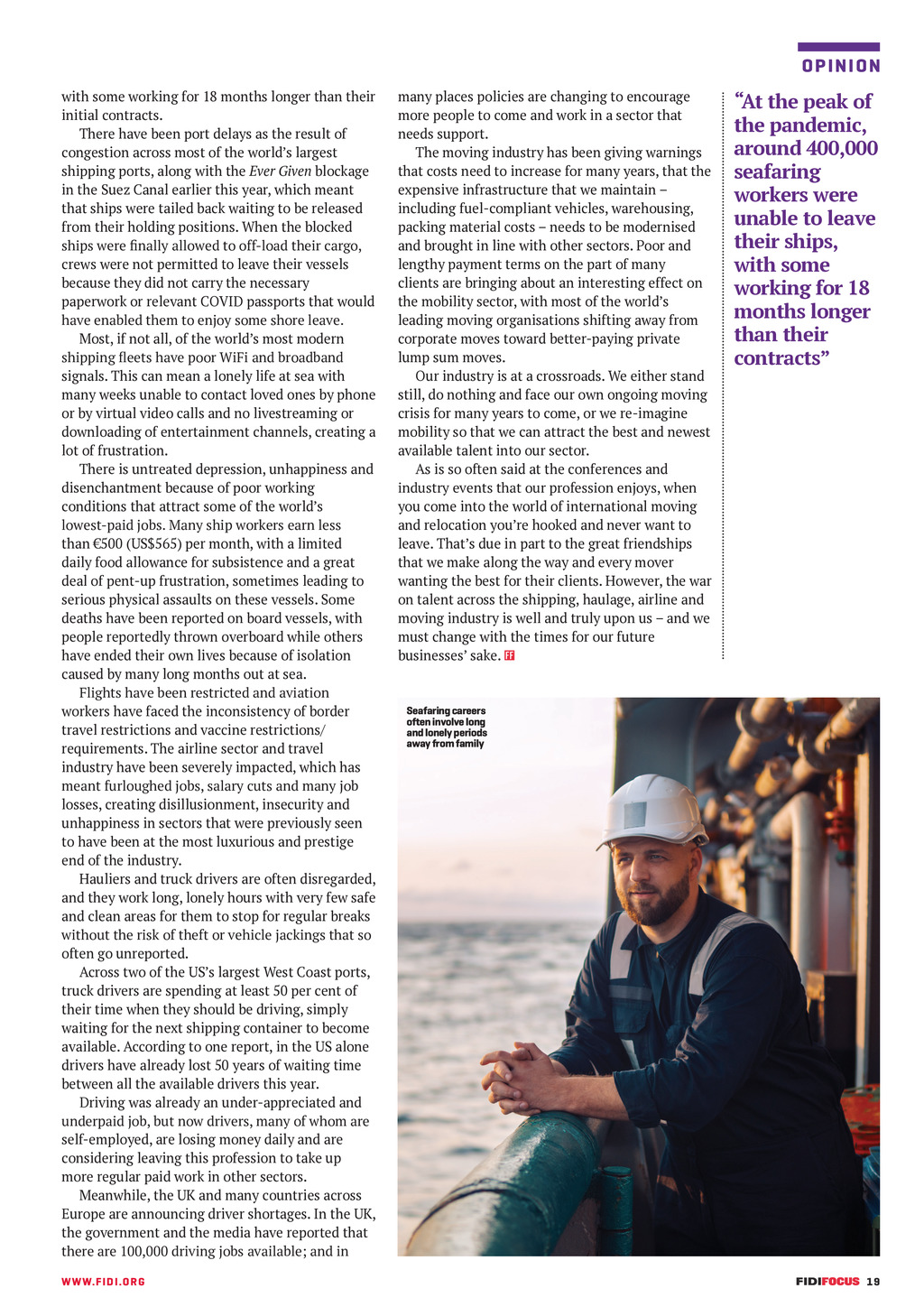

OPINION Road haulage has had trouble recruiting younger drivers, with many positions vacant globally Transport skills crisis hits movers While movers are experiencing first-hand the ongoing impact of international transport delays and soaring costs, the decline of prospects and conditions in many logistics sectors has brought forward a labour crunch that many expect to worsen over the next decade. Jeremy Chandar, Corporate Sales Director of Bournes, discusses implications of the worldwide war on talent M JEREMY CHANDAR, CORPORATE SALES DIRECTOR OF BOURNES 18 FF304 Dec_Jan 22 pp18-19 Opinion.indd 18 uch has been written about the elevated costs of shipping and the shipping transit time delays that our clients and we as movers have also been experiencing. However, very little has been said about working conditions and how these will be addressed to make the industry more enticing to the next generation of movers, hauliers, shippers and freight specialists. Many of the worlds leading think-tanks forecast that by the year 2030 the global working landscape will be drastically changed. They predict a war on talent, as many of the Baby Boomer generation head towards retirement age, and a shrinking pool of people within the Y and Z generations to fill the available jobs. This will mean a new crisis of skilled labour shortages. The global pandemic and reduced people migration around many parts of the world have combined to bring about this change much sooner than analysts had even imagined. In the mainstream media and on social media, we often read about the large profits achieved by many of the worlds most dominant shipping lines. But freight, shipping, airline and moving industries have been confronted with new challenges in ways that were unforeseen before the pandemic and these crises have combined to highlight worker conditions as an issue of utmost importance. It is reported that approximately 1.9 million people are employed to work on ships, and that in any given year more than 70,000 ships are operational on waters around the world. At the peak of the pandemic, around 400,000 seafaring workers were unable to leave their ships, WW W. F I D I FOC U S . OR G 07/12/2021 09:45