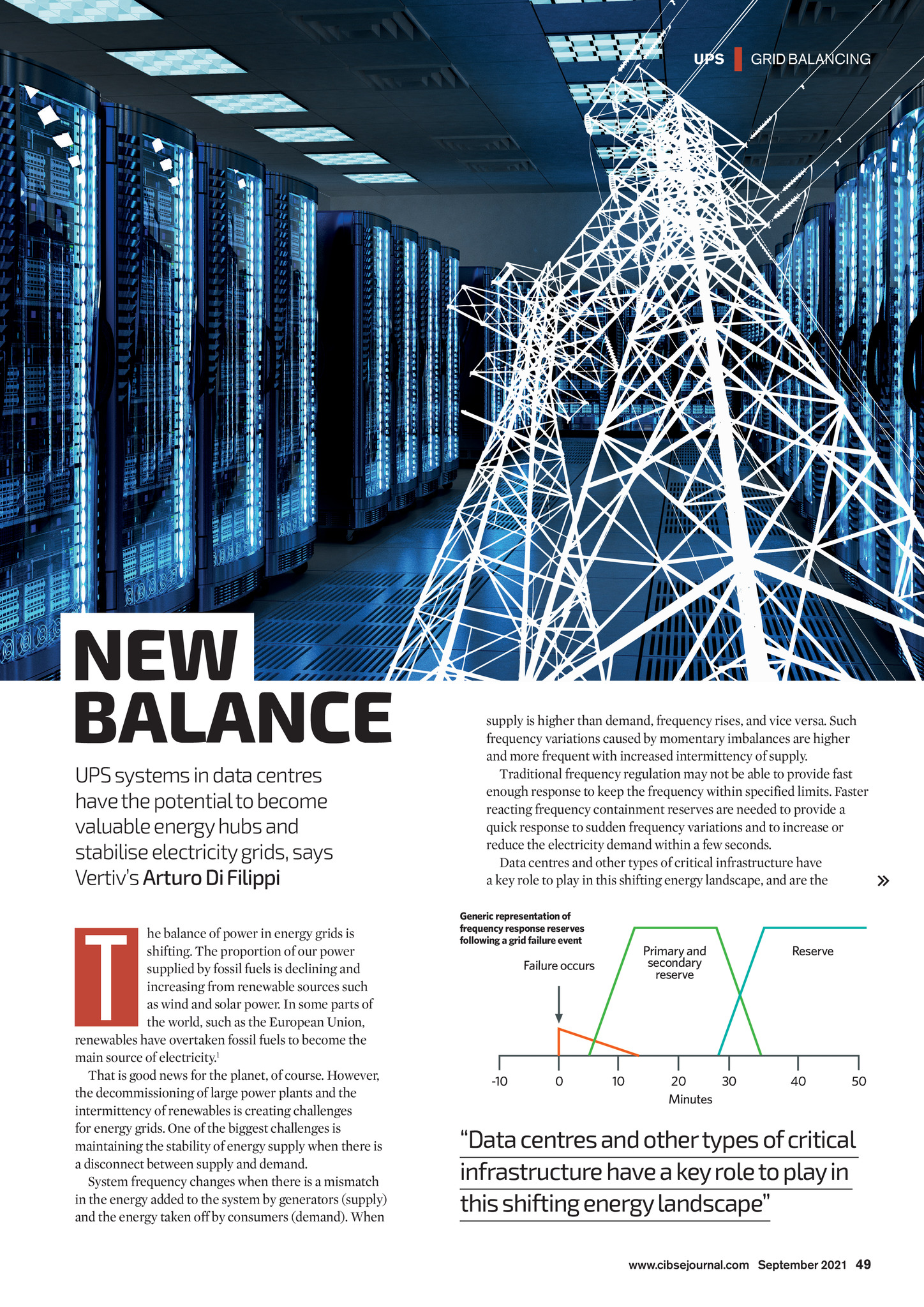
UPS NEW BALANCE UPS systems in data centres have the potential to become valuable energy hubs and stabilise electricity grids, says Vertivs Arturo Di Filippi T he balance of power in energy grids is shifting. The proportion of our power supplied by fossil fuels is declining and increasing from renewable sources such as wind and solar power. In some parts of the world, such as the European Union, renewables have overtaken fossil fuels to become the main source of electricity.1 That is good news for the planet, of course. However, the decommissioning of large power plants and the intermittency of renewables is creating challenges for energy grids. One of the biggest challenges is maintaining the stability of energy supply when there is a disconnect between supply and demand. System frequency changes when there is a mismatch in the energy added to the system by generators (supply) and the energy taken off by consumers (demand). When | GRID BALANCING supply is higher than demand, frequency rises, and vice versa. Such frequency variations caused by momentary imbalances are higher and more frequent with increased intermittency of supply. Traditional frequency regulation may not be able to provide fast enough response to keep the frequency within specified limits. Faster reacting frequency containment reserves are needed to provide a quick response to sudden frequency variations and to increase or reduce the electricity demand within a few seconds. Data centres and other types of critical infrastructure have a key role to play in this shifting energy landscape, and are the Generic representation of frequency response reserves following a grid failure event Primary and secondary reserve Failure occurs -10 0 10 20 30 Minutes Reserve 40 50 Data centres and other types of critical infrastructure have a key role to play in this shifting energy landscape www.cibsejournal.com September 2021 49 CIBSE Sep 21 pp49-50 UPS grid balancing.indd 49 27/08/2021 14:50