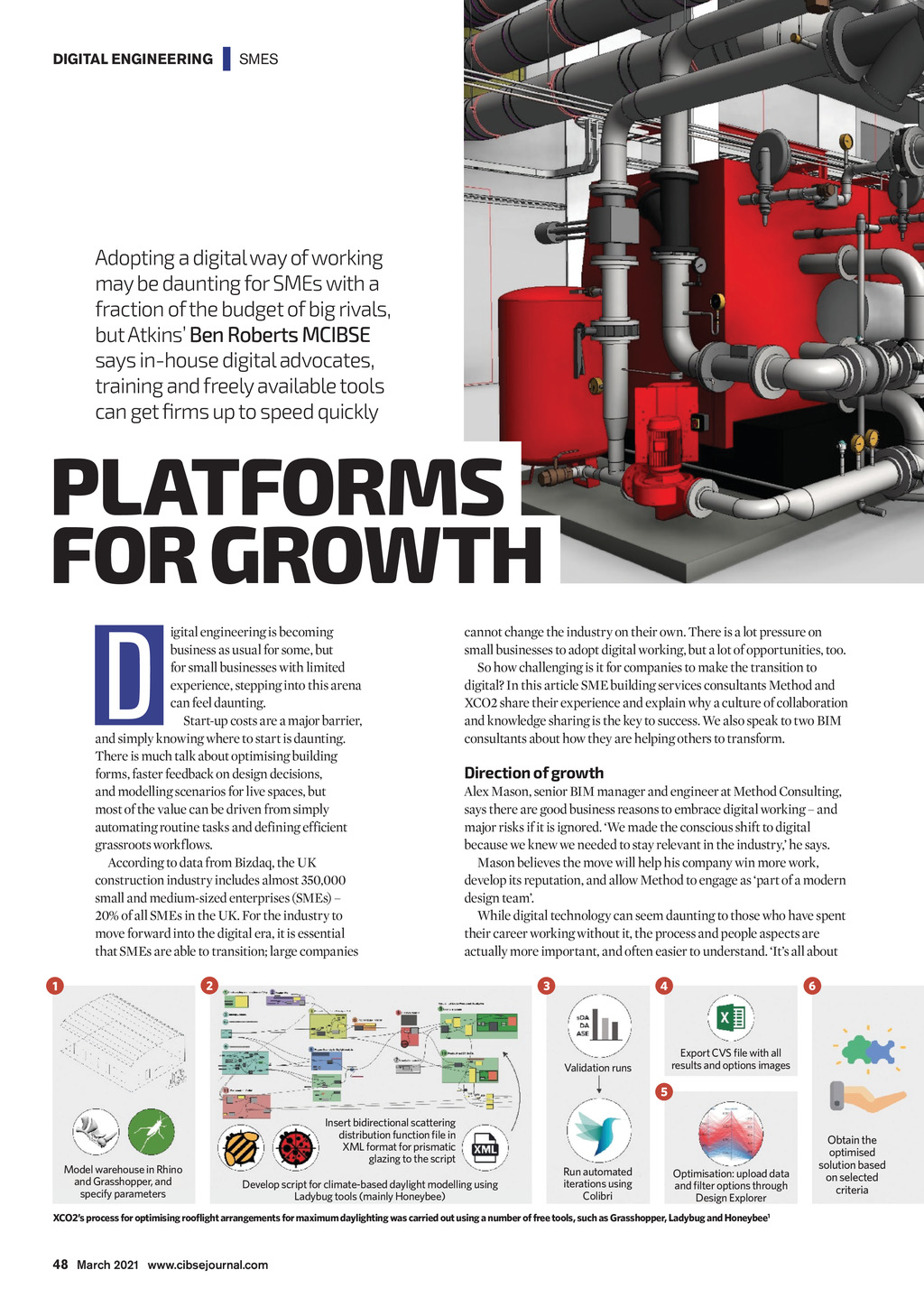
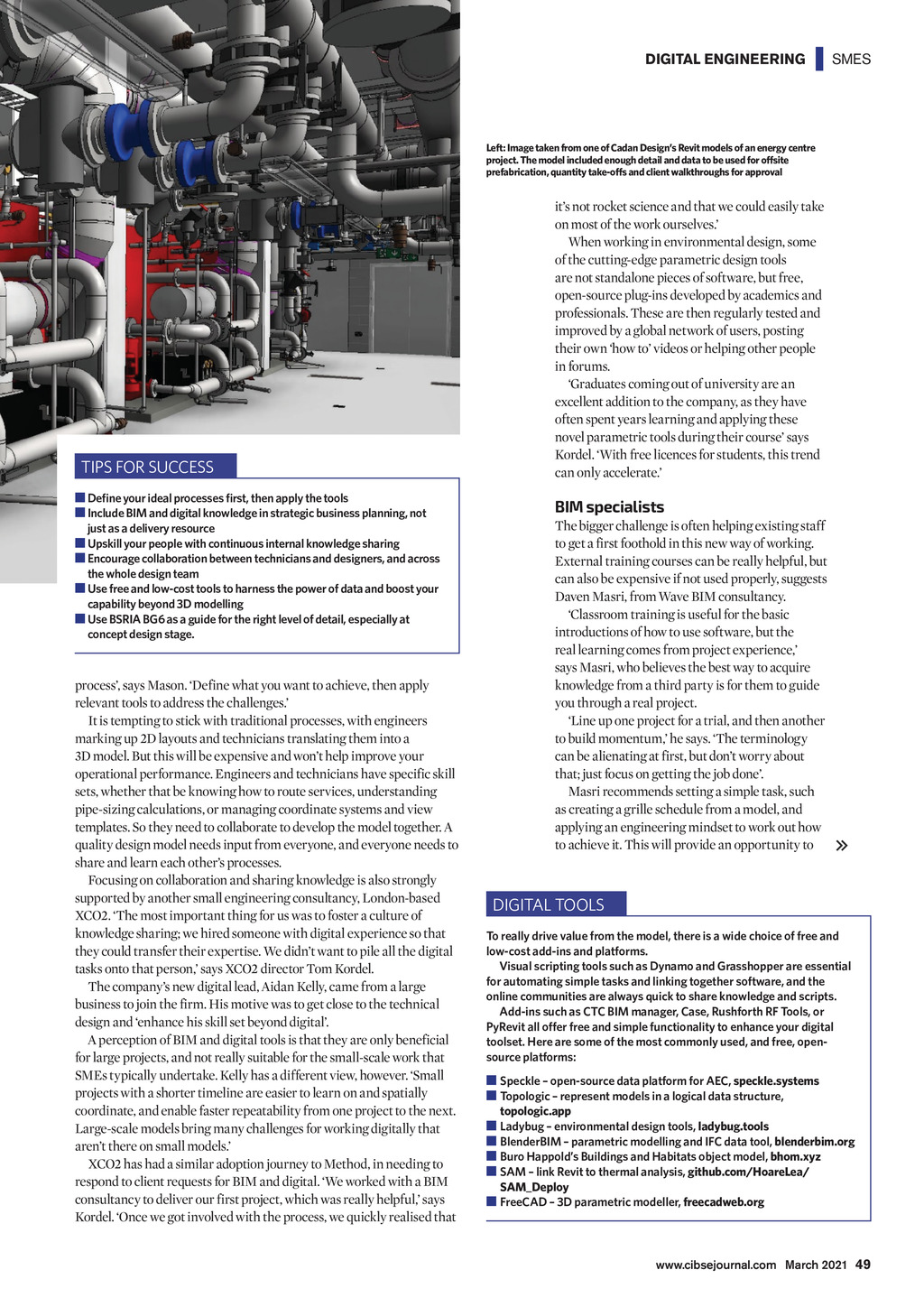

DIGITAL ENGINEERING | SMES Adopting a digital way of working may be daunting for SMEs with a fraction of the budget of big rivals, but Atkins Ben Roberts MCIBSE says in-house digital advocates, training and freely available tools can get firms up to speed quickly PLATFORMS FOR GROWTH D igital engineering is becoming business as usual for some, but for small businesses with limited experience, stepping into this arena can feel daunting. Start-up costs are a major barrier, and simply knowing where to start is daunting. There is much talk about optimising building forms, faster feedback on design decisions, and modelling scenarios for live spaces, but most of the value can be driven from simply automating routine tasks and defining efficient grassroots workflows. According to data from Bizdaq, the UK construction industry includes almost 350,000 small and medium-sized enterprises (SMEs) 20% of all SMEs in the UK. For the industry to move forward into the digital era, it is essential that SMEs are able to transition; large companies cannot change the industry on their own. There is a lot pressure on small businesses to adopt digital working, but a lot of opportunities, too. So how challenging is it for companies to make the transition to digital? In this article SME building services consultants Method and XCO2 share their experience and explain why a culture of collaboration and knowledge sharing is the key to success. We also speak to two BIM consultants about how they are helping others to transform. Direction of growth Alex Mason, senior BIM manager and engineer at Method Consulting, says there are good business reasons to embrace digital working and major risks if it is ignored. We made the conscious shift to digital because we knew we needed to stay relevant in the industry, he says. Mason believes the move will help his company win more work, develop its reputation, and allow Method to engage as part of a modern design team. While digital technology can seem daunting to those who have spent their career working without it, the process and people aspects are actually more important, and often easier to understand. Its all about Validation runs Model warehouse in Rhino and Grasshopper, and specify parameters Insert bidirectional scattering distribution function file in XML format for prismatic glazing to the script Develop script for climate-based daylight modelling using Ladybug tools (mainly Honeybee) Run automated iterations using Colibri Export CVS file with all results and options images Optimisation: upload data and filter options through Design Explorer Obtain the optimised solution based on selected criteria XCO2s process for optimising rooflight arrangements for maximum daylighting was carried out using a number of free tools, such as Grasshopper, Ladybug and Honeybee1 48 March 2021 www.cibsejournal.com CIBSE March 21 pp48-50 Digital SMEs.indd 48 19/02/2021 15:38