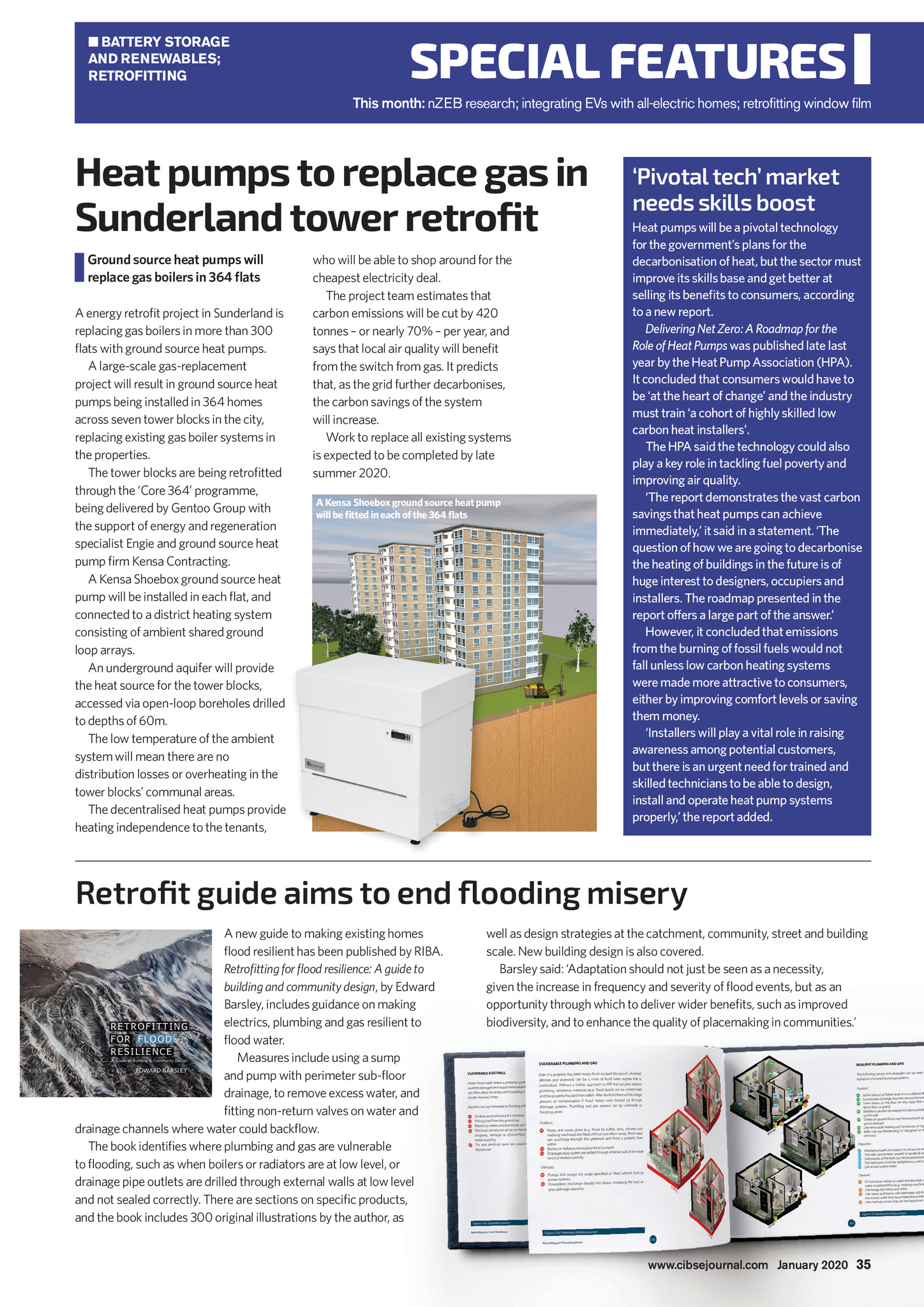

BATTERY STORAGE AND RENEWABLES; RETROFITTING SPECIAL FEATURES This month: nZEB research; integrating EVs with all-electric homes; retrofitting window film Heat pumps to replace gas in Sunderland tower retrofit Ground source heat pumps will replace gas boilers in 364 ats A energy retrot project in Sunderland is replacing gas boilers in more than 300 ats with ground source heat pumps. A large-scale gas-replacement project will result in ground source heat pumps being installed in 364 homes across seven tower blocks in the city, replacing existing gas boiler systems in the properties. The tower blocks are being retrotted through the Core 364 programme, being delivered by Gentoo Group with the support of energy and regeneration specialist Engie and ground source heat pump rm Kensa Contracting. A Kensa Shoebox ground source heat pump will be installed in each at, and connected to a district heating system consisting of ambient shared ground loop arrays. An underground aquifer will provide the heat source for the tower blocks, accessed via open-loop boreholes drilled to depths of 60m. The low temperature of the ambient system will mean there are no distribution losses or overheating in the tower blocks communal areas. The decentralised heat pumps provide heating independence to the tenants, who will be able to shop around for the cheapest electricity deal. The project team estimates that carbon emissions will be cut by 420 tonnes or nearly 70% per year, and says that local air quality will benet from the switch from gas. It predicts that, as the grid further decarbonises, the carbon savings of the system will increase. Work to replace all existing systems is expected to be completed by late summer 2020. A Kensa Shoebox ground source heat pump will be tted in each of the 364 ats Pivotal tech market needs skills boost Heat pumps will be a pivotal technology for the governments plans for the decarbonisation of heat, but the sector must improve its skills base and get better at selling its benets to consumers, according to a new report. Delivering Net Zero: A Roadmap for the Role of Heat Pumps was published late last year by the Heat Pump Association (HPA). It concluded that consumers would have to be at the heart of change and the industry must train a cohort of highly skilled low carbon heat installers. The HPA said the technology could also play a key role in tackling fuel poverty and improving air quality. The report demonstrates the vast carbon savings that heat pumps can achieve immediately, it said in a statement. The question of how we are going to decarbonise the heating of buildings in the future is of huge interest to designers, occupiers and installers. The roadmap presented in the report offers a large part of the answer. However, it concluded that emissions from the burning of fossil fuels would not fall unless low carbon heating systems were made more attractive to consumers, either by improving comfort levels or saving them money. Installers will play a vital role in raising awareness among potential customers, but there is an urgent need for trained and skilled technicians to be able to design, install and operate heat pump systems properly, the report added. Retrofit guide aims to end flooding misery A new guide to making existing homes ood resilient has been published by RIBA. Retrotting for ood resilience: A guide to building and community design, by Edward Barsley, includes guidance on making electrics, plumbing and gas resilient to ood water. Measures include using a sump and pump with perimeter sub-oor drainage, to remove excess water, and tting non-return valves on water and drainage channels where water could backow. The book identies where plumbing and gas are vulnerable to ooding, such as when boilers or radiators are at low level, or drainage pipe outlets are drilled through external walls at low level and not sealed correctly. There are sections on specic products, and the book includes 300 original illustrations by the author, as well as design strategies at the catchment, community, street and building scale. New building design is also covered. Barsley said: Adaptation should not just be seen as a necessity, given the increase in frequency and severity of ood events, but as an opportunity through which to deliver wider benets, such as improved biodiversity, and to enhance the quality of placemaking in communities. www.cibsejournal.com January 2020 35 CIBSE Jan20 pp35 Re News.indd 35 20/12/2019 17:03