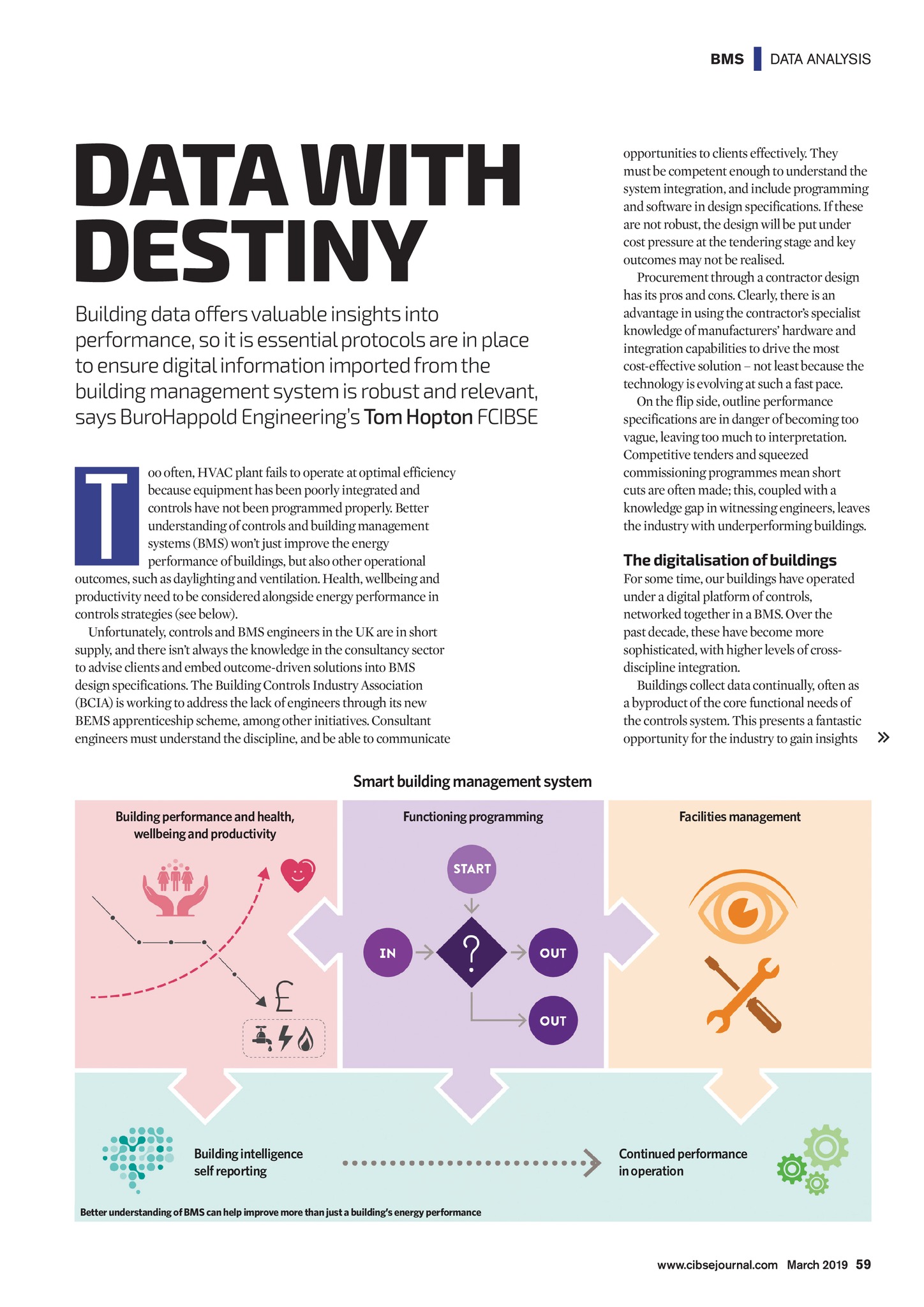

BMS DATA WITH DESTINY Building data offers valuable insights into performance, so it is essential protocols are in place to ensure digital information imported from the building management system is robust and relevant, says BuroHappold Engineerings Tom Hopton FCIBSE T oo often, HVAC plant fails to operate at optimal efficiency because equipment has been poorly integrated and controls have not been programmed properly. Better understanding of controls and building management systems (BMS) wont just improve the energy performance of buildings, but also other operational outcomes, such as daylighting and ventilation. Health, wellbeing and productivity need to be considered alongside energy performance in controls strategies (see below). Unfortunately, controls and BMS engineers in the UK are in short supply, and there isnt always the knowledge in the consultancy sector to advise clients and embed outcome-driven solutions into BMS design specifications. The Building Controls Industry Association (BCIA) is working to address the lack of engineers through its new BEMS apprenticeship scheme, among other initiatives. Consultant engineers must understand the discipline, and be able to communicate | DATA ANALYSIS opportunities to clients effectively. They must be competent enough to understand the system integration, and include programming and software in design specifications. If these are not robust, the design will be put under cost pressure at the tendering stage and key outcomes may not be realised. Procurement through a contractor design has its pros and cons. Clearly, there is an advantage in using the contractors specialist knowledge of manufacturers hardware and integration capabilities to drive the most cost-effective solution not least because the technology is evolving at such a fast pace. On the flip side, outline performance specifications are in danger of becoming too vague, leaving too much to interpretation. Competitive tenders and squeezed commissioning programmes mean short cuts are often made; this, coupled with a knowledge gap in witnessing engineers, leaves the industry with underperforming buildings. The digitalisation of buildings For some time, our buildings have operated under a digital platform of controls, networked together in a BMS. Over the past decade, these have become more sophisticated, with higher levels of crossdiscipline integration. Buildings collect data continually, often as a byproduct of the core functional needs of the controls system. This presents a fantastic opportunity for the industry to gain insights Smart building management system Building performance and health, wellbeing and productivity Functioning programming Building intelligence self reporting Facilities management Continued performance in operation Better understanding of BMS can help improve more than just a buildings energy performance www.cibsejournal.com March 2019 59 CIBSE Mar19 pp59-60 BMS Tom Hopton.indd 59 22/02/2019 16:45