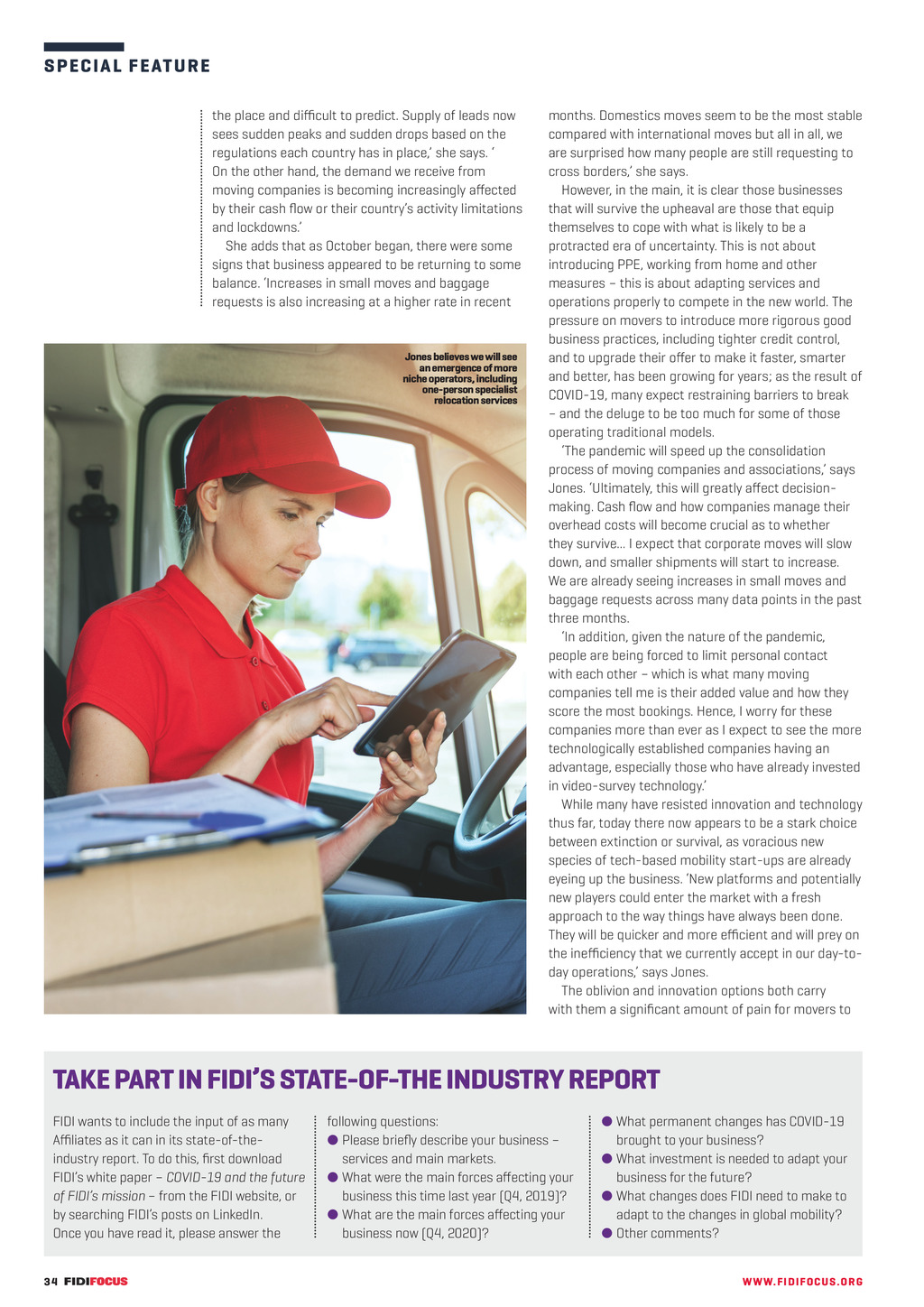


S P E C I A L F E ATURE the place and dicult to predict. Supply of leads now sees sudden peaks and sudden drops based on the regulations each country has in place, she says. On the other hand, the demand we receive from moving companies is becoming increasingly aected by their cash flow or their countrys activity limitations and lockdowns. She adds that as October began, there were some signs that business appeared to be returning to some balance. Increases in small moves and baggage requests is also increasing at a higher rate in recent Jones believes we will see an emergence of more niche operators, including one-person specialist relocation services months. Domestics moves seem to be the most stable compared with international moves but all in all, we are surprised how many people are still requesting to cross borders, she says. However, in the main, it is clear those businesses that will survive the upheaval are those that equip themselves to cope with what is likely to be a protracted era of uncertainty. This is not about introducing PPE, working from home and other measures this is about adapting services and operations properly to compete in the new world. The pressure on movers to introduce more rigorous good business practices, including tighter credit control, and to upgrade their oer to make it faster, smarter and better, has been growing for years; as the result of COVID-19, many expect restraining barriers to break and the deluge to be too much for some of those operating traditional models. The pandemic will speed up the consolidation process of moving companies and associations, says Jones. Ultimately, this will greatly aect decisionmaking. Cash flow and how companies manage their overhead costs will become crucial as to whether they survive... I expect that corporate moves will slow down, and smaller shipments will start to increase. We are already seeing increases in small moves and baggage requests across many data points in the past three months. In addition, given the nature of the pandemic, people are being forced to limit personal contact with each other which is what many moving companies tell me is their added value and how they score the most bookings. Hence, I worry for these companies more than ever as I expect to see the more technologically established companies having an advantage, especially those who have already invested in video-survey technology. While many have resisted innovation and technology thus far, today there now appears to be a stark choice between extinction or survival, as voracious new species of tech-based mobility start-ups are already eyeing up the business. New platforms and potentially new players could enter the market with a fresh approach to the way things have always been done. They will be quicker and more ecient and will prey on the ineciency that we currently accept in our day-today operations, says Jones. The oblivion and innovation options both carry with them a significant amount of pain for movers to TAKE PART IN FIDIS STATE-OF-THE INDUSTRY REPORT FIDI wants to include the input of as many Aliates as it can in its state-of-theindustry report. To do this, first download FIDIs white paper COVID-19 and the future of FIDIs mission from the FIDI website, or by searching FIDIs posts on LinkedIn. Once you have read it, please answer the 34 FF300 DecJan21 pp30-35 Business Recovery.indd 34 following questions: l Please briefly describe your business services and main markets. l What were the main forces aecting your business this time last year (Q4, 2019)? l What are the main forces aecting your business now (Q4, 2020)? l What permanent changes has COVID-19 brought to your business? l What investment is needed to adapt your business for the future? l What changes does FIDI need to make to adapt to the changes in global mobility? l Other comments? WW W. F I D I FOC U S . OR G 24/11/2020 15:25