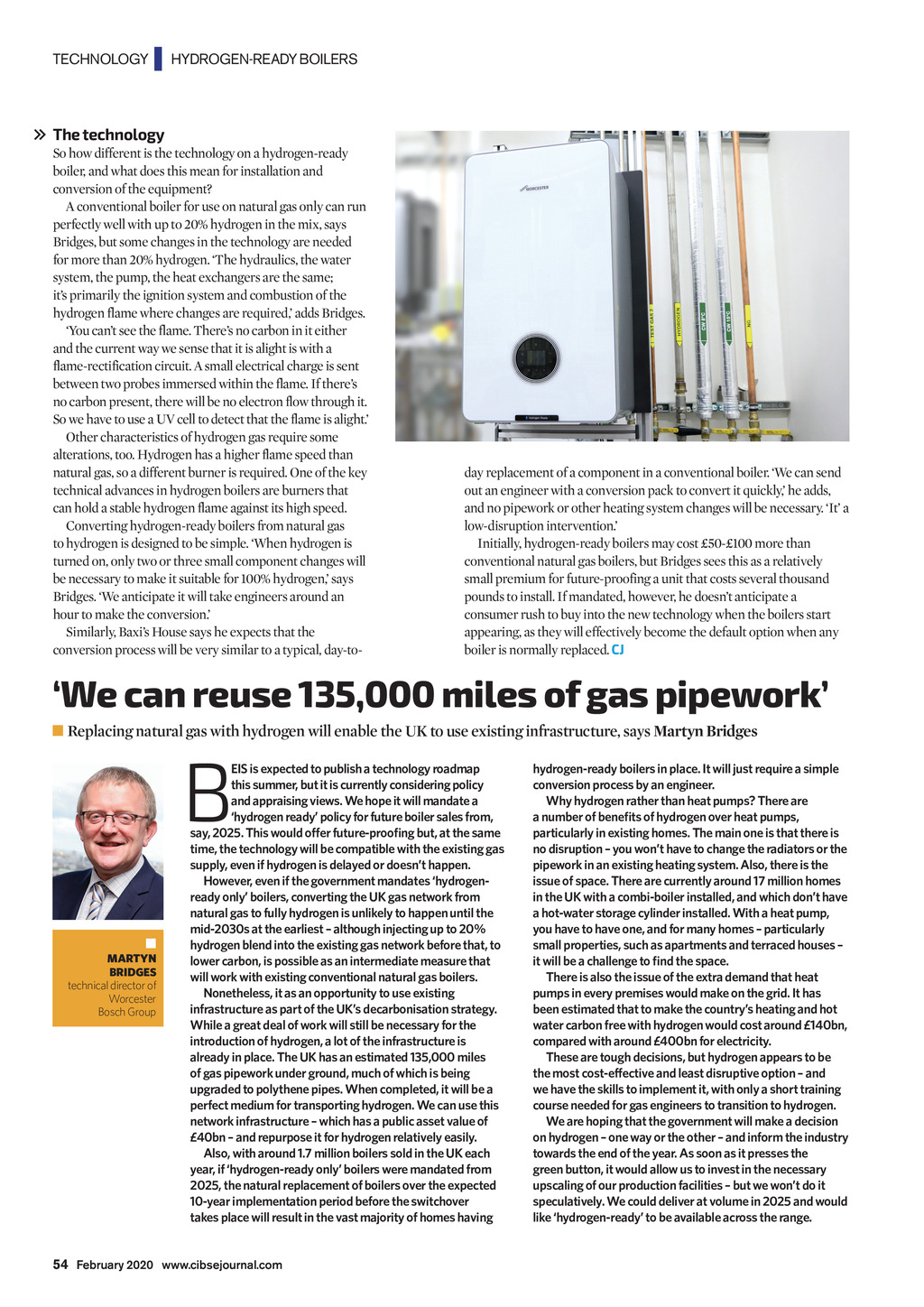


TECHNOLOGY | HYDROGEN-READY BOILERS The technology So how different is the technology on a hydrogen-ready boiler, and what does this mean for installation and conversion of the equipment? A conventional boiler for use on natural gas only can run perfectly well with up to 20% hydrogen in the mix, says Bridges, but some changes in the technology are needed for more than 20% hydrogen. The hydraulics, the water system, the pump, the heat exchangers are the same; its primarily the ignition system and combustion of the hydrogen flame where changes are required, adds Bridges. You cant see the flame. Theres no carbon in it either and the current way we sense that it is alight is with a flame-rectification circuit. A small electrical charge is sent between two probes immersed within the flame. If theres no carbon present, there will be no electron flow through it. So we have to use a UV cell to detect that the flame is alight. Other characteristics of hydrogen gas require some alterations, too. Hydrogen has a higher flame speed than natural gas, so a different burner is required. One of the key technical advances in hydrogen boilers are burners that can hold a stable hydrogen flame against its high speed. Converting hydrogen-ready boilers from natural gas to hydrogen is designed to be simple. When hydrogen is turned on, only two or three small component changes will be necessary to make it suitable for 100% hydrogen, says Bridges. We anticipate it will take engineers around an hour to make the conversion. Similarly, Baxis House says he expects that the conversion process will be very similar to a typical, day-to- day replacement of a component in a conventional boiler. We can send out an engineer with a conversion pack to convert it quickly, he adds, and no pipework or other heating system changes will be necessary. It a low-disruption intervention. Initially, hydrogen-ready boilers may cost 50-100 more than conventional natural gas boilers, but Bridges sees this as a relatively small premium for future-proofing a unit that costs several thousand pounds to install. If mandated, however, he doesnt anticipate a consumer rush to buy into the new technology when the boilers start appearing, as they will effectively become the default option when any boiler is normally replaced. CJ We can reuse 135,000 miles of gas pipework Replacing natural gas with hydrogen will enable the UK to use existing infrastructure, says Martyn Bridges B MARTYN BRIDGES technical director of Worcester Bosch Group EIS is expected to publish a technology roadmap this summer, but it is currently considering policy and appraising views. We hope it will mandate a hydrogen ready policy for future boiler sales from, say, 2025. This would offer future-proofing but, at the same time, the technology will be compatible with the existing gas supply, even if hydrogen is delayed or doesnt happen. However, even if the government mandates hydrogenready only boilers, converting the UK gas network from natural gas to fully hydrogen is unlikely to happen until the mid-2030s at the earliest although injecting up to 20% hydrogen blend into the existing gas network before that, to lower carbon, is possible as an intermediate measure that will work with existing conventional natural gas boilers. Nonetheless, it as an opportunity to use existing infrastructure as part of the UKs decarbonisation strategy. While a great deal of work will still be necessary for the introduction of hydrogen, a lot of the infrastructure is already in place. The UK has an estimated 135,000 miles of gas pipework under ground, much of which is being upgraded to polythene pipes. When completed, it will be a perfect medium for transporting hydrogen. We can use this network infrastructure which has a public asset value of 40bn and repurpose it for hydrogen relatively easily. Also, with around 1.7 million boilers sold in the UK each year, if hydrogen-ready only boilers were mandated from 2025, the natural replacement of boilers over the expected 10-year implementation period before the switchover takes place will result in the vast majority of homes having hydrogen-ready boilers in place. It will just require a simple conversion process by an engineer. Why hydrogen rather than heat pumps? There are a number of benefits of hydrogen over heat pumps, particularly in existing homes. The main one is that there is no disruption you wont have to change the radiators or the pipework in an existing heating system. Also, there is the issue of space. There are currently around 17 million homes in the UK with a combi-boiler installed, and which dont have a hot-water storage cylinder installed. With a heat pump, you have to have one, and for many homes particularly small properties, such as apartments and terraced houses it will be a challenge to find the space. There is also the issue of the extra demand that heat pumps in every premises would make on the grid. It has been estimated that to make the countrys heating and hot water carbon free with hydrogen would cost around 140bn, compared with around 400bn for electricity. These are tough decisions, but hydrogen appears to be the most cost-effective and least disruptive option and we have the skills to implement it, with only a short training course needed for gas engineers to transition to hydrogen. We are hoping that the government will make a decision on hydrogen one way or the other and inform the industry towards the end of the year. As soon as it presses the green button, it would allow us to invest in the necessary upscaling of our production facilities but we wont do it speculatively. We could deliver at volume in 2025 and would like hydrogen-ready to be available across the range. 54 February 2020 www.cibsejournal.com CIBSE Feb20 pp53-54 Hydrogen boilers.indd 54 24/01/2020 15:09