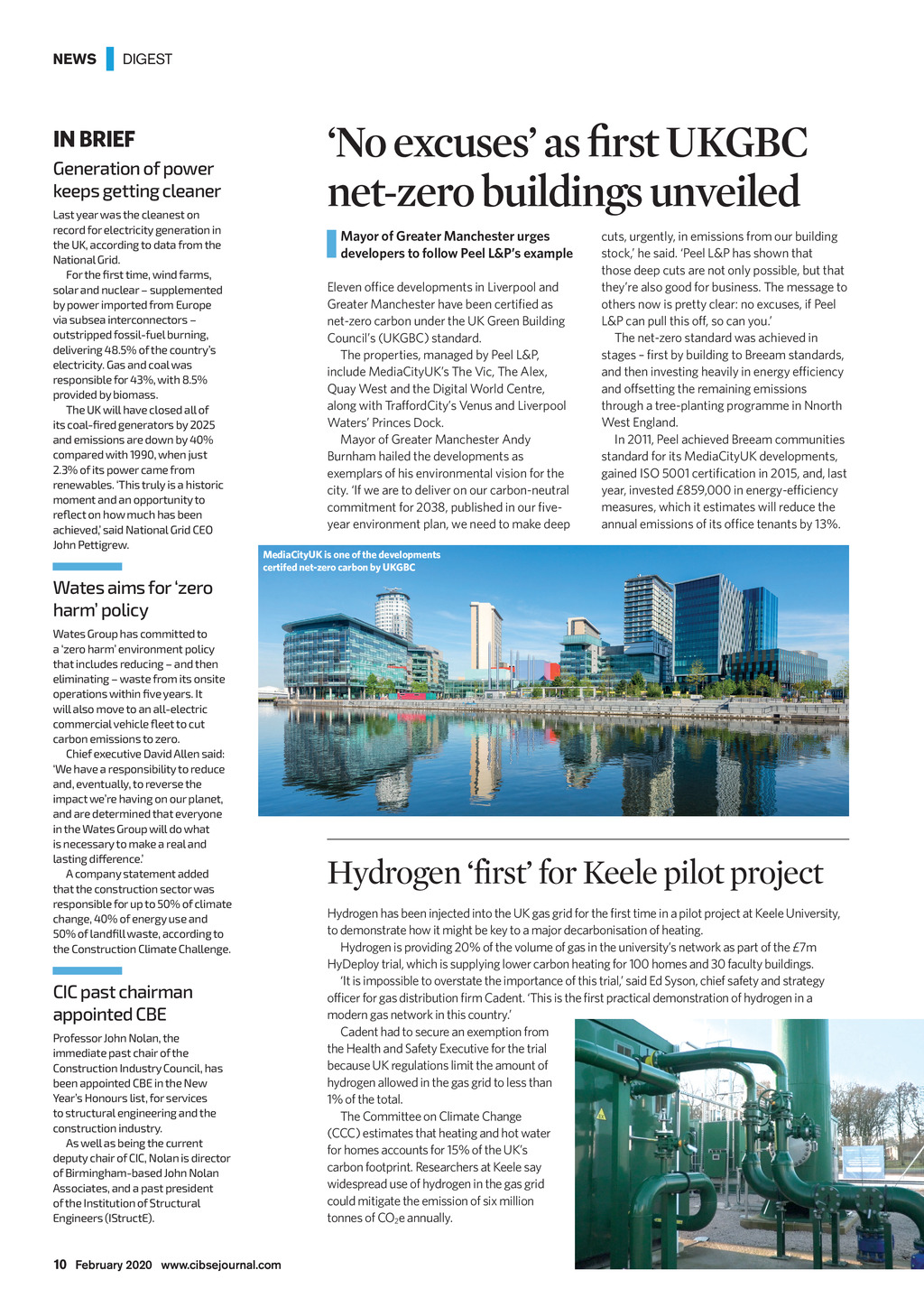


NEWS | DIGEST No excuses as first UKGBC net-zero buildings unveiled IN BRIEF Generation of power keeps getting cleaner Last year was the cleanest on record for electricity generation in the UK, according to data from the National Grid. For the first time, wind farms, solar and nuclear supplemented by power imported from Europe via subsea interconnectors outstripped fossil-fuel burning, delivering 48.5% of the countrys electricity. Gas and coal was responsible for 43%, with 8.5% provided by biomass. The UK will have closed all of its coal-fired generators by 2025 and emissions are down by 40% compared with 1990, when just 2.3% of its power came from renewables. This truly is a historic moment and an opportunity to reflect on how much has been achieved, said National Grid CEO John Pettigrew. Mayor of Greater Manchester urges developers to follow Peel L&Ps example Eleven office developments in Liverpool and Greater Manchester have been certified as net-zero carbon under the UK Green Building Councils (UKGBC) standard. The properties, managed by Peel L&P, include MediaCityUKs The Vic, The Alex, Quay West and the Digital World Centre, along with TraffordCitys Venus and Liverpool Waters Princes Dock. Mayor of Greater Manchester Andy Burnham hailed the developments as exemplars of his environmental vision for the city. If we are to deliver on our carbon-neutral commitment for 2038, published in our fiveyear environment plan, we need to make deep cuts, urgently, in emissions from our building stock, he said. Peel L&P has shown that those deep cuts are not only possible, but that theyre also good for business. The message to others now is pretty clear: no excuses, if Peel L&P can pull this off, so can you. The net-zero standard was achieved in stages first by building to Breeam standards, and then investing heavily in energy efficiency and offsetting the remaining emissions through a tree-planting programme in Nnorth West England. In 2011, Peel achieved Breeam communities standard for its MediaCityUK developments, gained ISO 5001 certification in 2015, and, last year, invested 859,000 in energy-efficiency measures, which it estimates will reduce the annual emissions of its office tenants by 13%. MediaCityUK is one of the developments certifed net-zero carbon by UKGBC Wates aims for zero harm policy Wates Group has committed to a zero harm environment policy that includes reducing and then eliminating waste from its onsite operations within five years. It will also move to an all-electric commercial vehicle fleet to cut carbon emissions to zero. Chief executive David Allen said: We have a responsibility to reduce and, eventually, to reverse the impact were having on our planet, and are determined that everyone in the Wates Group will do what is necessary to make a real and lasting difference. A company statement added that the construction sector was responsible for up to 50% of climate change, 40% of energy use and 50% of landfill waste, according to the Construction Climate Challenge. CIC past chairman appointed CBE Professor John Nolan, the immediate past chair of the Construction Industry Council, has been appointed CBE in the New Years Honours list, for services to structural engineering and the construction industry. As well as being the current deputy chair of CIC, Nolan is director of Birmingham-based John Nolan Associates, and a past president of the Institution of Structural Engineers (IStructE). Hydrogen first for Keele pilot project Hydrogen has been injected into the UK gas grid for the first time in a pilot project at Keele University, to demonstrate how it might be key to a major decarbonisation of heating. Hydrogen is providing 20% of the volume of gas in the universitys network as part of the 7m HyDeploy trial, which is supplying lower carbon heating for 100 homes and 30 faculty buildings. It is impossible to overstate the importance of this trial, said Ed Syson, chief safety and strategy officer for gas distribution firm Cadent. This is the first practical demonstration of hydrogen in a modern gas network in this country. Cadent had to secure an exemption from the Health and Safety Executive for the trial because UK regulations limit the amount of hydrogen allowed in the gas grid to less than 1% of the total. The Committee on Climate Change (CCC) estimates that heating and hot water for homes accounts for 15% of the UKs carbon footprint. Researchers at Keele say widespread use of hydrogen in the gas grid could mitigate the emission of six million tonnes of CO2e annually. 10 February 2020 www.cibsejournal.com CIBSE Feb20 pp10-11 News.indd 10 24/01/2020 14:45