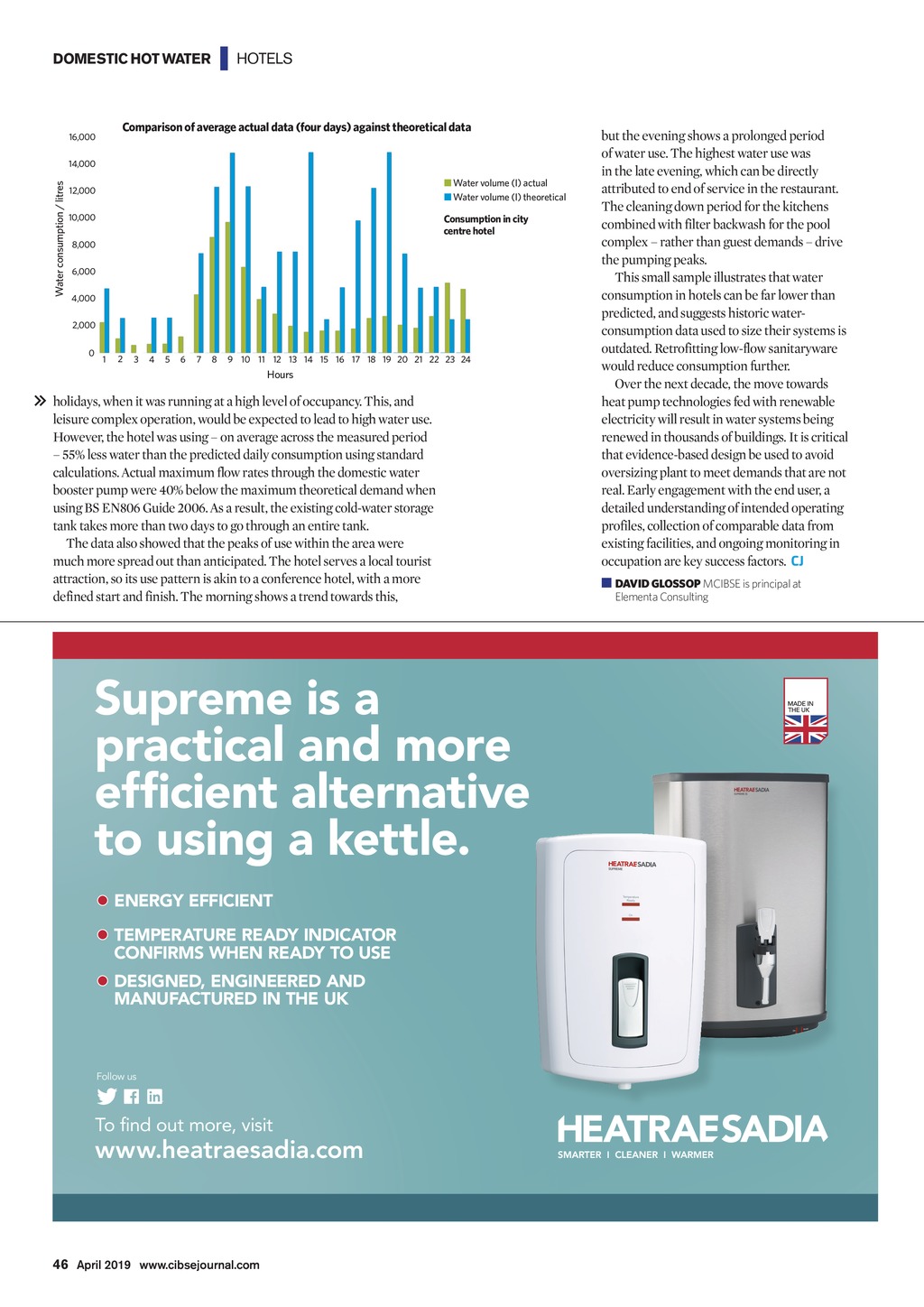


| HOTELS DOMESTIC HOT WATER Comparison of average actual data (four days) against theoretical data 16,000 Water consumption / litres 14,000 Water volume (I) actual Water volume (I) theoretical 12,000 10,000 Consumption in city centre hotel 8,000 6,000 4,000 2,000 0 1 2 3 4 5 6 7 8 9 10 11 12 13 14 15 16 17 18 19 20 21 22 23 24 Hours holidays, when it was running at a high level of occupancy. This, and leisure complex operation, would be expected to lead to high water use. However, the hotel was using on average across the measured period 55% less water than the predicted daily consumption using standard calculations. Actual maximum flow rates through the domestic water booster pump were 40% below the maximum theoretical demand when using BS EN806 Guide 2006. As a result, the existing cold-water storage tank takes more than two days to go through an entire tank. The data also showed that the peaks of use within the area were much more spread out than anticipated. The hotel serves a local tourist attraction, so its use pattern is akin to a conference hotel, with a more defined start and finish. The morning shows a trend towards this, but the evening shows a prolonged period of water use. The highest water use was in the late evening, which can be directly attributed to end of service in the restaurant. The cleaning down period for the kitchens combined with filter backwash for the pool complex rather than guest demands drive the pumping peaks. This small sample illustrates that water consumption in hotels can be far lower than predicted, and suggests historic waterconsumption data used to size their systems is outdated. Retrofitting low-flow sanitaryware would reduce consumption further. Over the next decade, the move towards heat pump technologies fed with renewable electricity will result in water systems being renewed in thousands of buildings. It is critical that evidence-based design be used to avoid oversizing plant to meet demands that are not real. Early engagement with the end user, a detailed understanding of intended operating profiles, collection of comparable data from existing facilities, and ongoing monitoring in occupation are key success factors. CJ DAVID GLOSSOP MCIBSE is principal at Elementa Consulting Supreme is a practical and more efficient alternative to using a kettle. ENERGY EFFICIENT TEMPERATURE READY INDICATOR CONFIRMS WHEN READY TO USE DESIGNED, ENGINEERED AND MANUFACTURED IN THE UK Follow us To find out more, visit www.heatraesadia.com DEPT_336619_HeatraeSadia_Supreme_HalfHoriz_CIBSEJournal_Apr19.indd 1 12/03/2019 09:05 46 April 2019 www.cibsejournal.com CIBSE Apr19 pp45-46 Hot water hotels.indd 46 22/03/2019 16:57