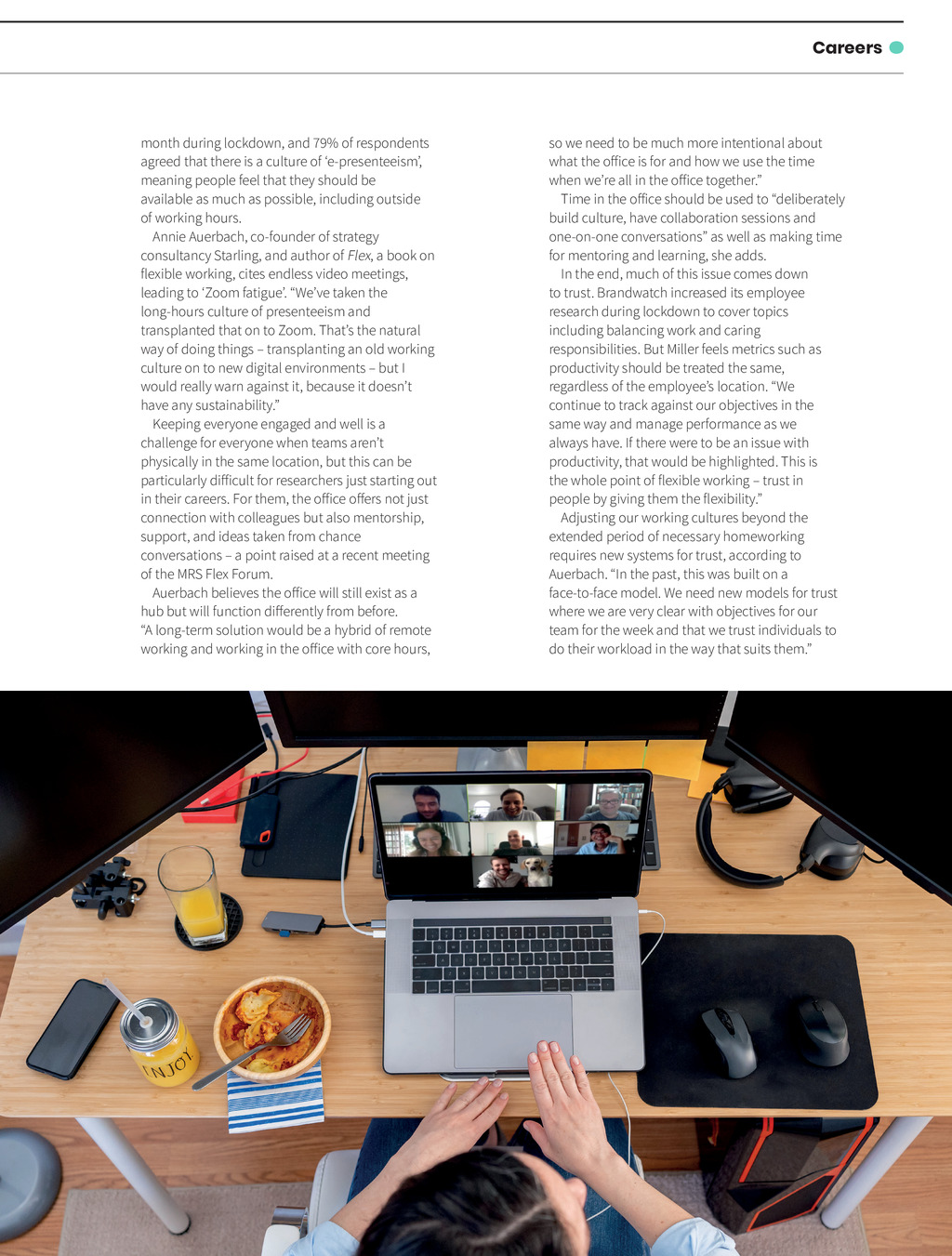
Careers Work in progress Working in the same way as before the pandemic seems a remote prospect, but how can businesses embed lessons learned now into future flexible models? By Katie McQuater S ix months ago, remote and flexible working arrangements were the exception to the rule. For the majority of us, our working lives were spent in an office. The Covid-19 pandemic forced an almost overnight shift in the way businesses operate across most industries, with employees moving to working from home and employers left with little time to prepare. Now, while introduced swiftly as an emergency, temporary measure, it looks set to have bigger implications beyond the current crisis. Twitter changed its working from home policy to allow staff to work remotely in perpetuity, while Google and Facebook said employees would have the option of doing so until 2021. But its not just the Silicon Valley tech titans. Investment bank Morgan Stanley chief executive James Gorman and former WPP chief Martin Sorrell both anticipate more staff working from home in the future. Expectations from employees may have also changed according to April research from O2, YouGov and ICM, 45% of UK workers expected to work more flexibly after lockdown restrictions. Beyond merely extending the necessary crisis mode arrangements, many businesses are rethinking the way they work more permanently. Like most others in the research industry, Ipsos Mori made a rapid pivot to homeworking in the spring. The experience means the business now knows it can run largely remotely, says chief executive Ben Page albeit missing the serendipity of office conversations. Page says: We are likely to be much more hybrid in how we work in future a mixture of home and office until a vaccine arrives, and probably afterwards. The use of Teams has let me directly connect with 1,300 people weekly in a way that previously I did face to face in some ways, despite shutting the office, we are better connected than ever. 54 Smaller offices Insight tech start-up Streetbees is exploring the possibility of a smaller office space, moving to a more permanent flexible model and reducing its business overheads at the same time. The company is considering a hot-desking structure where different teams can work in the office on different days. Offering the team added flexibility where they have two to three days working from home, and a couple of days in the office will not only work really well for employees, but also for the business, says chief executive Tugce Bulut. Streetbees monitors staff engagement and wellbeing on a weekly basis, and has found that scores increased during lockdown, suggesting that employees enjoyed having extra flexibility while working from home. Naturally, when everyone in the team is remote, you have to give people more autonomy and trust them to get stuff done. Its working really well from a team morale perspective, says Bulut. This example reinforces a strong body of evidence that flexible working is better both for our mental and physical health we eat and sleep better, and businesses also experience higher employee retention. Social insight company Brandwatch introduced a new flexible-working policy globally prior to the pandemic. While it plans to have employees return to the office, it is also expecting an increased uptake of the new policy. Its often hard to break long-standing habits and schedules, so this has shown that mixing things up provides options, says Victoria Miller, vice-president of communications and content. Remote vs flexible There is a difference between simply working remotely in response to a pandemic with many juggling family responsibilities and truly flexible working in more stable circumstances, where workers determine their own working hours in mutual agreement with their employer. While the location of work has changed and companies have put in place new digital tools for communication and management, however, the historical systems and habits underpinning them are still alive and kicking and not all of them are positive. Changing routines that have been in place since the Industrial Revolution takes work. A study commissioned by LinkedIn and the Mental Health Foundation found that UK homeworkers were racking up an additional 28 hours of overtime a