
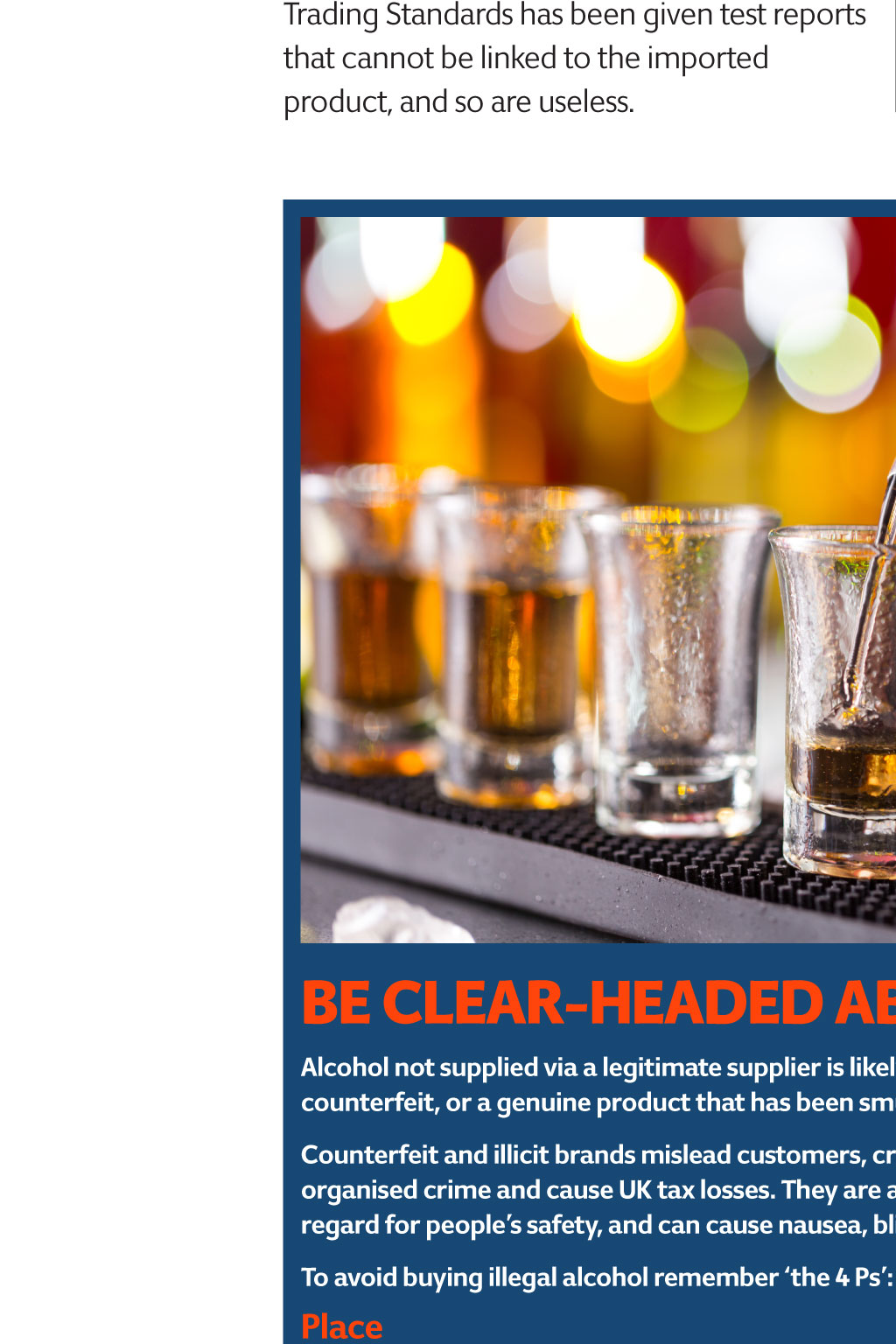
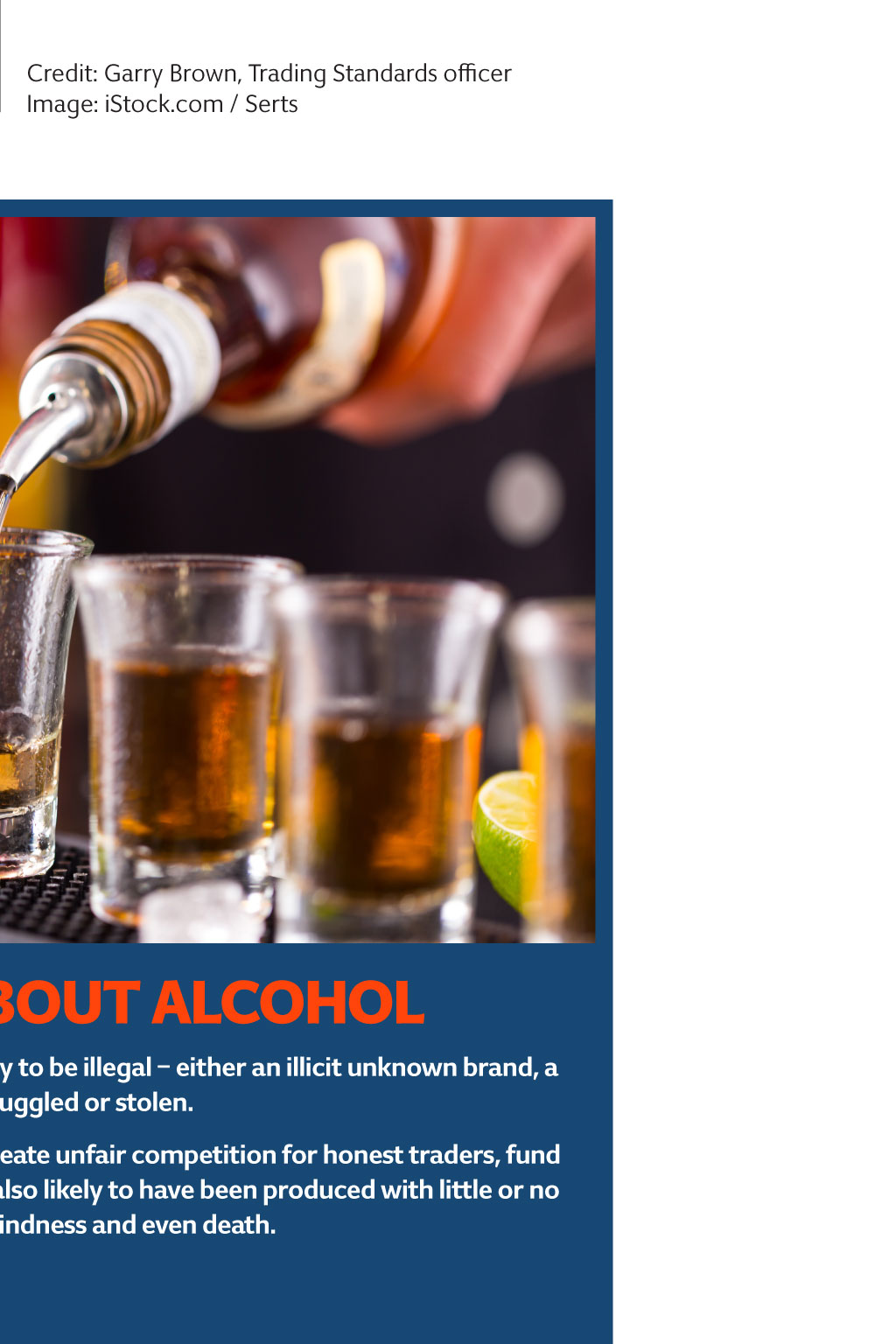
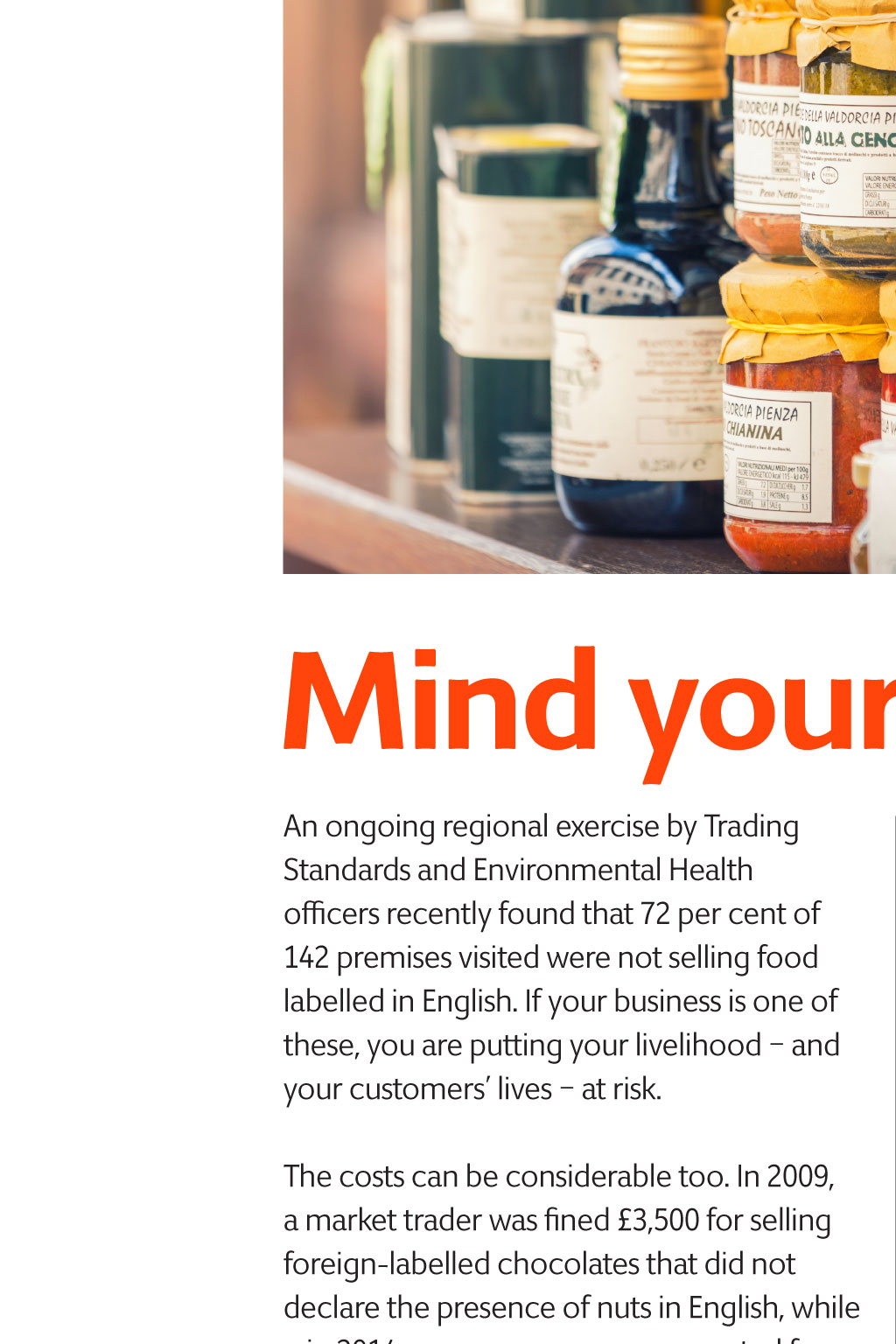
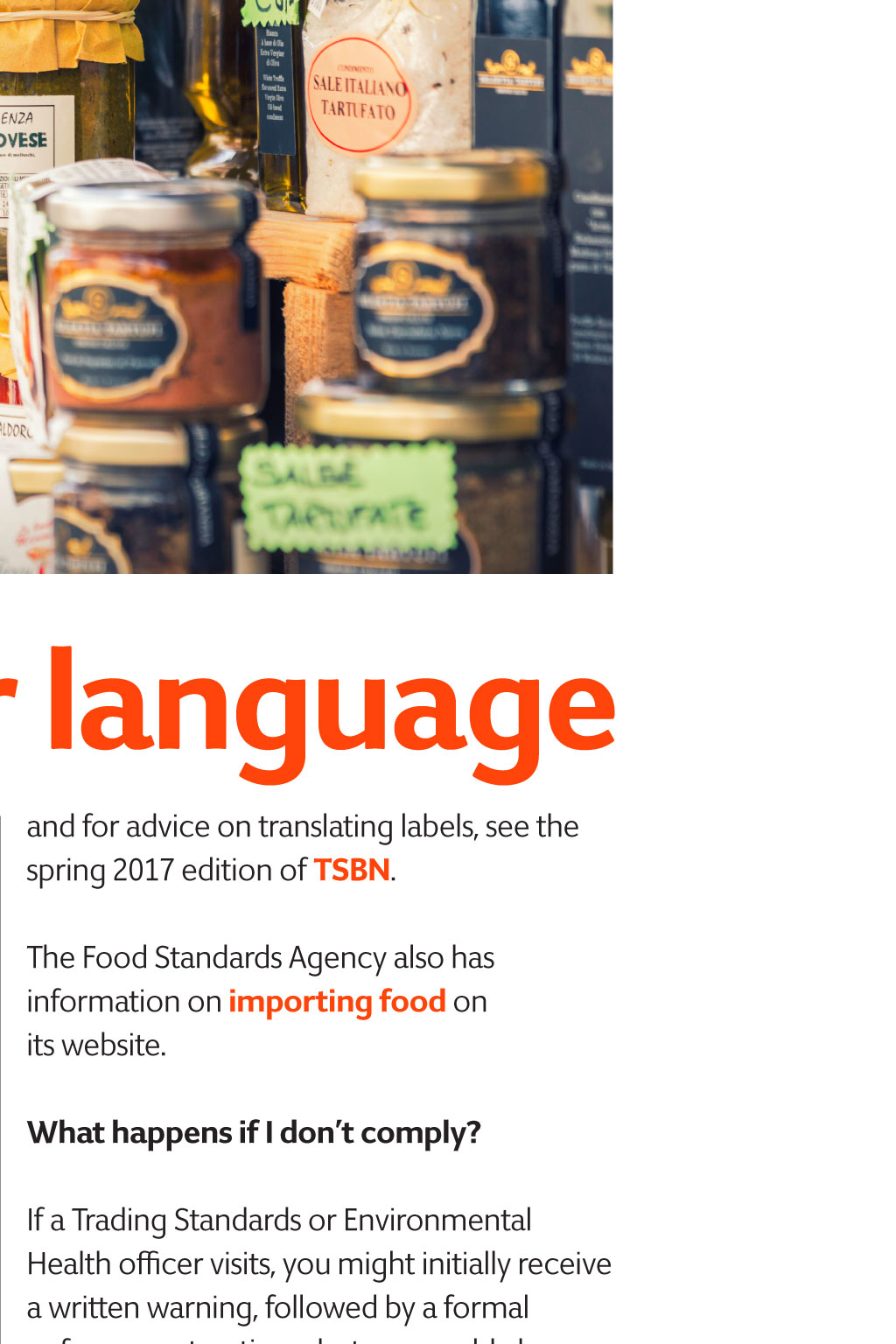
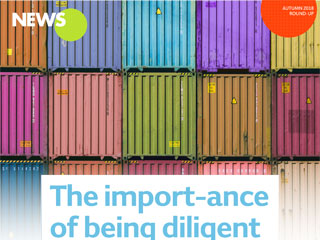
AUTUMN 2018 ROUND-UP The import-ance of being diligent Businesses that import goods from outside Europe must ensure the items they buy comply with EU laws, especially ones aimed at protecting the health and safety of consumers. ROUND-UP Some goods such as electrical items and toys have a CE mark, which is a declaration by the manufacturer that their item complies with all relevant EU law. For example, the CE mark on a childs electrical game should signify that it complies with electrical and toy safety laws. The CE mark is rebuttable, however; just because an item bears one doesnt mean the product complies with all relevant laws simply that the manufacturer has stated that it does. So whatever the product, it is vital to ask suppliers or manufacturers for proof of compliance. This can be in the form of technical or product information files, depending on what is being sold. It is also important to check that the test reports or information provided by the supplier relate to the item being imported. Trading Standards has been given test reports that cannot be linked to the imported product, and so are useless. An identification number is often required by law for toys and electrical goods, for example. So check that your product bears such an identifier, and confirm the validity of accompanying technical files or test reports by ensuring they have the same number. It is also important to check the labelling of products. Dierent products have dierent labelling requirements; if the labelling is wrong, the goods cannot be sold legally. Check Business Companion or ask your local Trading Standards for more information. If a business does not do these checks, it risks being unable to sell the imported goods, because they may not be safe. It may then have to go through a potentially costly exercise to have the goods tested and relabelled in the UK. In addition, if such goods are stopped at the border, Trading Standards ocers have the power to destroy any dangerous items leaving importers having to pay for goods they will never receive. Credit: Garry Brown, Trading Standards ocer Image: iStock.com / Serts BE CLEAR-HEADED ABOUT ALCOHOL Alcohol not supplied via a legitimate supplier is likely to be illegal either an illicit unknown brand, a counterfeit, or a genuine product that has been smuggled or stolen. Counterfeit and illicit brands mislead customers, create unfair competition for honest traders, fund organised crime and cause UK tax losses. They are also likely to have been produced with little or no regard for peoples safety, and can cause nausea, blindness and even death. To avoid buying illegal alcohol remember the 4 Ps: Place n Only deal with reputable suppliers and get proper invoices. Cash and carry businesses have been known to deal in illicit alcohol, so you must still check. Keep all invoices to show full traceability. n Never buy alcohol from anyone who brings the goods to the shop. n Control your stock so you can be sure where goods come from for example, mark boxes with the supplier and date of purchase. Be careful about accepting returns from customers. Price If a deal looks too good to be true, it probably is. Packaging n Check the label. Compare it with a bottle you know is genuine. Warning signs include poor printing or spelling errors, poor-quality label/alignment, overstuck labels, and foreign labelling. n If spirits are sold in cases that have been resealed or have UK Duty Paid crossed through dont buy them. Also check that individual bottle caps are properly sealed; even if the alcohol is genuine it could have been tampered with. n Spirits in bottles 35cl or larger and 30 per cent ABV or higher have to have a UK Duty stamp. This will glow white, yellow or green under UV light; it should not reflect blue/violet. n Scan the bar code to see if its listed as the correct product. ROUND-UP Product n Look out for fake versions of well-known brands and be wary of brand names that you havent seenbefore. n Vodka, the most commonly counterfeited spirit, should not have white particles or sediment in the bottle. If it does, the vodka may have been diluted with tap water. If you are oered illegal alcohol, report it to Trading Standards by calling the confidential fakes hotline on 0300 303 2636 or contact Crimestoppers anonymously on 0800 555 111. Mind your language An ongoing regional exercise by Trading Standards and Environmental Health ocers recently found that 72 per cent of 142 premises visited were not selling food labelled in English. If your business is one of these, you are putting your livelihood and your customers lives at risk. and for advice on translating labels, see the spring 2017 edition of TSBN. The Food Standards Agency also has information on importing food on its website. What happens if I dont comply? The costs can be considerable too. In 2009, a market trader was fined 3,500 for selling foreign-labelled chocolates that did not declare the presence of nuts in English, while in 2014 a company was prosecuted for a similar oence and faced costs of 4,590. Food for sale in the UK must be labelled in English. You can have information on the label in a dierent language too, but the information required by law must be in English and this includes allergens. Some people are allergic to certain foods. If they cant tell whether an allergen is in the food, it could lead to serious health implications and even death. Retailers, wholesalers and importers all have responsibilities when it comes to the labelling of food products. To find out what these are, If a Trading Standards or Environmental Health ocer visits, you might initially receive a written warning, followed by a formal enforcement notice but you could also have your stock seized and face prosecution. Not providing the correct allergen information is a criminal oence, with a maximum penalty of an unlimited fine. Ultimately, if your action, or inaction, was to lead to the death of an allergy suerer, there would be a police investigation, which could lead to manslaughter charges. For further advice, contact your local Trading Standards or Environmental Health service. Credit: Stuart Powell, Trading Standards ocer Image: iStock.com / Marcus Lindstrom For further information, please contact your local Trading Standards Service