
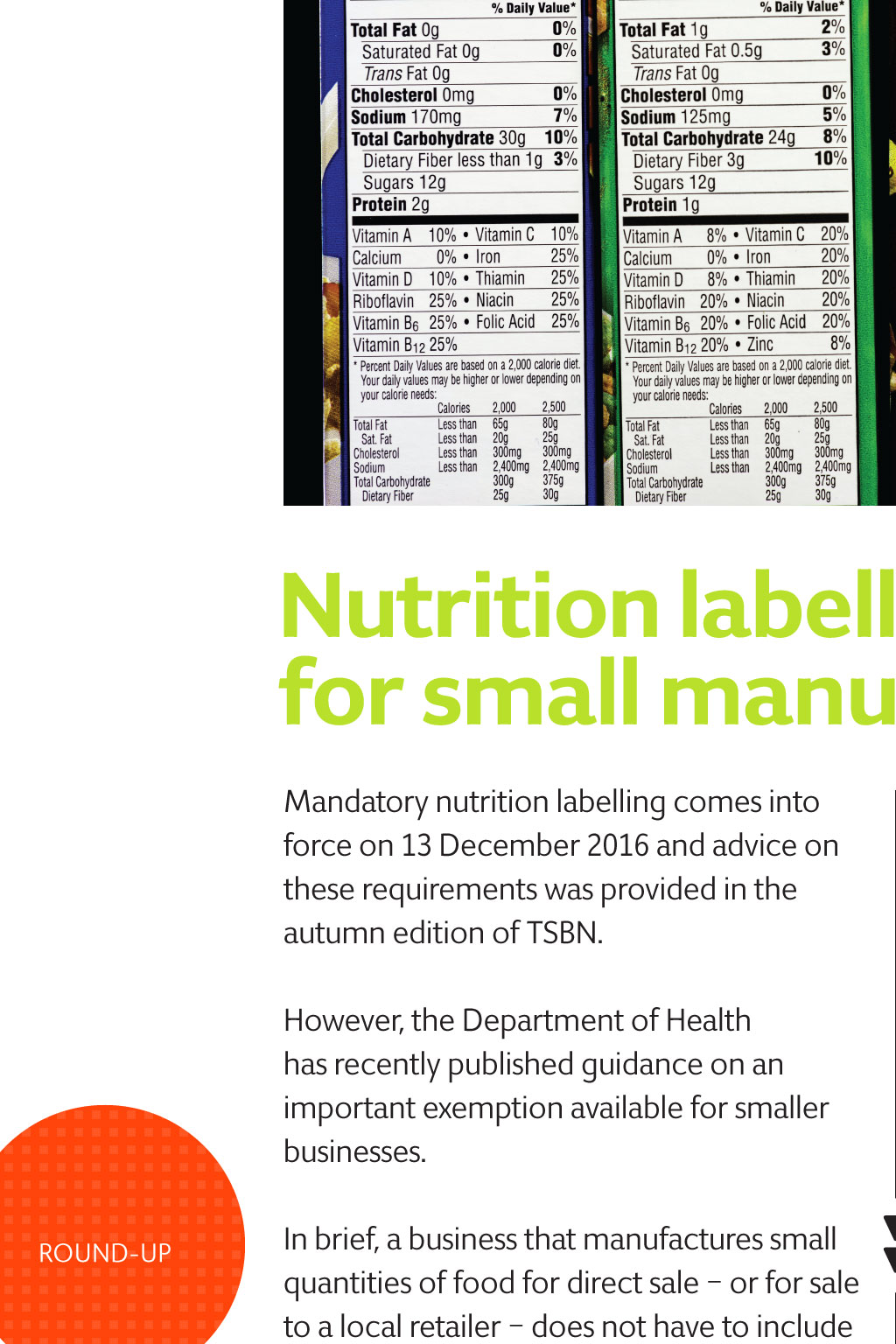
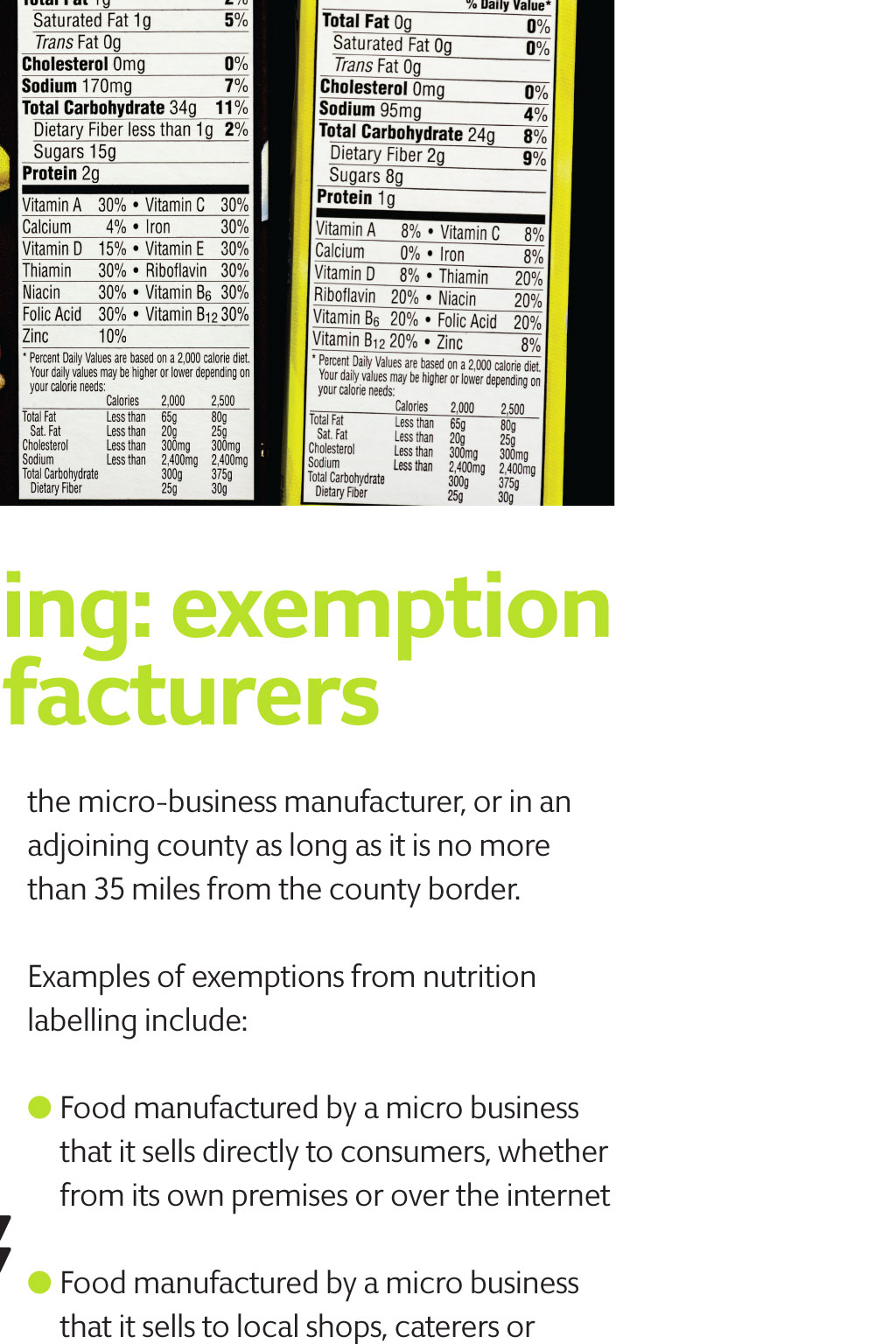
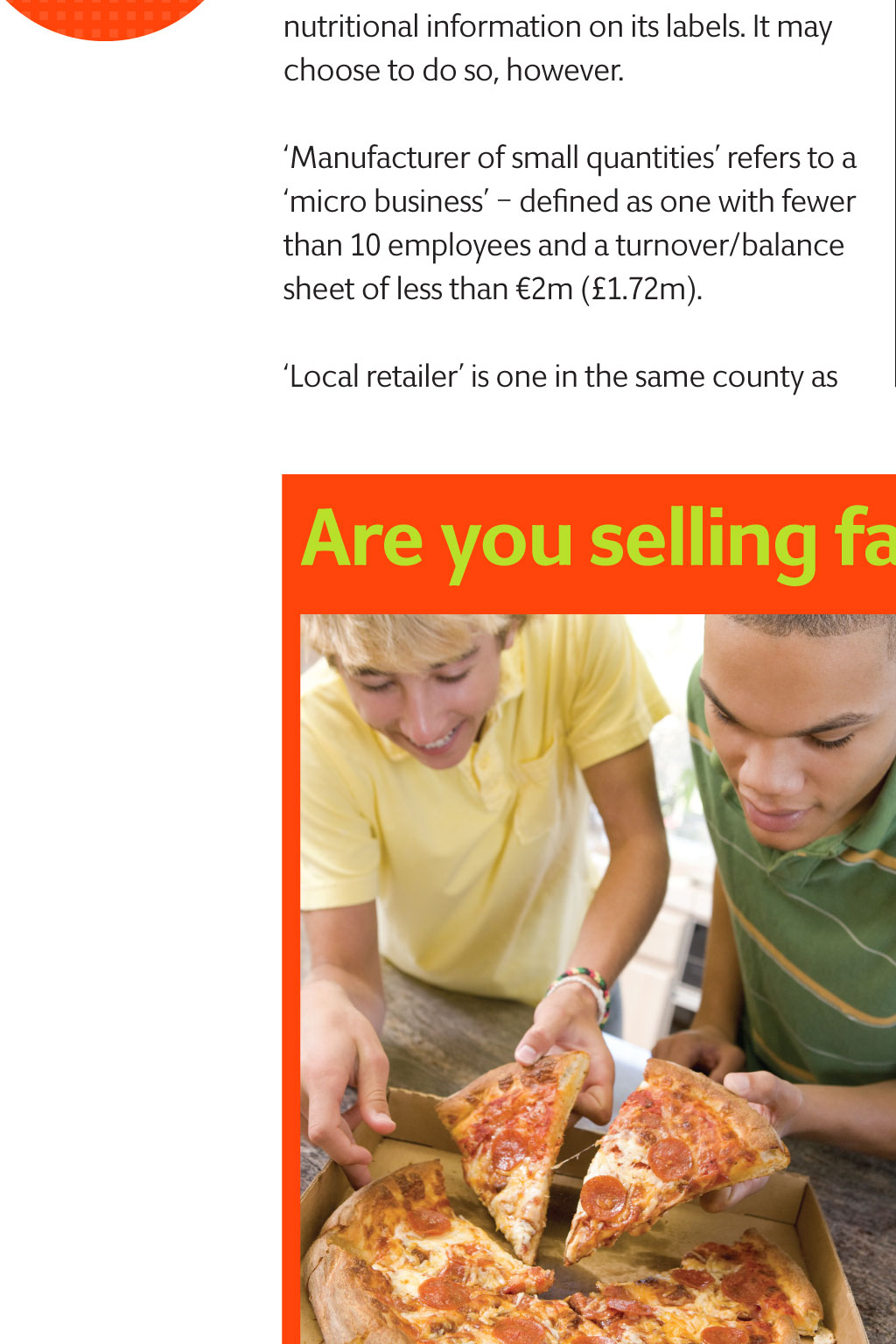
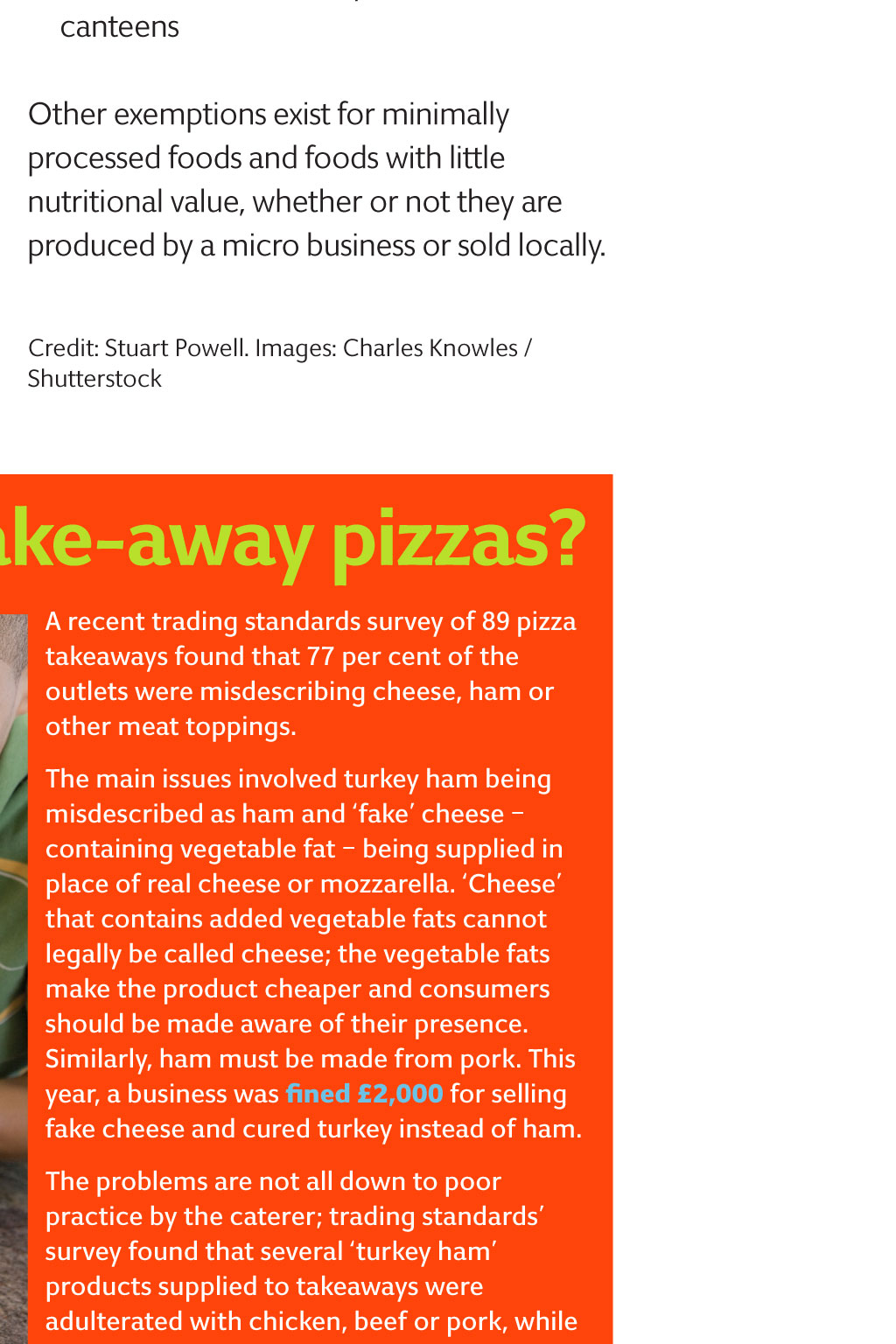
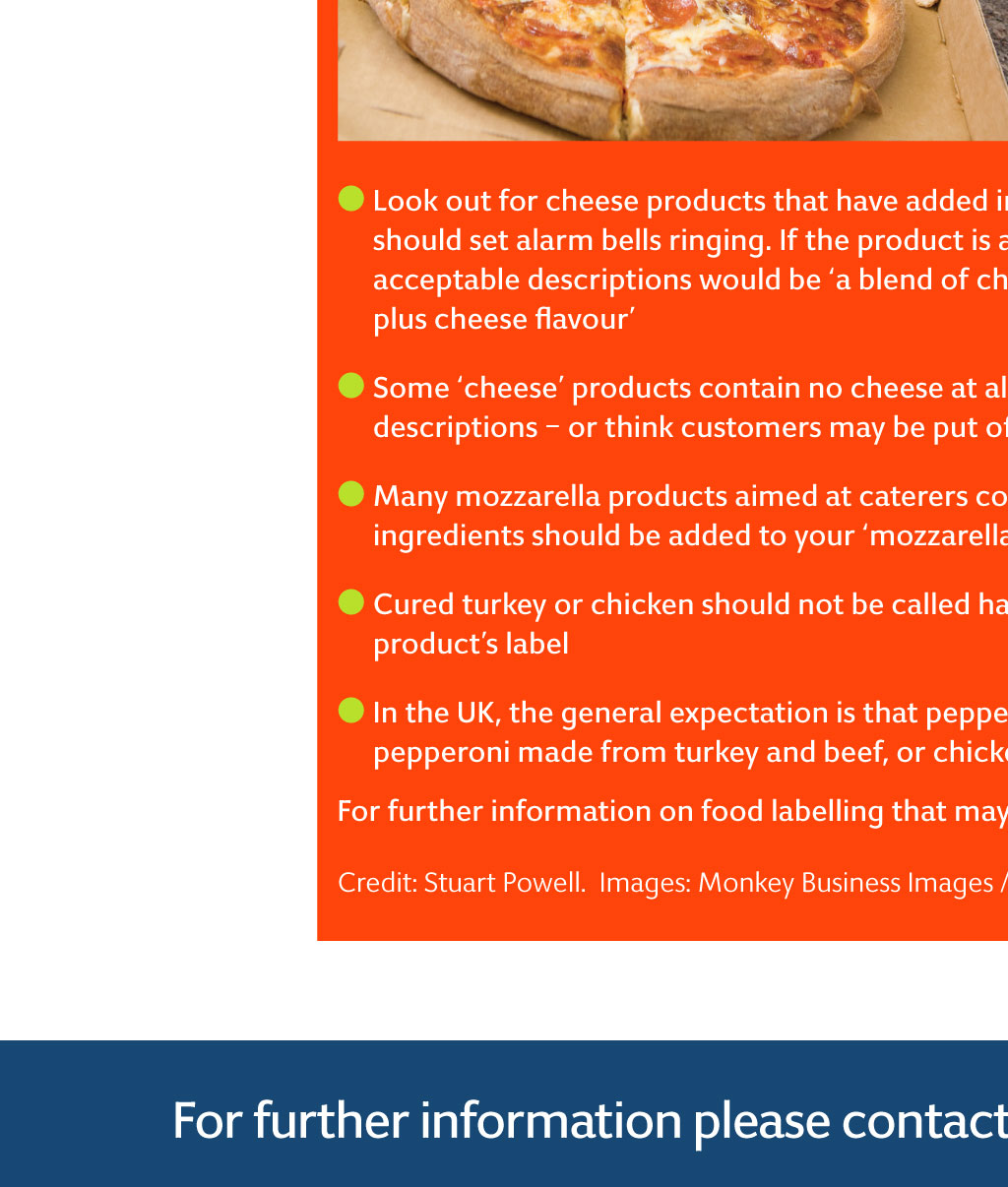
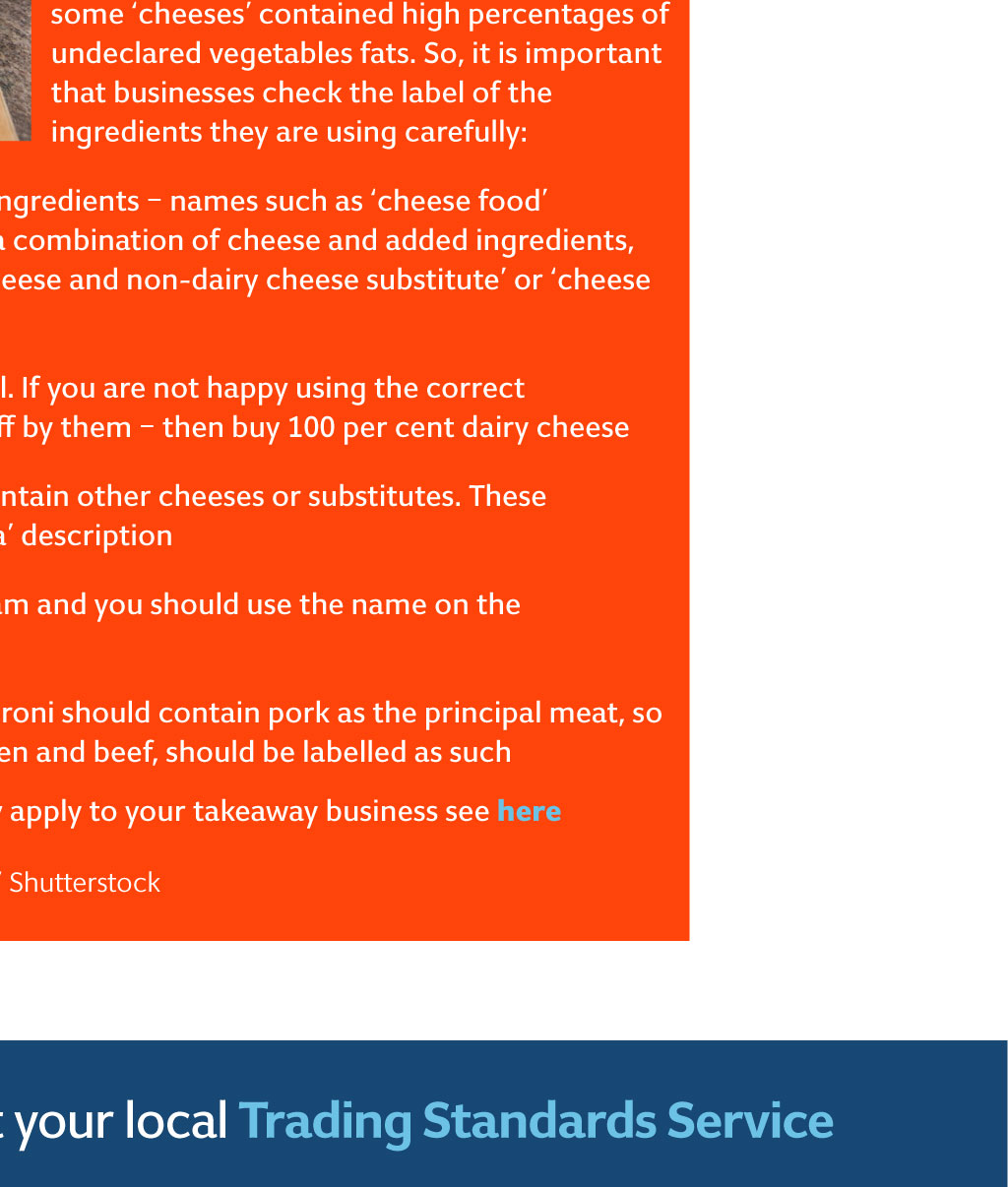
winter 2016 round-up Be clear over health and nutrition claims Making a health claim about a food sold loose in a caf, restaurant or takeaway can be challenging. If you want to make a general health claim for example, identifying a food as a healthy option or a superfood you would need to meet certain criteria under the nutrition and Health Claims Regulation (EC) no.1924/2006. This type of general claim would need to be accompanied by a specific, permitted health claim, details of which can be found on the EU nutrition and health claims website. You may need to display additional information for example, a statement indicating the importance of a varied and balanced diet and a healthy lifestyle, or a warning for products likely to present a health risk if consumed to excess. You can focus on other aspects of your food to promote it, however. Try using factual statements, such as: All our milkshakes are made with semi-skimmed milk, which is low in fat; or Spice up your meal with one of our low-calorie sauces. If you know the nutritional content of the food you are selling, you may find it easier to make nutrition claims such as low fat or source of fibre. These can often be clearer for consumers than a general reference to a product being healthy. Round-uP 100g or, for liquids, 1.5g of fat per 100ml. Statements of fact that do not imply the food is beneficial contains 5g of fat or 250 calories, for example are not nutrition claims, so do not have to comply with the regulation. nutrition claims can be used as long as they are included in the EU list of authorised nutrition claims and products using the claims comply with the set criteria. For example, to suggest that a product is low fat it must contain no more than 3g of fat per The department of Health has produced some useful guidance based on the legislation to help food businesses that want to make a nutrition or health claim for their food products. Credit: Rose Harris. Images: leonoris / Shutterstock nutrition labelling: exemption for small manufacturers Mandatory nutrition labelling comes into force on 13 december 2016 and advice on these requirements was provided in the autumn edition of TSBn. However, the department of Health has recently published guidance on an important exemption available for smaller businesses. Round-uP In brief, a business that manufactures small quantities of food for direct sale or for sale to a local retailer does not have to include nutritional information on its labels. It may choose to do so, however. Manufacturer of small quantities refers to a micro business defined as one with fewer than 10 employees and a turnover/balance sheet of less than 2m (1.72m). Local retailer is one in the same county as the micro-business manufacturer, or in an adjoining county as long as it is no more than 35 miles from the county border. Examples of exemptions from nutrition labelling include: l Food manufactured by a micro business that it sells directly to consumers, whether from its own premises or over the internet l Food manufactured by a micro business that it sells to local shops, caterers or canteens other exemptions exist for minimally processed foods and foods with little nutritional value, whether or not they are produced by a micro business or sold locally. Credit: Stuart Powell. Images: Charles Knowles / Shutterstock Are you selling fake-away pizzas? A recent trading standards survey of 89 pizza takeaways found that 77 per cent of the outlets were misdescribing cheese, ham or other meat toppings. the main issues involved turkey ham being misdescribed as ham and fake cheese containing vegetable fat being supplied in place of real cheese or mozzarella. Cheese that contains added vegetable fats cannot legally be called cheese; the vegetable fats make the product cheaper and consumers should be made aware of their presence. Similarly, ham must be made from pork. this year, a business was fined 2,000 for selling fake cheese and cured turkey instead of ham. the problems are not all down to poor practice by the caterer; trading standards survey found that several turkey ham products supplied to takeaways were adulterated with chicken, beef or pork, while some cheeses contained high percentages of undeclared vegetables fats. So, it is important that businesses check the label of the ingredients they are using carefully: l Look out for cheese products that have added ingredients names such as cheese food should set alarm bells ringing. if the product is a combination of cheese and added ingredients, acceptable descriptions would be a blend of cheese and non-dairy cheese substitute or cheese plus cheese flavour l Some cheese products contain no cheese at all. if you are not happy using the correct descriptions or think customers may be put off by them then buy 100 per cent dairy cheese l Many mozzarella products aimed at caterers contain other cheeses or substitutes. these ingredients should be added to your mozzarella description l Cured turkey or chicken should not be called ham and you should use the name on the products label l in the uK, the general expectation is that pepperoni should contain pork as the principal meat, so pepperoni made from turkey and beef, or chicken and beef, should be labelled as such For further information on food labelling that may apply to your takeaway business see here Credit: Stuart Powell. Images: Monkey Business Images / Shutterstock For further information please contact your local Trading Standards Service