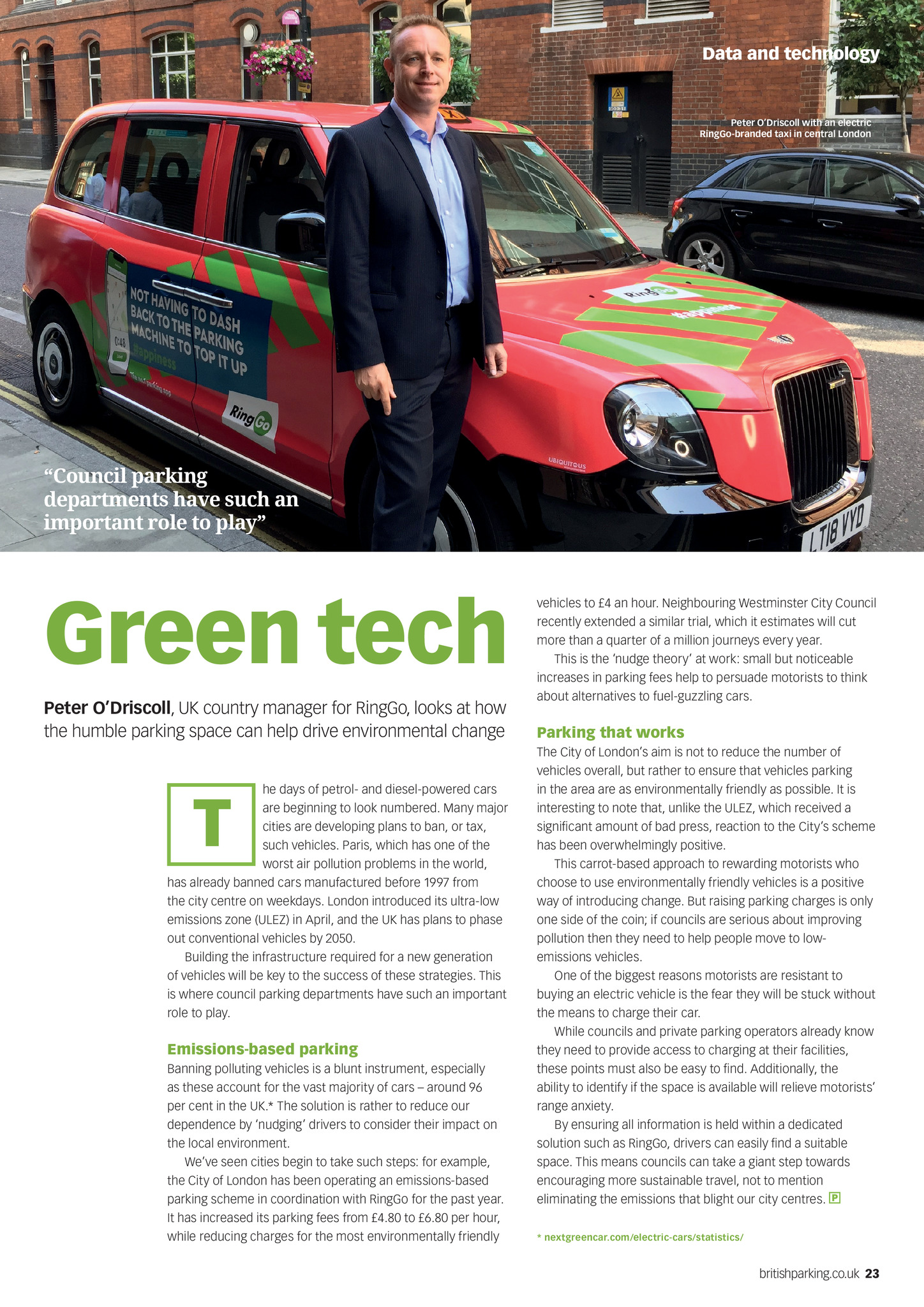
Data and technology Peter ODriscoll with an electric RingGo-branded taxi in central London Council parking departments have such an important role to play Green tech Peter ODriscoll, UK country manager for RingGo, looks at how the humble parking space can help drive environmental change T he days of petrol- and diesel-powered cars are beginning to look numbered. Many major cities are developing plans to ban, or tax, such vehicles. Paris, which has one of the worst air pollution problems in the world, has already banned cars manufactured before 1997 from the city centre on weekdays. London introduced its ultra-low emissions zone (ULEZ) in April, and the UK has plans to phase out conventional vehicles by 2050. Building the infrastructure required for a new generation of vehicles will be key to the success of these strategies. This is where council parking departments have such an important role to play. Emissions-based parking Banning polluting vehicles is a blunt instrument, especially as these account for the vast majority of cars around 96 per cent in the UK.* The solution is rather to reduce our dependence by nudging drivers to consider their impact on the local environment. Weve seen cities begin to take such steps: for example, the City of London has been operating an emissions-based parking scheme in coordination with RingGo for the past year. It has increased its parking fees from 4.80 to 6.80 per hour, while reducing charges for the most environmentally friendly vehicles to 4 an hour. Neighbouring Westminster City Council recently extended a similar trial, which it estimates will cut more than a quarter of a million journeys every year. This is the nudge theory at work: small but noticeable increases in parking fees help to persuade motorists to think about alternatives to fuel-guzzling cars. Parking that works The City of Londons aim is not to reduce the number of vehicles overall, but rather to ensure that vehicles parking in the area are as environmentally friendly as possible. It is interesting to note that, unlike the ULEZ, which received a significant amount of bad press, reaction to the Citys scheme has been overwhelmingly positive. This carrot-based approach to rewarding motorists who choose to use environmentally friendly vehicles is a positive way of introducing change. But raising parking charges is only one side of the coin; if councils are serious about improving pollution then they need to help people move to lowemissions vehicles. One of the biggest reasons motorists are resistant to buying an electric vehicle is the fear they will be stuck without the means to charge their car. While councils and private parking operators already know they need to provide access to charging at their facilities, these points must also be easy to find. Additionally, the ability to identify if the space is available will relieve motorists range anxiety. By ensuring all information is held within a dedicated solution such as RingGo, drivers can easily find a suitable space. This means councils can take a giant step towards encouraging more sustainable travel, not to mention eliminating the emissions that blight our city centres. * nextgreencar.com/electric-cars/statistics/ britishparking.co.uk 23 PN Sep19 pp22-23 RingGo.indd 23 22/08/2019 11:50