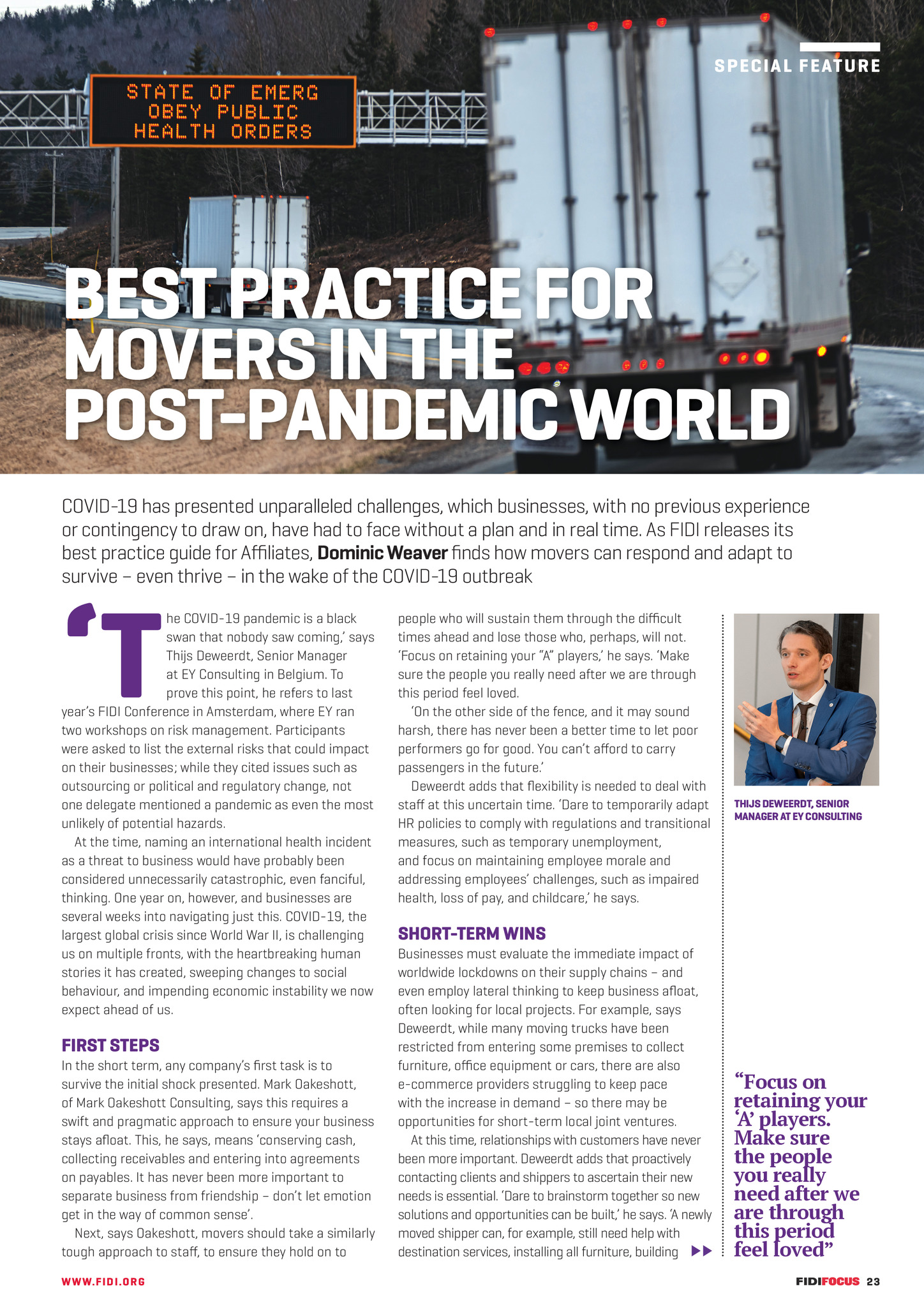
m S PECI AL F E ATU RE BEST PRACTICE FOR MOVERS IN THE POST-PANDEMIC WORLD COVID-19 has presented unparalleled challenges, which businesses, with no previous experience or contingency to draw on, have had to face without a plan and in real time. As FIDI releases its best practice guide for Affiliates, Dominic Weaver finds how movers can respond and adapt to survive even thrive in the wake of the COVID-19 outbreak T he COVID-19 pandemic is a black swan that nobody saw coming, says Thijs Deweerdt, Senior Manager at EY Consulting in Belgium. To prove this point, he refers to last years FIDI Conference in Amsterdam, where EY ran two workshops on risk management. Participants were asked to list the external risks that could impact on their businesses; while they cited issues such as outsourcing or political and regulatory change, not one delegate mentioned a pandemic as even the most unlikely of potential hazards. At the time, naming an international health incident as a threat to business would have probably been considered unnecessarily catastrophic, even fanciful, thinking. One year on, however, and businesses are several weeks into navigating just this. COVID-19, the largest global crisis since World War II, is challenging us on multiple fronts, with the heartbreaking human stories it has created, sweeping changes to social behaviour, and impending economic instability we now expect ahead of us. FIRST STEPS In the short term, any companys first task is to survive the initial shock presented. Mark Oakeshott, of Mark Oakeshott Consulting, says this requires a swift and pragmatic approach to ensure your business stays afloat. This, he says, means conserving cash, collecting receivables and entering into agreements on payables. It has never been more important to separate business from friendship dont let emotion get in the way of common sense. Next, says Oakeshott, movers should take a similarly tough approach to staff, to ensure they hold on to WW W. F I D I. O R G FF297 JunJul20 pp22-30 Best p1.indd 23 people who will sustain them through the difficult times ahead and lose those who, perhaps, will not. Focus on retaining your A players, he says. Make sure the people you really need after we are through this period feel loved. On the other side of the fence, and it may sound harsh, there has never been a better time to let poor performers go for good. You cant afford to carry passengers in the future. Deweerdt adds that flexibility is needed to deal with staff at this uncertain time. Dare to temporarily adapt HR policies to comply with regulations and transitional measures, such as temporary unemployment, and focus on maintaining employee morale and addressing employees challenges, such as impaired health, loss of pay, and childcare, he says. THIJS DEWEERDT, SENIOR MANAGER AT EY CONSULTING SHORT-TERM WINS Businesses must evaluate the immediate impact of worldwide lockdowns on their supply chains and even employ lateral thinking to keep business afloat, often looking for local projects. For example, says Deweerdt, while many moving trucks have been restricted from entering some premises to collect furniture, office equipment or cars, there are also e-commerce providers struggling to keep pace with the increase in demand so there may be opportunities for short-term local joint ventures. At this time, relationships with customers have never been more important. Deweerdt adds that proactively contacting clients and shippers to ascertain their new needs is essential. Dare to brainstorm together so new solutions and opportunities can be built, he says. A newly moved shipper can, for example, still need help with destination services, installing all furniture, building Focus on retaining your A players. Make sure the people you really need after we are through this period feel loved 23 01/06/2020 14:54