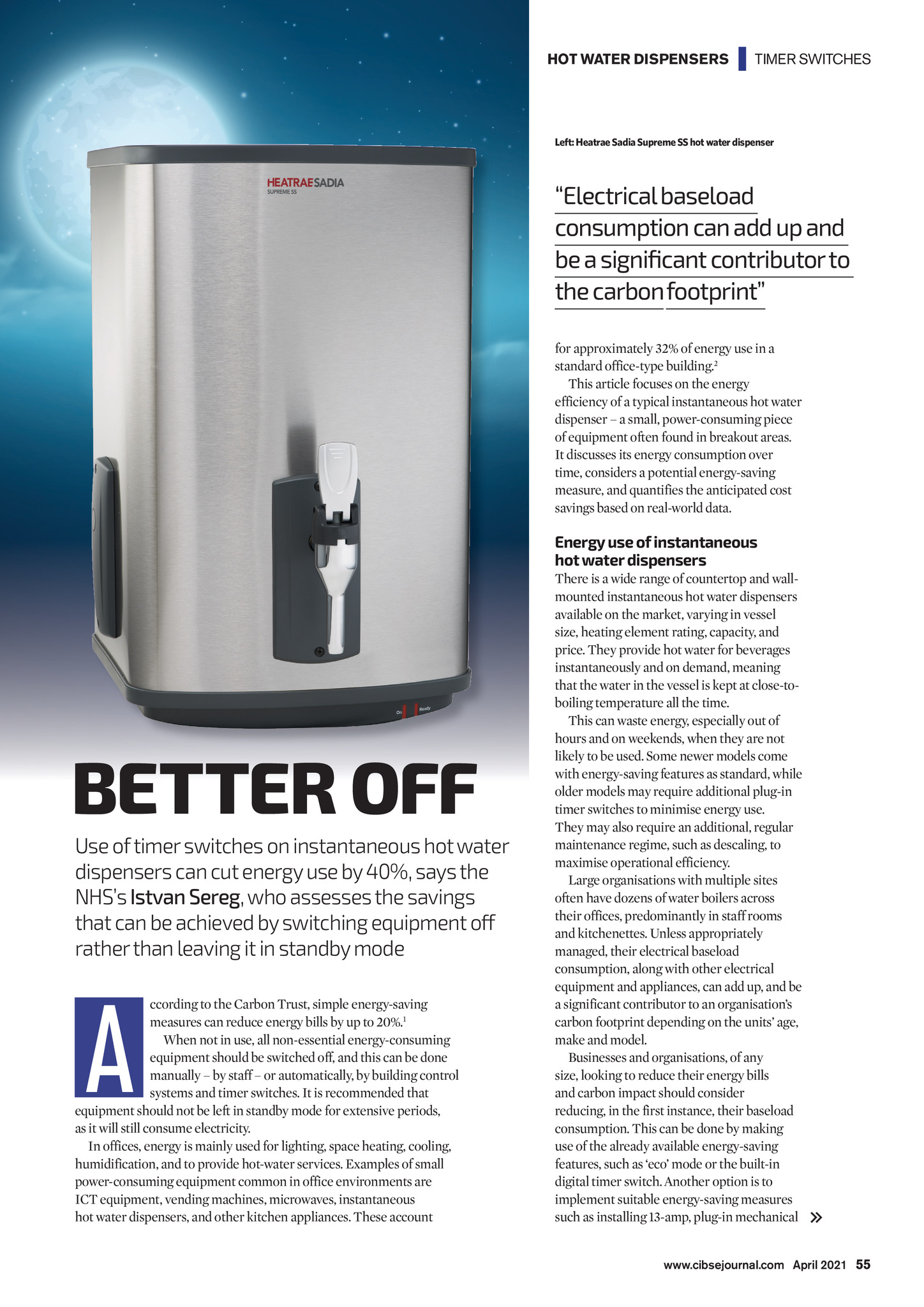
HOT WATER DISPENSERS | TIMER SWITCHES Left: Heatrae Sadia Supreme SS hot water dispenser Electrical baseload consumption can add up and be a significant contributor to the carbonfootprint for approximately 32% of energy use in a standard office-type building.2 This article focuses on the energy efficiency of a typical instantaneous hot water dispenser a small, power-consuming piece of equipment often found in breakout areas. It discusses its energy consumption over time, considers a potential energy-saving measure, and quantifies the anticipated cost savings based on real-world data. Energy use of instantaneous hot water dispensers BETTER OFF Use of timer switches on instantaneous hot water dispensers can cut energy use by 40%, says the NHSs Istvan Sereg, who assesses the savings that can be achieved by switching equipment off rather than leaving it in standby mode A ccording to the Carbon Trust, simple energy-saving measures can reduce energy bills by up to 20%.1 When not in use, all non-essential energy-consuming equipment should be switched off, and this can be done manually by staff or automatically, by building control systems and timer switches. It is recommended that equipment should not be left in standby mode for extensive periods, as it will still consume electricity. In offices, energy is mainly used for lighting, space heating, cooling, humidification, and to provide hot-water services. Examples of small power-consuming equipment common in office environments are ICT equipment, vending machines, microwaves, instantaneous hot water dispensers, and other kitchen appliances. These account There is a wide range of countertop and wallmounted instantaneous hot water dispensers available on the market, varying in vessel size, heating element rating, capacity, and price. They provide hot water for beverages instantaneously and on demand, meaning that the water in the vessel is kept at close-toboiling temperature all the time. This can waste energy, especially out of hours and on weekends, when they are not likely to be used. Some newer models come with energy-saving features as standard, while older models may require additional plug-in timer switches to minimise energy use. They may also require an additional, regular maintenance regime, such as descaling, to maximise operational efficiency. Large organisations with multiple sites often have dozens of water boilers across their offices, predominantly in staff rooms and kitchenettes. Unless appropriately managed, their electrical baseload consumption, along with other electrical equipment and appliances, can add up, and be a significant contributor to an organisations carbon footprint depending on the units age, make and model. Businesses and organisations, of any size, looking to reduce their energy bills and carbon impact should consider reducing, in the first instance, their baseload consumption. This can be done by making use of the already available energy-saving features, such as eco mode or the built-in digital timer switch. Another option is to implement suitable energy-saving measures such as installing 13-amp, plug-in mechanical www.cibsejournal.com April 2021 55 CIBSE April 21 pp55-57 Hot water dispenser.indd 55 26/03/2021 14:44