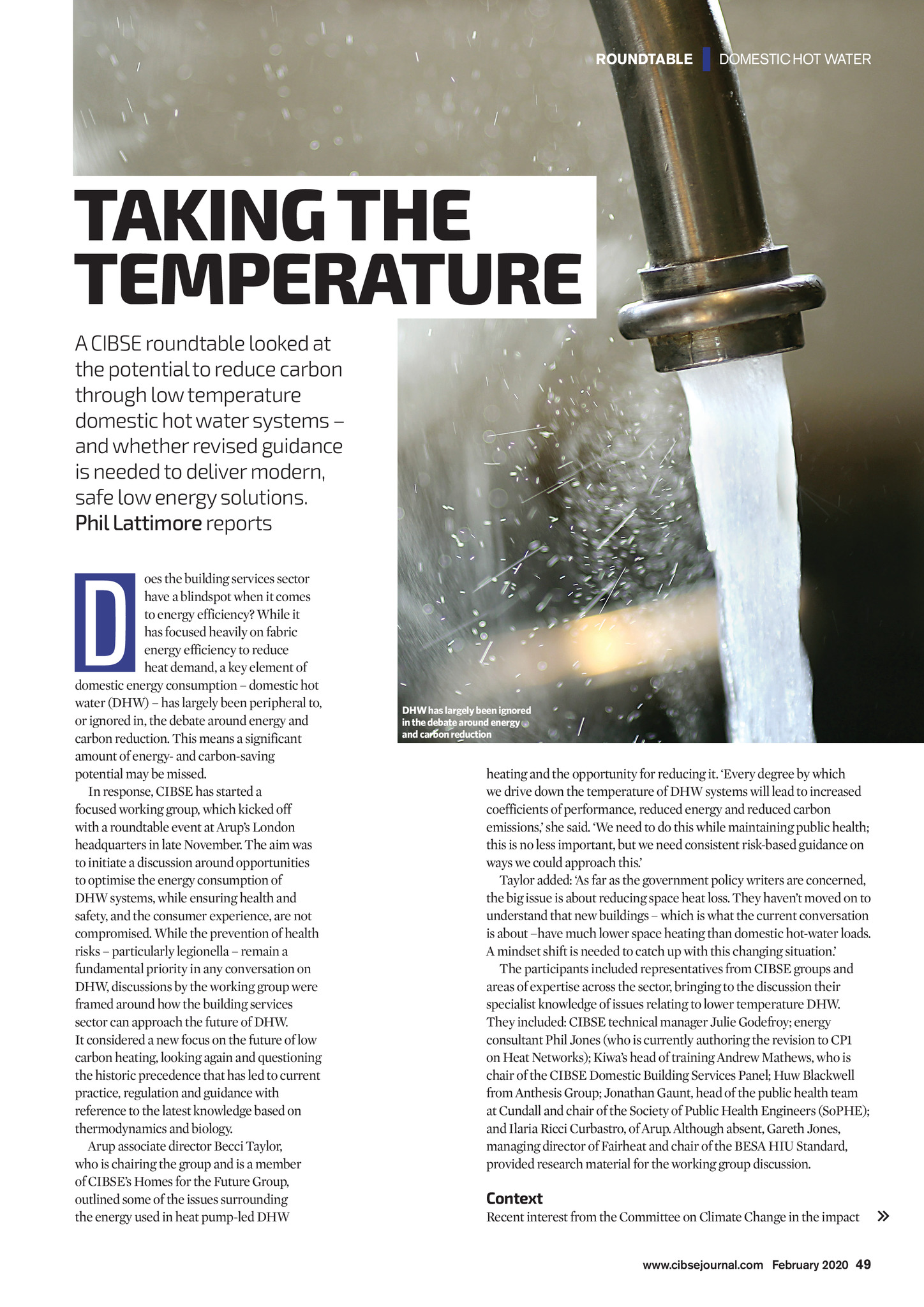

ROUNDTABLE | DOMESTIC HOT WATER TAKING THE TEMPERATURE A CIBSE roundtable looked at the potential to reduce carbon through low temperature domestic hot water systems and whether revised guidance is needed to deliver modern, safe low energy solutions. Phil Lattimore reports D oes the building services sector have a blindspot when it comes to energy efficiency? While it has focused heavily on fabric energy efficiency to reduce heat demand, a key element of domestic energy consumption domestic hot water (DHW) has largely been peripheral to, or ignored in, the debate around energy and carbon reduction. This means a significant amount of energy- and carbon-saving potential may be missed. In response, CIBSE has started a focused working group, which kicked off with a roundtable event at Arups London headquarters in late November. The aim was to initiate a discussion around opportunities to optimise the energy consumption of DHW systems, while ensuring health and safety, and the consumer experience, are not compromised. While the prevention of health risks particularly legionella remain a fundamental priority in any conversation on DHW, discussions by the working group were framed around how the building services sector can approach the future of DHW. It considered a new focus on the future of low carbon heating, looking again and questioning the historic precedence that has led to current practice, regulation and guidance with reference to the latest knowledge based on thermodynamics and biology. Arup associate director Becci Taylor, who is chairing the group and is a member of CIBSEs Homes for the Future Group, outlined some of the issues surrounding the energy used in heat pump-led DHW DHW has largely been ignored in the debate around energy and carbon reduction heating and the opportunity for reducing it. Every degree by which we drive down the temperature of DHW systems will lead to increased coefficients of performance, reduced energy and reduced carbon emissions, she said. We need to do this while maintaining public health; this is no less important, but we need consistent risk-based guidance on ways we could approach this. Taylor added: As far as the government policy writers are concerned, the big issue is about reducing space heat loss. They havent moved on to understand that new buildings which is what the current conversation is about have much lower space heating than domestic hot-water loads. A mindset shift is needed to catch up with this changing situation. The participants included representatives from CIBSE groups and areas of expertise across the sector, bringing to the discussion their specialist knowledge of issues relating to lower temperature DHW. They included: CIBSE technical manager Julie Godefroy; energy consultant Phil Jones (who is currently authoring the revision to CP1 on Heat Networks); Kiwas head of training Andrew Mathews, who is chair of the CIBSE Domestic Building Services Panel; Huw Blackwell from Anthesis Group; Jonathan Gaunt, head of the public health team at Cundall and chair of the Society of Public Health Engineers (SoPHE); and Ilaria Ricci Curbastro, of Arup. Although absent, Gareth Jones, managing director of Fairheat and chair of the BESA HIU Standard, provided research material for the working group discussion. Context Recent interest from the Committee on Climate Change in the impact www.cibsejournal.com February 2020 49 CIBSE Feb20 pp49-51 DHW roundtable.indd 49 24/01/2020 15:31