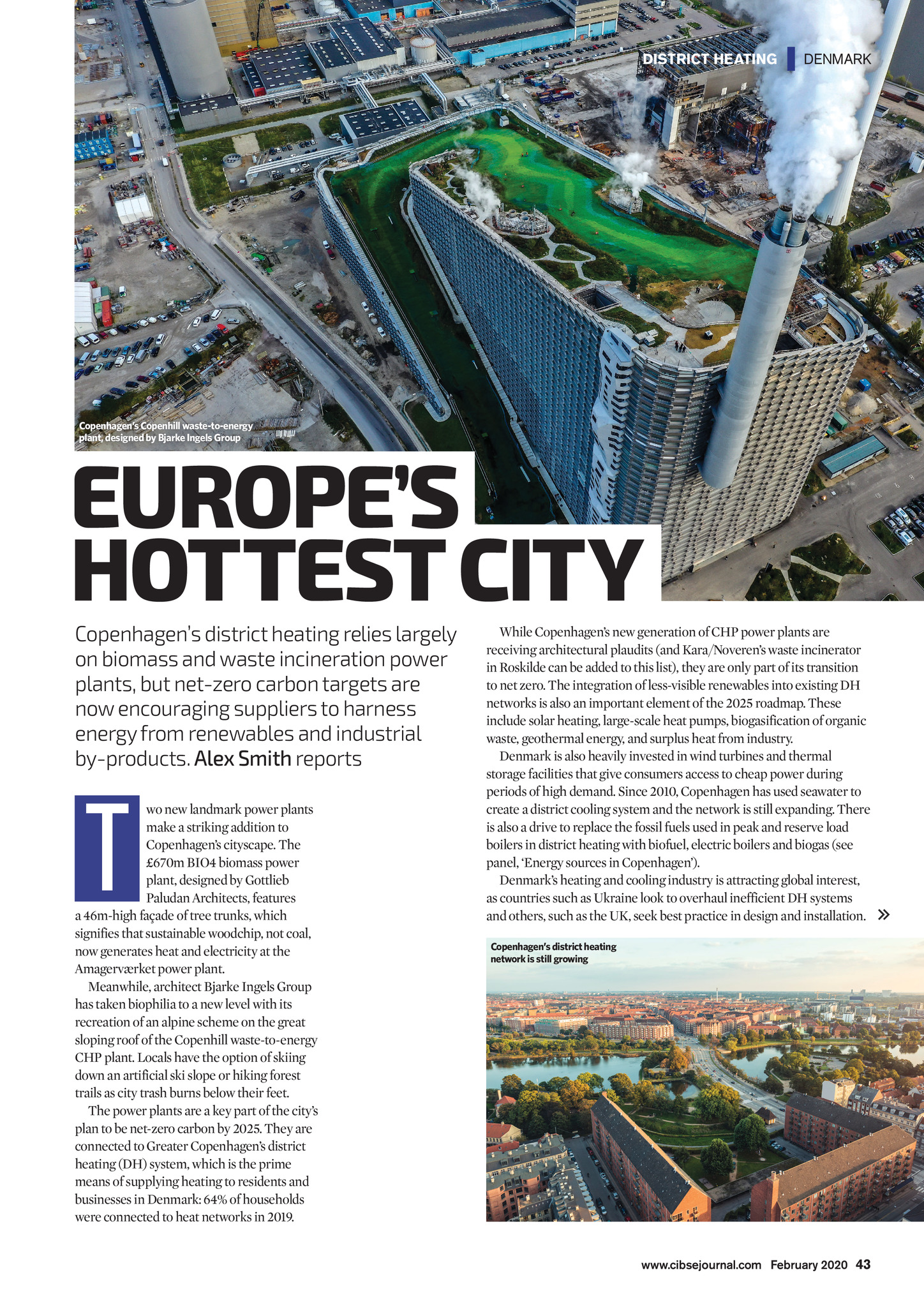
DISTRICT HEATING | DENMARK Copenhagens Copenhill waste-to-energy plant, designed by Bjarke Ingels Group EUROPES HOTTEST CITY Copenhagens district heating relies largely on biomass and waste incineration power plants, but net-zero carbon targets are now encouraging suppliers to harness energy from renewables and industrial by-products. Alex Smith reports T wo new landmark power plants make a striking addition to Copenhagens cityscape. The 670m BIO4 biomass power plant, designed by Gottlieb Paludan Architects, features a 46m-high faade of tree trunks, which signifies that sustainable woodchip, not coal, now generates heat and electricity at the Amagervrket power plant. Meanwhile, architect Bjarke Ingels Group has taken biophilia to a new level with its recreation of an alpine scheme on the great sloping roof of the Copenhill waste-to-energy CHP plant. Locals have the option of skiing down an artificial ski slope or hiking forest trails as city trash burns below their feet. The power plants are a key part of the citys plan to be net-zero carbon by 2025. They are connected to Greater Copenhagens district heating (DH) system, which is the prime means of supplying heating to residents and businesses in Denmark: 64% of households were connected to heat networks in 2019. While Copenhagens new generation of CHP power plants are receiving architectural plaudits (and Kara/Noverens waste incinerator in Roskilde can be added to this list), they are only part of its transition to net zero. The integration of less-visible renewables into existing DH networks is also an important element of the 2025 roadmap. These include solar heating, large-scale heat pumps, biogasification of organic waste, geothermal energy, and surplus heat from industry. Denmark is also heavily invested in wind turbines and thermal storage facilities that give consumers access to cheap power during periods of high demand. Since 2010, Copenhagen has used seawater to create a district cooling system and the network is still expanding. There is also a drive to replace the fossil fuels used in peak and reserve load boilers in district heating with biofuel, electric boilers and biogas (see panel, Energy sources in Copenhagen). Denmarks heating and cooling industry is attracting global interest, as countries such as Ukraine look to overhaul inefficient DH systems and others, such as the UK, seek best practice in design and installation. Copenhagens district heating network is still growing www.cibsejournal.com February 2020 43 CIBSE Feb20 pp43-44, 46 Danish district heating.indd 43 24/01/2020 15:30