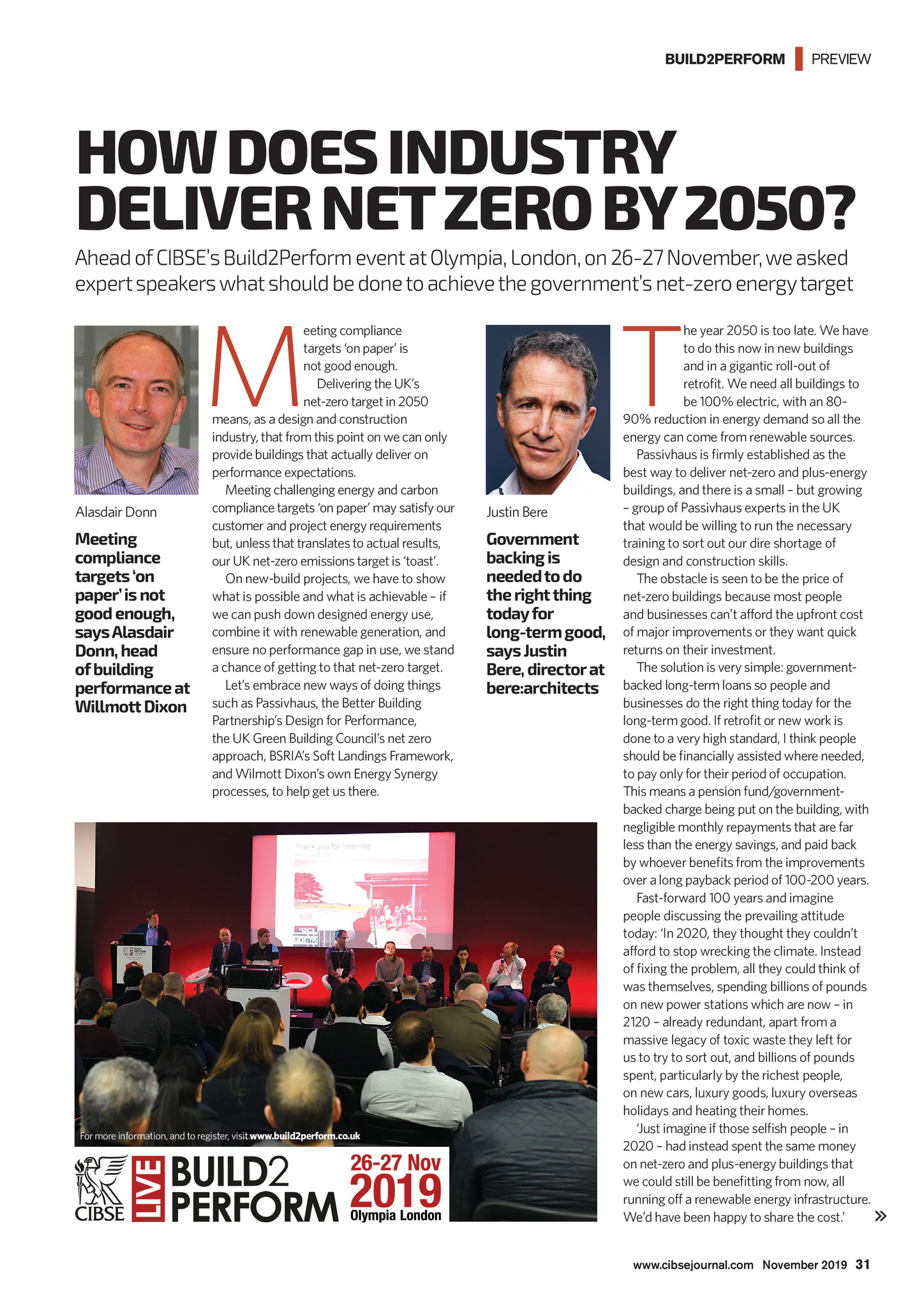

BUILD2PERFORM | PREVIEW HOW DOES INDUSTRY DELIVER NET ZERO BY 2050? Ahead of CIBSEs Build2Perform event at Olympia, London, on 26-27 November, we asked expert speakers what should be done to achieve the governments net-zero energy target M Alasdair Donn Meeting compliance targets on paper is not good enough, says Alasdair Donn, head of building performance at Willmott Dixon eeting compliance targets on paper is not good enough. Delivering the UKs net-zero target in 2050 means, as a design and construction industry, that from this point on we can only provide buildings that actually deliver on performance expectations. Meeting challenging energy and carbon compliance targets on paper may satisfy our customer and project energy requirements but, unless that translates to actual results, our UK net-zero emissions target is toast. On new-build projects, we have to show what is possible and what is achievable if we can push down designed energy use, combine it with renewable generation, and ensure no performance gap in use, we stand a chance of getting to that net-zero target. Lets embrace new ways of doing things such as Passivhaus, the Better Building Partnerships Design for Performance, the UK Green Building Councils net zero approach, BSRIAs Soft Landings Framework, and Wilmott Dixons own Energy Synergy processes, to help get us there. For more information, and to register, visit www.build2perform.co.uk T Justin Bere Government backing is needed to do the right thing today for long-term good, says Justin Bere, director at bere:architects he year 2050 is too late. We have to do this now in new buildings and in a gigantic roll-out of retrot. We need all buildings to be 100% electric, with an 8090% reduction in energy demand so all the energy can come from renewable sources. Passivhaus is rmly established as the best way to deliver net-zero and plus-energy buildings, and there is a small but growing group of Passivhaus experts in the UK that would be willing to run the necessary training to sort out our dire shortage of design and construction skills. The obstacle is seen to be the price of net-zero buildings because most people and businesses cant afford the upfront cost of major improvements or they want quick returns on their investment. The solution is very simple: governmentbacked long-term loans so people and businesses do the right thing today for the long-term good. If retrot or new work is done to a very high standard, I think people should be nancially assisted where needed, to pay only for their period of occupation. This means a pension fund/governmentbacked charge being put on the building, with negligible monthly repayments that are far less than the energy savings, and paid back by whoever benets from the improvements over a long payback period of 100-200 years. Fast-forward 100 years and imagine people discussing the prevailing attitude today: In 2020, they thought they couldnt afford to stop wrecking the climate. Instead of xing the problem, all they could think of was themselves, spending billions of pounds on new power stations which are now in 2120 already redundant, apart from a massive legacy of toxic waste they left for us to try to sort out, and billions of pounds spent, particularly by the richest people, on new cars, luxury goods, luxury overseas holidays and heating their homes. Just imagine if those selsh people in 2020 had instead spent the same money on net-zero and plus-energy buildings that we could still be benetting from now, all running off a renewable energy infrastructure. Wed have been happy to share the cost. www.cibsejournal.com November 2019 31 CIBSE Nov19 pp31-32 Build2Perform.indd 31 25/10/2019 14:46